Taken for a Ride: How to Fleece the Taxpayer
CFACT’s Craig Rucker on COP 31 and the climate money push, then economist Joe Cortright on how ODOT hides its cost overruns
About this episode
Two stories about your money that politicians and bureaucrats would rather you not look at too closely: a global climate conference pressing for trillions more, and a state transportation agency whose megaprojects keep doubling and tripling in cost.
Mark opens with a principle every taxpayer should know: opportunity cost. The true cost of anything isn’t only the money spent; it’s the best alternative you gave up. With government budgets often climbing by double digits from one biennium to the next, he asks listeners to keep one question in mind through the hour: what could that money have done instead, or better still, why collect it at all?
Craig Rucker, president and co-founder of CFACT, is just back from COP 31 in Antalya, Türkiye. He describes a conference where some 120 Democratic officials, including John Kerry and Gavin Newsom, arrived to claim the midterms were a referendum on climate, even though, as Craig points out, the campaigns ran on gas prices and affordability. He explains why he thinks rejoining Paris will be harder this time, why he expects the push to come state by state rather than through Washington, and how far donor nations have fallen short of their climate-fund goals. Mark raises meteorologist Chuck Wiese’s point about the hydrological cycle, the Earth’s built-in air conditioner, and Craig describes a fight over a UN science report and the argument that CO2’s warming effect is near saturation.
Craig also tells the story of CFACT’s referee-shirt “0–31” banner and the police who made them throw it away, and of Greta Thunberg’s return. Then Mark turns to an energy source that left and right might both support. Google has agreed to buy superhot rock geothermal power from Central Oregon’s Newberry Volcano for its data centers, and Craig weighs the promise of geothermal against its limited geography and the risk of induced tremors.
In the second half, economist Joe Cortright, founder of City Observatory and one of ODOT’s most persistent critics, explains how the agency reports its costs. He says ODOT “rebaselines” projects so that only the latest estimate counts, and that its online Project Tracker, required by a 2017 law, lists a handful of small ADA ramp projects as over budget while leaving out the Abernethy Bridge, which has more than tripled. He walks through how that estimate went from about $250 million to more than $850 million, why the consultants who design these projects have little reason to finish them quickly, and why he says inflation explains only about $1 billion of the Interstate Bridge’s $7.5 billion increase. Mark quotes Joe’s line that ODOT is “the kitchen remodeler from hell.”
Joe’s solutions: a firm fix-it-first policy for preservation and maintenance, and no new megaprojects until the cost is known and the money is in hand. In the final minutes, Mark brings up former Intel CEO Andy Grove’s 2010 warning that sending manufacturing overseas costs the know-how behind the next generation of products, and Joe explains what industry clusters mean for Oregon’s semiconductor, footwear and wood-products strengths, and why data centers don’t produce the same local spillovers as research and design work.
In this episode
Opportunity Cost, and Escaping COP 31
Mark explains opportunity cost and welcomes Craig back from Antalya: private jets, a jubilant Democratic delegation claiming a climate mandate, why rejoining Paris may be harder this time, and a state-by-state strategy.
The “Mandate” Nobody Campaigned On
European electricity prices, Shellenberger’s count of climate in Democratic campaign materials, the Earth’s built-in air conditioner, a fight over a UN science report, and climate as a “sexist issue.”
The 0–31 Banner, Data Centers, and Geothermal
Greta’s return, CFACT’s referee-shirt protest, Gates and Bezos backing off as data centers grow, and Google’s deal for superhot rock geothermal from Newberry Volcano.
How ODOT Hides Its Cost Overruns
Rebaselining, a 2017 transparency law, a Project Tracker that leaves out the Abernethy Bridge, the I-5 Rose Quarter jump from $2.2 billion to $3.6 billion, and why no one has been fired.
The Kitchen Remodeler from Hell
How the Abernethy Bridge exploded, consultants on the Interstate Bridge Replacement, how much inflation really explains, and Oregon’s road-repair backlog.
Fix It First, and What Andy Grove Got Right
Fix-it-first, no more “extend and pretend,” industry clusters and Oregon’s high-tech strengths, why data centers aren’t a cluster, and Mark’s close on the tyranny of the majority.
Key questions about ODOT’s costs and COP 31
How much has ODOT’s Abernethy Bridge project grown in cost?
According to Joe Cortright’s September 29, 2026 analysis at City Observatory, the I-205 Abernethy Bridge was estimated at $248 million when it was approved in 2018. The cost doubled to $495 million when bids were opened in 2022, then rose to $622 million (2023), $750 million (2024) and $815 million, and Cortright puts the current figure at about $885 million. On the show, he said ODOT spent six months and about $12 million with an engineering consulting firm to produce the original estimate.
Why doesn’t the Abernethy Bridge show up as over budget on ODOT’s Project Tracker?
A 2017 law (Chapter 50, Oregon Laws 2017, Section 12) requires ODOT to keep an online database showing projects’ original budgets and schedules and whether they finished on time and on budget. Cortright reports that ODOT’s Transportation Project Tracker lists seven over-budget projects with a combined overrun of about $6 million: six ADA curb-ramp projects and the Bridal Veil US 30 Bridge. He says ODOT counts a project as on budget if it stays at or below 110% of its “baselined” construction budget, set when the contract is awarded, and can re-baseline after construction starts, so growth from the original planning estimate is left out.
What did ODOT’s own internal audit find about its budget?
ODOT Internal Audit Report #25-02, dated January 9, 2025 and presented to the Oregon Transportation Commission on January 16, 2025, found that the agency lacked key controls to ensure its legislative budget was built on an accurate revenue figure. The 2023-25 ODOT budget totaled $5.9 billion, and the revenue assumed in building it was too high by $1.1 billion.
How has the Interstate Bridge Replacement’s cost changed, and why does Cortright expect more increases?
In an October 29, 2026 City Observatory article, Cortright writes that the Interstate Bridge Replacement estimate has grown from $4.8 billion in 2020 to about $15 billion before construction begins. He reports that only one team, Columbia River Constructors (a Kiewit-led joint venture), proposed for the main contract, and that under the progressive design-build approach a guaranteed maximum price is not expected until around fall 2028. On the show, he said the project and its predecessor, the Columbia River Crossing, have generated close to $500 million in consulting fees.
What is Google’s geothermal deal at Newberry Volcano?
OPB reported on November 17, 2026 that Google agreed to buy 50 megawatts of superhot rock geothermal power from Texas-based Quaise Energy’s Project Obsidian site on the southern flank of Newberry Volcano in Central Oregon, to supply three Google data centers in The Dalles. Deliveries could begin as early as 2030, the price was not disclosed, and Quaise must build a 10-mile transmission line to a substation in La Pine. OPB described it as the world’s first deal to buy commercial superhot rock geothermal energy.
What happened at COP 31 in Antalya?
Craig Rucker reported for CFACT that John Kerry told the COP 31 gathering the 2026 midterms showed Americans had made climate change a voting issue, while Rucker argued Democrats had downplayed climate during the campaign, citing Michael Shellenberger’s count of Democratic press releases. Rucker also cited a CNN count of 93 private flights into Antalya, compared with 66 for the prior year’s conference in Brazil. CFACT says its members were removed from a UN shuttle bus by security and police over a banner reading “0-31 … Three Decades of UN COP Flops … End Net Zero,” and were released on condition that they discard it.
Links & resources mentioned
Our Guests
- CFACT — Committee For A Constructive Tomorrow (Craig Rucker, president and co-founder)
- City Observatory (Joe Cortright, founder and director)
- Joseph Cortright (D.C. Policy Center)
COP 31 in Antalya
- The climate elites’ farce at COP31 (CFACT, Craig Rucker, November 12, 2026)
- COP 31 Dispatch: The Green Zone is now the Green Wash zone (CFACT, Craig Rucker and Peter Murphy, November 13, 2026)
Green Money After the Midterms
- Wells Fargo Pledges $500 Billion in Green Financing. How Much Is Going to China? (National Center for Public Policy Research, November 19, 2026)
- Why wind and solar won’t save the planet: A U.S. case history (CFACT, Douglas Pollock, March 28, 2024)
Geothermal Energy and Newberry Volcano
- Google announces world’s first deal to buy commercial superhot rock geothermal energy from Central Oregon (OPB, November 17, 2026)
- More than 26 power deals were signed for a technology that can run under any backyard in America (GCN, July 28, 2026)
- Geothermal Energy: Another Nail in the Coffin of Wind and Solar Power? (CFACT, Bonner Cohen, June 26, 2025)
- Legacy environmentalists thwarting geothermal energy exploration (CFACT, Gabriella Hoffman, September 27, 2021)
- The World’s 10 Biggest Geothermal Energy Plants (ClimateCare, updated December 15, 2025)
ODOT’s Cost Overruns
- How ODOT covers up cost overruns (City Observatory, Joe Cortright, September 29, 2026)
- Risky business: How IBR’s contracting will produce billions in added costs (City Observatory, Joe Cortright, October 29, 2026)
- ODOT’s Most Persistent Critic Says the State Could Solve Its Road-Funding Crunch—by Scuttling Some Projects (Willamette Week, August 20, 2025)
- Audits reveal ODOT projects from 2017 funding package are over budget and behind schedule (OPB Think Out Loud, February 20, 2025)
ODOT’s Budget and Funding Outlook
- ODOT Has Taken Steps to Improve the Budget Development Process, But More Actions Are Needed (ODOT Internal Audit Report #25-02, January 9, 2025)
- In Extraordinary Hearing, ODOT Explains Billion-Dollar Budget Blunder (Willamette Week, February 26, 2025)
- Kotek’s workgroup shares grim Oregon transportation funding outlook for 2027 session (KGW, November 2026)
Manufacturing, Know-How and Industry Clusters
- Andy Grove: How America Can Create Jobs (Bloomberg Businessweek, July 1, 2010)
About the guests
Craig Rucker is the president and co-founder of CFACT, a Washington, D.C.-based free-market environmental policy group. He has attended roughly 30 major UN climate conferences as an observer and co-produced the documentaries Climate Hustle (2016) and Climate Hustle 2 (2020). He is a regular commentator on energy and environmental policy.
Joe Cortright is a Portland economist, the founder and director of City Observatory, a think tank that does data-driven analysis of cities and the policies that shape them, and the principal of Impresa, an economic consulting firm specializing in urban and regional economics. For 12 years he served as the Executive Officer of the Oregon Legislature’s Trade and Economic Development Committee. He has written three studies for the Brookings Institution on industry clusters, including analyses of high-tech and biotech clusters, and Willamette Week has called him ODOT’s most persistent critic.
Full transcript ▸
MARK: There’s a principle of economics and business that everybody should understand, because it can change the way you think about what government does and how they spend money — your money. It’s a principle known as opportunity cost. In a nutshell, it’s what you give up when you choose one thing over another. A simple way to think about it is, if I spend money on project A, I won’t have money to spend on project B. But it’s more than just money and what you could have spent that on instead. The real insight is that the true cost of anything isn’t just the money spent, it’s the best alternative that you sacrificed. This forces you to look beyond the simple price of something, and you start weighing decisions based on what you lose rather than just what you pay.
A real-life example: you decide you’re going to spend your evenings watching TV instead of working a side gig that could pay you two thousand dollars a month. The show didn’t cost you money. It didn’t cost you two thousand dollars cash. But it’s that lost opportunity of the alternative. When you start thinking this way, you tend to make better decisions, because you start making decisions based on what you would lose rather than just what you’d pay. You tend to make better choices about money and time.
And with government runaway spending, budgets often increasing by double digits from one biennium to the next, we need to start thinking of the alternative rather than billions of dollars squandered. What could that money have been spent on instead? Or here’s a shock to the system. Better still, don’t collect those taxes to begin with and let people keep more of their money. On today’s show, we’re going to be talking about two issues that cost an awful lot of money. And as we talk about them, I’d like you to be thinking about the alternative. What could we be doing instead? Because when you start thinking about the opportunity cost, it forces you to focus on the core issue. Is this really worth it?
I’d like to welcome back Craig Rucker. He’s the co-founder and president of CFACT, Committee For A Constructive Tomorrow. And Craig, you just escaped COP 31. I congratulate you on surviving that.
CRAIG: Well said. Well, thanks, Mark. It’s a pleasure being back on the program, and it was a bit of an escape. I will say that it was a very long flight to get over there. It was not in Istanbul, which would have been more of a direct flight. It was on the southern coast there on the Med, a town called Antalya, historic town, but obviously one that was picked out by the UN because it has a certain charm to it. As is typical for a lot of these, they never have them in Toledo, Ohio, or Akron or someplace like that. They always pick Bali, Indonesia or Copenhagen, and in this case Antalya. Very nice sites.
MARK: Which involves travel by jets, of course.
CRAIG: As a matter of fact, correct. And they got a little bit of flak for that this time, I was surprised, from of all sources CNN. At the time I was there, some ninety-three private jets had arrived. And that’s an uptick from just over sixty back in Belém in Brazil, where they had it last year. And one of them was by a Nigerian businessman who apparently didn’t just take any private jet. When they ascertained how many emissions it put out, it’s the equivalent of what a person would put out using all of their cars and flights and everything. It would take an average person six years to actually emit what this one Nigerian businessman did going from Nigeria to Antalya.
MARK: Wow. Environmentally friendly there. So I haven’t done an awful lot of reading about COP 31, in the sense that I’ve been glued to the television watching the coverage or anything like that. But I did get the sense from the articles that I did read that they’re a little bit more jubilant this year than they were last year. Last year they were in the middle of Trump cutting a lot of their funding, and this year they seemed a little jubilant with the Democrats taking over. Is that a good assessment of the mood there?
CRAIG: It was, and I would say that the Democrats played it up, as they were welcomed as heroes. Because, of course, the United States pulled out of the Paris Accord, but not just the Paris Accord. President Trump actually got us out of the original UN Convention on Climate Change. It dates back to George H. Bush, and that will make it problematic should there be a Democratic administration coming in, because they would have to once again sign back up for that, get two-thirds of Senate approval, and then try to get us back in the Paris Accord. So anyway, Trump did his homework this time, and I think that it’ll be difficult to get back in.
Nevertheless, there was a booth there called America’s All In, and some one hundred and twenty Democrats showed up. Initially there was only supposed to be nineteen congressmen, and then it ballooned. You had John Kerry. I saw Gavin Newsom there. You had the governor of New Mexico and the mayor of Raleigh, North Carolina. Just a bunch of them all speaking up, saying, remarkably, that the midterms were a referendum on climate, that Americans said loud and clear, we want back in on climate change. But I don’t really recall that being much of an issue at the time. It was more high gas prices and affordability, but that’s not what they told the press.
MARK: How convinced are they that the Democrats can back the cash cow up to the milking machine and once again open the spigot of billions of dollars of taxpayer monies? Trump can pretty much veto any funding bill at all. He doesn’t have a line-item veto, so he either has to veto the whole bill or go ahead and sign it. So that’s going to cause a problem, because you’d have to have two-thirds to override that. So I don’t know that it’s going to be as easy as maybe they’re thinking there at COP 31, that the Democrats are going to open the money spigot again.
CRAIG: Yeah. And I don’t think they’re actually thinking on the federal level. I think the reason you saw a lot of these state and other officials show up is they’re planning to do it more on a state-by-state basis. Now, you would think there’d be a problem with a state trying to get involved with international negotiations and treaties and things. But that’s essentially what they’re doing. They’re trying to create an appearance, make their states align with Paris goals without formally joining the Paris Accord. And a number of states have already done that. You have a number in the northeast part of the Regional Greenhouse Gas Initiative. You have some twenty-plus states that are part of the U.S. Climate pact, which are states dedicated to doing that. That dates back to when Trump initially pulled out back in 2016. So there are a lot of those initiatives going on.
I don’t think they have a whole lot of anticipation that the U.S. will be funneling a whole lot of money there. In fact, even the nations that are part of it, the U.K., France, all these different countries — they wanted about three hundred-plus billion for their Green Climate Fund, and to date they only have about twenty-eight, less than, I guess, ten percent of what they have actually aimed to get. And this is even by nations extremely enthusiastic. They just have not been ponying up the money. It’s been more of a case of greenwashing, where they talk a good game but don’t actually put up the bucks — which we’re not complaining about at CFACT, because it would be just wasted money anyway. But that is a big emphasis of this conference. They want three hundred billion, rising to one point two trillion within ten years.
MARK: Wow. All right. Stay with us. More with Craig Rucker talking about the schemes the far left has for your money to solve a problem that really isn’t there.
MARK: And welcome back to Craig Rucker. He is the president and co-founder of CFACT, that’s Committee For A Constructive Tomorrow. You can find out more about them at CFACT.org. We’ll link that up on today’s show page, ISpyRadio.com/16-47. So you just got back from COP 31, and I wanted to go back to that, because the Democrats are kind of crowing. John Kerry is telling the delegates that the midterms prove that Americans really believe in climate change and it was a voting issue. But that didn’t make it into any of their ads. And as far as I remember, I don’t even think climate change was on pretty much anybody’s radar as far as the midterms are concerned. I don’t recall any mass swelling of public support for climate change.
So in terms of that, how much do you think they can actually shove through if there isn’t genuine public support? Because really what they’re talking about when they’re talking about climate change is spending more money. And of course, what they ran on was affordability. And now we just need to raise taxes in order to spend more money. I don’t see that getting a lot of public support.
CRAIG: No. As a matter of fact, look at the countries around the world that have actually implemented a lot of the Paris Accord-type programs. Look at Europe as a classic case in point. Their electricity prices have skyrocketed. I mean, Germany is paying, what, forty, fifty cents a kilowatt hour. We’re paying about eighteen cents. And the more we become like Germany and France and start using more solar and wind, which is being touted as the way to save the planet, the more expensive the electricity will be. And of course their fuel prices are way higher than ours, which the Greens consider a good thing. So if they’re going to campaign that gas prices are too high and we need more affordability, going the route of the Green New Deal and the whole climate agenda that’s being bandied about at COP 31 in Turkey is not the way to go.
And you’re absolutely right. This was never mentioned in the election. As a matter of fact, Michael Shellenberger took a look at the Democrat materials that were going out, and he found that, unlike back in 2024, where about a quarter of the materials mentioned climate, this time only two percent of their pamphlets and brochures and the like during the first half of this year even mentioned climate. And many of the major donors in fact instructed the people not to campaign on that and to hush about that. It was a very silent issue, deliberately not mentioned, because they wanted to talk about affordability and good electricity rates and things of that sort — which they are the biggest culprits of driving up. So it’ll be curious to see where they go from here.
MARK: Yeah. Well, of course, with the global warming crowd, they constantly like to spew about how scientifically based all of this is. And that’s just simply not true. It’s more fantasy than it is science. And quite frankly, it’s more religion than it is science. A few shows ago I had been talking with Chuck Wiese off air, and he told us about the hydrological cycle. This is something that he’s probably mentioned and it just never really clicked with me. But it boils down to, essentially, we can’t warm the earth through CO2, because the more CO2 you add to the atmosphere, any kind of effect that it might have had is absorbed through water vapor. As the earth warms, water evaporates, creates convection, causes the air to cool. Water vapor then forms clouds, which block the sunlight. The water vapor gets condensed to liquid droplets, which then rains and evaporates again. And that process keeps going until it reaches equilibrium. It’s kind of this self-mitigating air conditioner for the earth. I mean, this is the laws of physics. It’s not imaginary problems. So do you think anybody at COP 31 is even aware of this? Because we’ve spent trillions of dollars to solve a problem that doesn’t exist, because the earth has its own air conditioner system.
CRAIG: Well, I’ll tell you, I think that there are some starting to. And one of those countries is Saudi Arabia. There was supposed to be a climate report released this week, as a matter of fact, and a number of nations — of all of them, Russia, China, Saudi Arabia and several others — refused to let the UN release that report, which has caused a lot of arguing, because they didn’t like what it said. One of their big beefs is that they don’t have enough scientists from outside of France, the U.K. and some of these Western universities, which they say skew the science and embellish it. Well, you want to know what? They’re right. That’s exactly what they do. So I am actually encouraged. I know it sounds kind of odd to be saying that China is correct, but they are right in this particular case, as are the others. I’m not trying to champion them too much, but on this particular case, I think they have a point. And it would be good to see the science actually address things like you just mentioned.
And I think there are other scientists who have for a long time said that the CO2 in the atmosphere has reached a saturation point. It’s kind of like getting a blanket wet. Once you get it to a certain level, it can only get so wet. Putting more on it doesn’t actually absorb any more. It just rolls off. And that’s where they say a lot of the CO2 in the atmosphere is right now. Its ability to be a warming influence on the planet has already hit a saturation point. Adding more to it isn’t going to increase its ability to keep the planet warm. So there’s a lot of different debate on this thing, but it’s not being given the time of day, because the people at COP 31 and the UN have long seen the climate issue as a way to increase their bureaucracy, increase their budget. It’s big business for them.
MARK: So if they’re suddenly realizing that more CO2 isn’t going to warm up the planet, and we’re not going to have all of the rising oceans and all the rest of things, where do they turn from there?
CRAIG: I don’t know, and I’ll tell you another interesting thing about the COP meeting and where it’s turning to. It’s getting away from science and actually getting into a lot of woke social causes. One of the big things going on this week is a lot of the women’s groups are saying that climate change basically is a sexist issue, that global warming is impacting women more than it is men, apparently. And I’m not really sure how to handle that, other than to say maybe, okay, we’re sorry for warming the world and we’re wrong. Can we accept your apology? I’m not really sure how you handle this with these feminists, but that is actually a big issue right now: that climate change, though it’s going to be causing floods and wiping out villages, and though it’s going to be causing the end of life, somehow will impact women more than men. I’m not quite sure how. If everybody dies in a village, I’m not sure how women and children are impacted more than men. I think they’re all dead.
MARK: Well, if there’s any logic to it, they wouldn’t believe in global warming to begin with. But it is time for a break. We will wrap things up with Craig Rucker from CFACT after this. Coming up, could there actually be something the right and the left agree on when it comes to green energy?
MARK: And welcome back. This is the I Spy Radio Show, talking today to Craig Rucker. He’s the president and co-founder of CFACT, Committee For A Constructive Tomorrow. Their website is CFACT.org. So Craig, before we leave COP 31, you had mentioned that Greta was back after a five-year hiatus and is very upset that nothing has been solved.
CRAIG: Exactly. And she came back and did garner quite a bit of news, a little bit of media. She looks good, actually, much better than she did when she left. But she kind of dropped the Palestinian issue for now. And I think she sensed that this is the way to come back, especially with data centers in the news and the idea that climate might somehow impact that. That’s where the news is at. And really, all that I think she achieved there was a lot of publicity for herself. I’m not entirely clear that she really had a coherent message that she shared with everybody. But I don’t know that that’s important. She did energize the crowd.
MARK: Well, how dare you criticize her?
CRAIG: Exactly, exactly.
MARK: So I do have to ask you this before we leave COP 31. Apparently there were some lighthearted antics there, we’ll say. You guys dressed in referee shirts and held up a banner, 0–31. So how did that go over?
CRAIG: Well, yes, as is typical, we try to get a message out using a little sense of humor. We were using a sports analogy, had a sports banner saying the score was thirty-one to nothing, or zero to thirty-one — that these have been COP flops and that they need to end net zero. Well, before we even really got to the point of unfurling the banner, we just got on the bus that was going to take us to the Green Zone. We walked on, everybody waved, let us go on the bus, and all of a sudden somebody must have sounded the alarm. A couple of police came on and told us to unfurl the banner. I don’t know as though they fully understood “COP flop,” but they knew it wasn’t good when they saw “net zero.” So they made us come outside, about a dozen police there, and throw the thing in the trash. There can be no dissent at these things.
MARK: No.
CRAIG: Absolutely not. We gave it a try, and usually we do succeed, but not this time.
MARK: Well, speaking of data centers, and we’ve said this before with you, the push toward data centers is really exposing the fallacy of green energy anyway. And Bill Gates, of course, has suddenly pulled back on green energy, because you really have either a world economy powered by data centers and technology, or you have a world powered by green energy. You can’t have both. Is that a fair summation of the situation there?
CRAIG: Well, it is, and that’s exactly why you see some backtracking by Bezos and Gates and all of them, really. They realize that what they’ve been championing, what they’ve been funding, would get in the way of them being able to branch out in their businesses. So now that it impacts them, they are singing a different tune on climate. That’s why Bill Gates, I think it was last year, famously walked back, saying it’s not the end of the earth, it might have been overblown. And you see the same thing with Bezos cutting back on the contributions and pledges that he gives toward the climate cause. So these are good developments. It has earned them the scorn of the environmentalists. In fact, when we were at COP 31, many of them were being very criticized by the rank-and-file attendees.
MARK: Yeah. Well, it’s kind of like they were funding their own demise — sort of like what Republicans do whenever they vote for a green energy bill. I do like to look for areas where we might agree with the other side. And there is a source of energy that potentially might fit that bill, be more green than the current green energy and produce actual energy, not just when the wind decides to blow. I don’t know an awful lot about geothermal, but this came to light recently because there was an article from Oregon Public Broadcasting where Google announced they’re going to buy fifty megawatts of energy that’s coming from the Newberry Volcano in Central Oregon. And it’s a slightly different technology called superhot rock geothermal energy. It just taps into the heat trapped below the Earth’s surface. I know geothermal is an energy source that CFACT has looked into. So what can you tell us about this?
CRAIG: Well, I think geothermal is a proven energy source. It’s not theoretical, because we know the nation of Iceland relies heavily on it, and it’s been used for decades. So it’s a question of how it’s used. It has limited geography, because generally, for most of the places in the world, they go to areas that have a lot of volcanic activity and the like, where they can actually maximize its use. New technologies are perhaps making it available in areas that are not like that. And there are concerns about earthquakes, which we discussed off the air. I think that’s worth looking into, because it’s very probable they do cause some sort of disruption — but all energy sources cause something. So there’s a question whether it causes tremors, or does it actually trigger something more serious?
MARK: Yeah. The new technology, from what I understand anyway, is similar to what we saw with fracking. They had reached kind of a limit, and then they figured out new ways to drill and whatnot. With geothermal, they’re injecting water into the ground, and it creates some fissures, and then because of the liquid it’s able to draw up the heat a little bit better. And that’s really for areas that don’t have volcanoes. Although, maybe if we had an active volcano in New York City, that would solve a few problems. But as far as this going forward, do you see maybe more funding for this type of exploration?
CRAIG: I do. I don’t think this would be something objected to by either side of the aisle. Ours wouldn’t, because it seems like an energy source that is clean environmentally. It doesn’t have a big environmental footprint like, let’s say, wind or solar does. It’s not actually something that I think is manufactured by foreign governments either, since most of the photovoltaics and wind power stuff is often fabricated in China and put in by Europeans. So it would be nice if this was homegrown for United States industry. Again, I think science needs to play an important role in this. Where it’s put in and how it’s put in, I think, needs to be something that requires prudence.
MARK: Yeah. Well, if there’s a way to make it more expensive and less efficient, the green energy groups will find a way to do that, unfortunately. We’re up against it. I want to thank you so much for your time today.
CRAIG: Well, thanks, Mark. Always a pleasure being on the program.
MARK: Whether you’re Republican or Democrat or somewhere in between, or somewhere on the outside of either of those, we can pretty much all agree that Oregon’s Department of Transportation, ODOT, is often a prime example of how not to run a government bureaucracy, especially when it comes to spending: not on time, not on budget, and then lying about the results. To talk about that, I would like to welcome Joe Cortright to the show. Joe is an economist and the founder and director of City Observatory, a Portland-based think tank that studies what makes cities and regions succeed. And for twelve years, he also served as the executive officer of the Oregon Legislature’s Trade and Economic Development Committee, so he knows how the sausage gets made in Salem. He’s also become one of ODOT’s most persistent critics. Joe, welcome to I Spy Radio.
JOE CORTRIGHT: Hey, thanks. Great to be here.
MARK: So let’s talk a bit about the problems here. One of the core issues, I think, with ODOT is how they conduct business. You have a great article that we’ll link up on today’s show page, “How ODOT Covers Up Cost Overruns.” It’s from September 29 of this year. And you say this: “ODOT management systematically hides data showing the nature and extent of cost overruns.” So walk us through what exactly they’re hiding.
JOE: Well, let’s just talk about cost overruns. ODOT takes on big highway construction projects. They’re building things like the Abernethy Bridge, the I-205 bridge between Oregon City and West Linn. And usually what they’ll do is go to the Legislature or the Oregon Transportation Commission and say a project is going to cost a certain amount of money. And then you find out years later, when the project is actually built, that it ends up costing vastly more. On average, the typical ODOT project ends up costing between two and three times what they told the public and the Legislature at the time the project was authorized.
And the only way you would know that, though, is if you go back and track down the original numbers that ODOT presented to the public. Because what ODOT does is what it calls, in bureaucratic words, “rebaseline” the project, which means forget about the original estimate that they gave you and just talk about what the last number was that they predicted before they finished the project.
MARK: One of the things that they were supposed to be doing was tracking this and making it more transparent. I think that dated back to a law in 2017. It was supposed to bring more accountability, including a transportation project tracker online site. So how is that going?
JOE: Not really well. Obviously this problem has been going on for quite some time. We’ve gone back more than twenty years, and this pattern holds. But as you’re right, the 2017 Legislature said, well, we’re going to fix this. We’re going to require ODOT to report online on the original cost of the project and then how much it cost when finished. And what it has done is basically — if you go to their site, you can Google “ODOT Project Tracker” — you’ll find that essentially they buried the original cost estimates on that site. They don’t report what they originally cost. So they’re actually hiding how much the cost overrun has been.
To take one project, the Abernethy Bridge project: ODOT said that was going to cost two hundred and fifty million dollars. Big round numbers. Right now, the cost of that project is eight hundred and eighty-five million dollars and counting. So it has more than tripled in the time since it was authorized.
MARK: And on that transportation tracker, it does not show up among the only seven projects that apparently are overrun.
JOE: Right. If you go to Project Tracker, it gives you a way to filter the different projects. So you can say, well, where are the ones that went over budget? And it identifies, I think, six or seven projects, most of which are ADA — Americans with Disabilities Act — ramp improvements, which are usually a couple of million bucks or so. And there’s no admission by ODOT that their single largest project went three times over budget and almost five hundred million dollars over budget.
MARK: So how do they get away with not showing that as one of these cost overruns? Are there certain qualifiers, in terms of, okay, this one counts as over budget, but that one somehow doesn’t?
JOE: That’s a really good question, and one that we should be asking the Oregon Transportation Commission and our Legislature. ODOT needs to be honest about what it said the projects were going to cost and how much they ended up costing. And the way they’re doing it right now, they’re kind of hiding behind what I would call bureaucratic footnotes to hide this original information about what they said the projects would cost.
MARK: Well, in your article, you say you can’t solve a problem unless you understand the nature and causes of the problem. And I one hundred percent agree with that. ODOT as an agency continues to be in denial about these overruns. So how is it that they continue to be in denial? Who should be holding them responsible, and why aren’t they?
JOE: Well, I think it’s really up to, as I said, the Oregon Transportation Commission and the Legislature. They’re, in theory, the ones who are supervising the Oregon Department of Transportation. And right now, as we speak — in fact, yesterday in Salem — the governor had a new working group, the Oregon Transportation Vision Working Group, I think, which is supposedly looking at what they call major projects. But if you go in there and look at the report that they’ve done on major projects, the estimated costs they’re talking about are not the current best estimates of how much those projects are going to cost. So again, this problem is very deep, very systematic. They’re not being frank and candid with the public about how expensive these projects are.
And also the chronic inability of ODOT to manage these projects. The I-5 Rose Quarter project in Portland: six months ago, ODOT was saying it was going to cost two point two billion dollars. The latest number is now three point six billion dollars. So this isn’t an ancient history problem. This is a problem that’s playing out in real time, even as we speak.
MARK: Well, in private business, if your budgets explode like that, there’s a good chance that you’d be fired. So has anybody in ODOT been fired?
JOE: I don’t think anybody’s been fired. We’ve seen some staff turnover there. But in general, there just haven’t been consequences for this. What happens usually is ODOT staff will come in to the Oregon Transportation Commission and shrug and say, hey, this is costing a lot more. And the commission goes, that’s really a terrible thing. And then they vote to give them more money. They give essentially the same people more money to do the same thing, and the costs just keep going up.
MARK: The other side of that coin is they are unlikely to be fired if the people making those decisions don’t have good information. So do you get the sense that the Legislature knows that they’re being lied to by ODOT?
JOE: That’s a really good question. I’ve spent a lot of time trying to inform public officials, including legislators, about these cost overruns. But ODOT is the leading source of information for the public and for the Legislature on these things. So it’s hard to know how well informed folks are and how accurate the information is that they’re getting, but it could be a lot more accurate.
MARK: Okay. Let’s go ahead and take a break there, everyone. Stay with us. We’ll continue with Joe Cortright. He runs City Observatory. You can visit them at CityObservatory.org.
MARK: And welcome back. We’re talking about everyone’s favorite state agency, ODOT. We’re talking with economist Joe Cortright, the director of City Observatory, about ODOT and where Oregon’s transportation dollars are really going. He’s also the principal of Impresa, an economic consulting firm in Portland. During the break, we were talking about incentives and how that really is an important issue here. But before we get to that, I’d like to revisit the Abernethy Bridge, because I think, if I’m envisioning what the audience is thinking at this point, it’s: okay, so how do we get to a project that isn’t done, isn’t done on time, and is now three times the cost of what it was originally budgeted? Can you walk us through how that kept exploding in costs?
JOE: Yeah, that’s a great question, and this is a classic case study. In 2017 the Oregon Legislature said, we don’t have money for the Abernethy Bridge. So ODOT, would you study it and come back with what’s called a cost-to-complete report? And ODOT spent six months and about twelve million dollars with an engineering consulting firm to come up with what they thought was a bulletproof cost estimate. And they said it would cost about two hundred and fifty million dollars. A couple of years later, they were hoping to spend toll money on building that bridge. We know tolls aren’t going forward, but they believed that they were. So they borrowed a bunch of money and then launched the project. The bids came back at five hundred million dollars, so it doubled right away. And we’re about four years into the construction project right now, and the costs are over eight hundred and fifty million dollars.
So this project is one that has just exploded. ODOT essentially lowballed the cost estimate at the beginning. They way, way underestimated how much it would cost. And then once they issued the project, they’ve been unable to get the contractor to adhere to the price that was agreed to. So this demonstrates problems both at the front end, in terms of estimating, and at the back end, in terms of managing these processes.
MARK: Well, have they ever looked at how they missed that initial budget estimate so badly?
JOE: In my view, no, they have not candidly looked at that. In fact, they’ve tried to argue that it was a slapdash estimate, a back-of-the-envelope estimate, when in fact they spent six months and twelve million dollars with an engineering consulting firm and said that they tested the market with contractors and so on. That’s what they said up front. They’ve conveniently forgotten that that’s what they said when they were first selling the project, like seven years ago.
MARK: Like I said, during the break we were talking about the impact of incentives. Right now they are incentivized to lowball these bids, because they’re trying to get these budgets passed. So the agency will go to the Legislature and lowball the figures — oh, that’s a bargain. But then on the other side of that, you’ve got the consultants, who are incentivized to be as big as possible. They want these huge projects that keep going and going and going, because they get these consulting fees. Are there any fines or consequences on the contractors for cost overruns? Because right now they’re incentivized to just keep billing.
JOE: There really aren’t. And it’s important to know that with the very biggest projects, ODOT has essentially outsourced the design and management of those projects to private contractors. So the Interstate Bridge project in Portland, which now has a total budget approaching fifteen billion dollars — that’s with a B — is almost entirely run by private consultants, including a private company called WSP. That company and the other consultants who’ve worked on that project and its predecessor — you may recall the Columbia River Crossing more than a decade ago — have billed out now close to five hundred million dollars in consulting fees.
And not only that, but they’ve taken their sweet time in moving forward with the project. The project’s environmental review took two years longer than the consultants said it would, and all the time the consultants are getting paid more and more. Plus, as the project has escalated in cost — it’s essentially more than tripled in the last five years — that means more money for the consultants as that project proceeds. So they’ve essentially designed a huge project that will, if it goes forward, guarantee them a steady stream of revenue for engineering services for the next twenty years.
MARK: Wow. These massive multimillion-dollar studies — if that was being done on the private side, would those studies be that expensive? You hear about these hundred-million-dollar studies and whatnot, and it seems incredible that you would need a study that large, that expensive.
JOE: Yeah, it does seem incredible. In fact, it’s funny, because again, we designed something called the Columbia River Crossing, which died a little over ten years ago. And the head of the project, who was hired away from one of these consulting firms to run the project, said that they were designing, quote unquote, basically the same project as the Columbia River Crossing. And they spent an additional more than two hundred million dollars over a period of years designing, again, basically the same project. So there seems to be really limited accountability here.
MARK: Well, one of the problems, of course, is the impact of inflation. There was an interesting article from OPB from February of last year, right in the middle of the gas tax fight. The title is “Audits Reveal ODOT Projects from 2017 Funding Package Are Over Budget and Behind Schedule.” Surprise, surprise. But within that, the person being interviewed, who works for the Statesman Journal, was talking about a bridge that was originally part of that 2017 funding package, the Center Street Bridge. It was a seismic update type of thing, and it still hadn’t been started as of 2025. So you’ve got eight years of inflation kicking in. I looked it up: if something cost a million dollars in 2017, by 2025, eight years later, it’s like one point three five million. So you’ve got thirty-five, almost forty percent budget increase just from inflation.
JOE: Yeah. And again, I’m an economist, so I pay a lot of attention to inflation. There are a couple of things you should know. One is, when they estimate the cost of the project, they include inflation in the estimate. They do what’s called year-of-construction dollars. They figure what the rate of inflation is, and they know approximately when they’re going to build it. So the real question is, is inflation higher than they expected? It was. And we’ve looked at the biggest project out there, the Interstate Bridge. The cost of that project went from about seven and a half billion in 2022 to fifteen billion in 2026. And as best we can tell, only about one billion of that seven and a half billion dollar increase is attributable to higher inflation and construction costs. So yes, inflation is a factor, and inflation has been somewhat higher than everybody expected. But it doesn’t come anywhere close to explaining these doublings and triplings in project costs.
MARK: Well, when it comes to government, it’s always a war between spending versus revenue, and which is the real problem there. And I know that when that gas tax was being proposed, you actually testified against it. And I have this pull quote here, because you said that rather than a revenue shortage, it’s the overspending on these big projects. And you said this: ODOT is “the kitchen remodeler from hell.” I just love that, because that is exactly right.
JOE: Yeah. Once your kitchen is all torn up, when the contractor comes in and says, hey, this is going to cost three times what I told you, you don’t have a lot of choices, right? And that has happened again and again and again with ODOT. And part of this is that ODOT has cannibalized its budget for preservation of roads, fixing potholes and basic daily operations — everything you can think of, from cleaning up crashes to plowing the snow. And those are the things that Oregonians really care about, right? They want their roads fixed.
I’ll give you two numbers. Oregon ranks second from the bottom among the fifty states in terms of the size of its preservation and repair backlog. And we have three of the four most expensive highway projects per mile in the country. The Interstate Bridge, the Rose Quarter and the Abernethy Bridge are all more than a billion dollars a mile, which makes them three of the four most expensive projects in the nation.
MARK: Wow. Okay, we will wrap this up with Joe Cortright. His website is CityObservatory.org.
MARK: And welcome back for our final segment with Joe Cortright of City Observatory. Joe has also written three studies for the Brookings Institution on industry clusters, which makes him the right person to talk about where Oregon’s high-tech jobs are headed, and we’ll get to that. Before we leave the subject of ODOT, though: you’ve been studying ODOT for a long time now. You’ve seen it from the inside, and certainly as a taxpayer you’ve seen it as well. What are some of your thoughts on solutions that could start getting ODOT back on the right track?
JOE: I think probably the first and most important thing is to really adopt a firm fix-it-first policy: that our first priority with our transportation revenue, which is limited — and we know from the May election that Oregonians are not excited about throwing a lot more money at ODOT — should be taking care of this very expensive asset that we’ve invested in. And unfortunately, ODOT is the second worst in the country in terms of taking care of our roads. We know from public opinion polling that’s been done by ODOT that Oregonians strongly favor preservation — fixing potholes and so on — and operations, taking care of the roadways, plowing the snow and so on. So a fix-it-first policy is really critical.
The second thing is basically not starting these big, expensive construction projects until we know exactly what they’re going to cost and that we actually have the revenue in hand to pay for them. Because what ODOT has done is launch projects without knowing where the money was going to come from, or hoping that the money would materialize, and then issuing bonds, which essentially create a debt that requires us to pay for it. So we need to have the money in hand and know really how much they’re going to cost before we launch, as opposed to what people in the financial community call “extend and pretend,” where we move forward with a project and pretend that the money will eventually show up.
MARK: Okay. So in the time that we have left: way back in 2010, former Intel CEO Andy Grove warned that when we start sending manufacturing overseas, we don’t just lose the jobs, we lose the know-how that produces the next generation of products. And I know that you have done some articles for Brookings on this idea of clusters. So what does this mean for Oregon’s high-tech sectors?
JOE: I think it’s really important to think about the economy and what drives the economy, and Andy Grove is a very insightful fellow on this. Ultimately, it’s the ability to create economically valuable new ideas and turn them into businesses. And not every place is good at every single idea. The key to economic development is to figure out what it is that you know, or what you can do quicker, better, faster than other people, where you can generate those new ideas. So as a focus for economic development, we should be thinking about where we have strengths, where we have distinctive advantages over other places in terms of what we know, what our people know, what our entrepreneurs know, and encourage the further development of that.
Oregon won’t be the best in everything, but we can be the best in some things, and figuring out what we’re good at and building on those strengths should really be the key to economic development. That’s the insight about clusters. We’ve studied very carefully, for example, the emergence of the high-tech cluster in the Portland area. And even within high tech, we’re really good at some things, semiconductors in particular, and not great in others. It’s basically, again, thinking about how you build up those strengths. And that’s true whether we’re talking about semiconductors or athletic footwear and apparel, or wood fiber and the lumber industry. How do we further develop the strengths that we have?
MARK: Well, I tend to think of clusters as sort of a snowball effect: as you become successful and you come up with new innovations, that inspires more innovation from other people, and so it just grows and grows. So as far as attracting more high-tech businesses — we’ve only got about a minute here with you — right now the mood is very much against data centers. Do we need to be a little more cautious on that front, to not chase them away and then potentially lose that cluster effect?
JOE: Data centers are not really a cluster. Essentially, a data center doesn’t really care where it is. You get the same service from a data center whether it’s in your backyard or halfway across the country.
MARK: It’s that mindset, though, that I’m thinking of.
JOE: Well, the other thing is there aren’t really spillovers. If you think about it, data centers are basically computers in a closet, or computers in a warehouse. They don’t seem to have the kind of spillovers locally that, say, a research and development facility does, where you’ve got a lot of really talented people working on new ideas. So I would distinguish between data centers and R&D, or what’s called electronic design automation — the people who design new circuits and new chips. There are big spillovers there.
MARK: I do think that when it comes to any business, we should be welcoming, but not necessarily offering them carte blanche for being here.
JOE: Yeah, it’s a question of where you invest your resources, where the big payoffs are.
MARK: Absolutely. Well, unfortunately, we are up against it. I want to thank you so much for your time.
JOE: My pleasure. Good talking to you.
MARK: You know, it’s always important to find common ground when we can. And that’s certainly true of the Legislature as well, especially when you’re in the minority, like the Republicans got themselves into. But it’s also very much true, and perhaps more so, for the majority, because otherwise what happens is democracy turns into the tyranny of the majority: we will do whatever we want, and you can’t stop us. That’s a horrible way to govern. Power corrupts, but eventually it catches up with you. And let’s hope they remember that, because as we say every week, the best information does you no good if you don’t use it. Reagan, what do you think?
Catch the show live
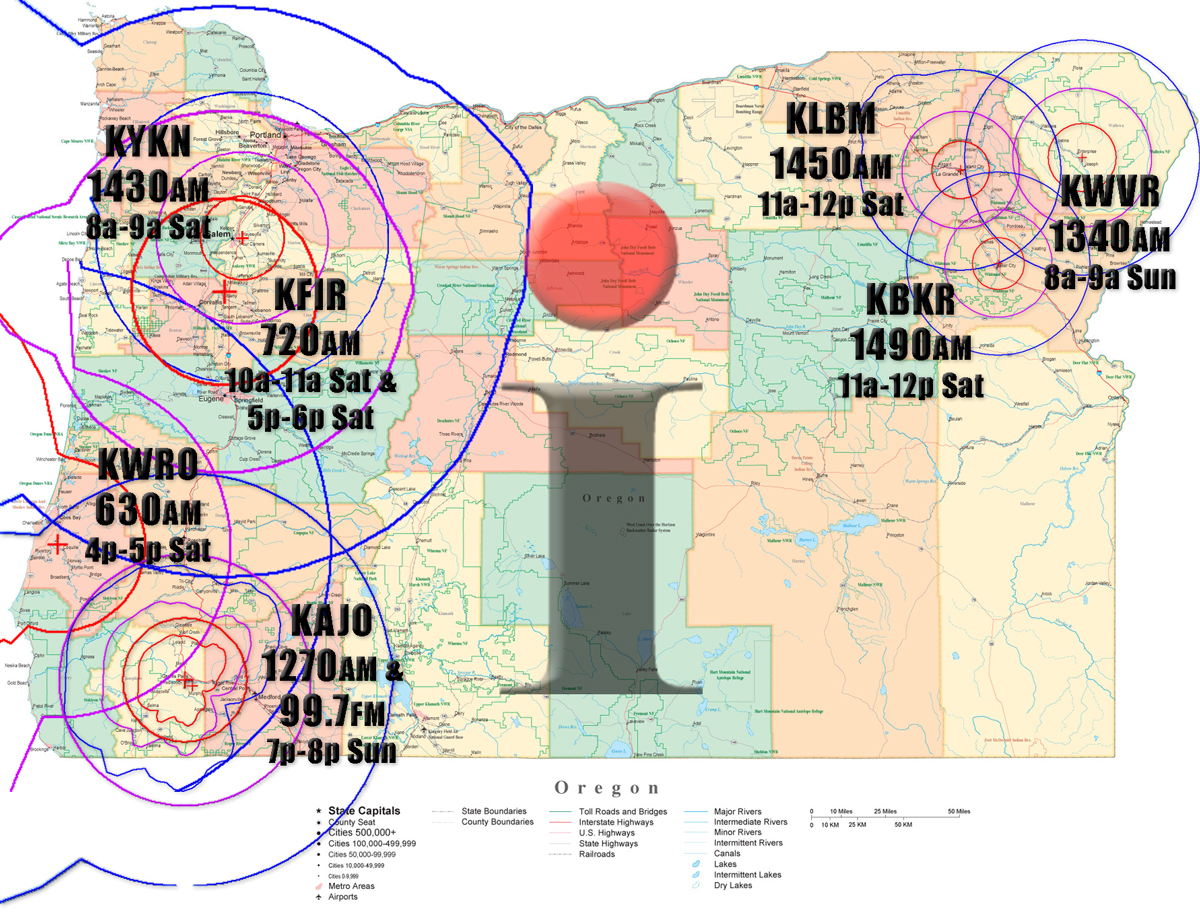
The I Spy Radio Show airs weekends — seven times across seven real radio stations, not internet-only streams. Listen anywhere through the stations’ live streams. See when, where, and how to listen for the full schedule.
Missed it? The podcast posts Mondays, after the broadcast stations air the show — here on this page or on your favorite platform.
★ Named to FeedSpot’s 30 Best Conservative Talk Shows. Thank you, listeners.