America at 250 — The Revolution as Seen Through Everyday Colonists' Eyes
About this episode
On America’s 250th anniversary, we go past the mythology to ask: what actually drove ordinary people to take on the most powerful empire on earth?
The Declaration of Independence is a document most Americans think they know — but its list of grievances wasn’t written for philosophers. It was written for farmers who couldn’t sell their own crops, merchants who watched their livelihoods strangled from 3,000 miles away, and tradesmen like Paul Revere whose first major ride came the day after the Boston Tea Party, not the night the lanterns were hung in Old North Church. Mark and returning Fourth of July guest Greg Leo work through the Revolution from the ground up: the militias who held the line while a real army was being built, the colonial farmers for whom land ownership was the American Dream the King kept trying to close off, and the merchants and craftsmen whose 100-year tradition of self-directed trade was suddenly taxed and restricted into rebellion.
The conversation moves from the specific grievances of the Declaration to the foundational idea behind all of them — that rights come from the Creator, not the Crown — and takes a hard look at the claim that the founders were merely deists. Hint: the peer-reviewed data says otherwise. The show closes with Oregon’s own threads back to 1776: William Cannon, the only Revolutionary War veteran known buried in the Pacific Northwest; Marion County, named for the “Swamp Fox” who pushed Cornwallis to Yorktown; and Mount Hood — named, in an irony of history, for the British admiral whose defeat made American independence possible.
In this episode
Ordinary People, Extraordinary Times
Mark’s opener on the militias, farmers, merchants, and tradesmen who made independence possible — then Greg Leo on why land ownership made the Revolution more existential for colonists than any abstract ideal.
Paul Revere and Benjamin Franklin — Up Close
Revere’s real first ride (December 1773, the day after the Tea Party), how British economic policy turned a silversmith into a revolutionary, and Franklin’s extraordinary arc from runaway apprentice to statesman — and why he chose to spend his wealth building a nation rather than enjoying it.
The Grievances — Read Through Everyday Colonists' Eyes
No taxation without representation, the Quartering Act, the Proclamation of 1763 cutting off westward expansion, and the strangling of colonial maritime trade — each grievance mapped to the people it actually hurt most.
A Nation of Laws, Not Men — and the Echoes Today
How the specific abuses in the Declaration found their way into the Constitution as safeguards, the parallels between colonial two-tier justice and what Americans see today, and why Abigail Adams’s famous warning to John still resonates.
The Faith of the Founders — What the Data Actually Shows
Were the founders deists or practicing Christians? The Lutz/Hyneman study, the role of political sermons as the op-eds of their day, and why the biblical framework wasn’t just private faith — it was the public political language of the Revolution.
Oregon’s Threads Back to 1776
William Cannon — Revolutionary War veteran, Champoeg voter, and the only man of his generation known buried in the Pacific Northwest. Marion County and its namesake Francis Marion, the Swamp Fox. And Mount Hood, named for the British admiral whose defeat at the Battle of the Virginia Capes ended the war.
Links & resources mentioned
Greg Leo & The Leo Company
- The Leo Company (government and public affairs consulting)
America’s 250th — Oregon Events
- The Sounds of Liberty — Liberty Bell ringing at the Oregon State Capitol (July 4, 2026, 10:30 a.m.; declaration read aloud at 10:30, bell rings at 11:00 a.m.)
The Declaration of Independence & the Revolution
- Declaration of Independence — Full Text (National Archives)
- Paul Revere — More Than the Midnight Ride (American Battlefield Trust)
- The Battle of the Virginia Capes (National Park Service — the engagement that stranded Cornwallis at Yorktown)
Faith of the Founders
- Donald Lutz & Charles Hyneman, “The Relative Influence of European Writers on Late Eighteenth-Century American Political Thought” (American Political Science Review, 1984 — peer-reviewed source for the 34% Bible citation figure)
Oregon’s Revolutionary War Connections
- William Cannon — Revolutionary War veteran (Pennsylvania 4th Regiment), Champoeg voter (1843), buried at St. Paul Cemetery (mentioned in Washington Irving, Astoria, 1836)
- Marion County, Oregon — named for Brig. Gen. Francis Marion, the “Swamp Fox” of the Southern Campaign
- Mount Hood — named by Lt. William Broughton (Vancouver Expedition, 1792) for Rear Admiral Samuel Hood, whose defeat at the Battle of the Virginia Capes (1781) helped end the Revolutionary War
- Jesse Applegate and the Applegate family — son of Revolutionary War soldier Daniel Applegate; led the 1843 Cow Column to Oregon (see ispyradio.com/16-26 for more)
About the guest
Greg Leo is a government and public affairs consultant and the owner of The Leo Company, which helps smaller governments navigate interactions with larger ones. He is an avid amateur historian with a deep interest in America’s founding and Oregon’s history, and a regular Fourth of July guest on I Spy Radio. Greg lives near Champoeg, Oregon — where American settlers voted in 1843 to form the first American-style government on the Pacific Coast.
Full transcript ▸
— Segment 1 —
MARK (00:44): Well, we have been looking forward to this all year long. It is America’s 250th. Welcome. This is our annual 4th of July show. And you know, while celebrating the signing of the Declaration of Independence, we often focus on the founders and those who signed it and the big historical moments — the battles and events that led up to the creation of the Declaration, with the spirit of liberty so beautifully enshrined in it. Endowed with God-given rights, mankind has the inherent right to form governments best suited for them and to throw off government when they become oppressive and no longer have the consent of the governed.
But while the men who signed it get the attention (and rightfully so) there was an entire country filled with everyday, ordinary people. Some of whom rose to do the extraordinary. And others went about their lives in simple but determined ways that made possible that one, truly extraordinary event: the signing of the Declaration of Independence.
One such group was the militias, which had been part of America’s founding from the very beginning. Britain eagerly wanted colonies to get all the wealth they could out of those, but they did not have the money or manpower to protect and defend those colonies. Instead, they were on their own. Americans had been defending themselves for 150 years before 1776. Self-reliance wasn’t a revolutionary idea — it was just what they knew.
Those militia later became the soldiers who fought the war. The army that fought the Revolution was itself a microcosm of everyday people. Most soldiers in the Continental Army were not professionals. They were farmers and tradesmen and merchants — even landed gentry and so many more elements and classes besides. The grievances outlined in the Declaration affected all walks of life, all corners of society.
When the time came to fight for freedom, all walks of American life stepped forward to put their life on the line while enduring all manners of hardships. Some went barefoot in the snow for lack of shoes. Poor shelter. Heat exhaustion in summer. Disease and starvation were a constant threat.
Without people from all corners of society fighting that war and enduring those hardships, the Declaration of Independence had no real meaning other than philosophically. Everyday people willing to sacrifice themselves to defend their God-given rights against the government that chose to take them away. That’s got much more meaning, because that government was violating its sacred duty to defend those rights.
And think of all the other “ordinary,” everyday elements of society at the time — that don’t get the attention but without them, the revolution never could have happened: farmers who had to keep the armies and the nation fed, and on whose land battles were often fought. The merchants who kept the armies and nation supplied with necessary goods — much more than tea and coffee — taking risks and finding ways to import goods and evade British naval blockades, pirates, and privateers. The bankers who took risks to finance them and face bankruptcy should they fail.
Paul Revere — an everyday silversmith, quietly plying his trade, took it upon himself to become one of the trusted couriers for the Committees of Correspondence. But while he gets most of the attention for his ride that fateful night the lanterns were hung in Boston’s Old North Church, by the time he reached Lexington, hundreds of other riders, alerted by Revere, were already fanning out all across the countryside, spreading the alarm to the far-flung Minutemen.
What made all of that happen — leading up to the Declaration and what happened afterward — was that people got involved. They took action. They didn’t sit idly by. They found ways to contribute, even if indirectly, simply by leading their lives in an ordinary way during an extraordinary period of history. And took action and contributed what they could, where they could.
The extraordinary Ben Franklin is another example. In fact, he set the example. In America, he had the ability to rise above his station, accomplishing something he almost certainly never could in any other country of the time. Penniless, he became a self-made man and rose to greatness. He believed you make yourself a success and in doing so, you can make your community great. And together, those communities make the colony — the state — a success. And together, the United States great.
That rising up, that rising together, and the desire to be free and independent to be able to make the best of yourself and everything around you, and making sure others also have those same chances.
That’s what led to the Declaration of Independence, that desire to be free. What they faced was truly oppressive, and that desire for freedom was so strong, they were willing to challenge the most powerful nation on Earth to finally break free.
I’d like to welcome Greg Leo back as our regular guest for our Fourth of July shows. Greg is a government affairs consultant. His company is the Leo Company, and he is an avid, amateur historian with a passion for America, its founding, and for Oregon’s history as well. Greg, welcome back — this time for the big one — America’s 250th!
GREG: Thank you Mark. It’s a great year to celebrate 250 years of American freedom.
MARK: Yeah, absolutely. So, this year’s theme is looking at the Declaration of Independence from the viewpoint of everyday people, why it mattered to them, because the list of grievances that we all know are listed in the Declaration of Independence were not just issues important to the signers, but to the people that they were representing. All of those complaints listed there directly impacted their lives and livelihoods. So, in terms of the average people —
GREG: The average people did drive it because, you know, there had been a series of outrageous acts by the king — the Stamp Tax and the Intolerable Acts. And of course, the British government was trying to pay for the French and Indian War. They saw the colonies were doing well financially and there was a lot of taxation without representation.
A theme we hear today, and the average person was really unhappy about the government that sat across the sea, which really did not allow them to have access to basic services in government.
MARK: Yeah. You know, there are all sorts of people that we could be focusing in on. But let’s start with the people that did the initial fighting. The militias. As I said in my opener, Britain wanted colonies but couldn’t afford to defend them. So, it was up to the people to defend themselves. The very notion of independence and self-reliance and defending yourself — that was deeply ingrained into American culture.
GREG: Absolutely.
MARK: April 19th, 1775, when the opening shots were fired at Lexington and Concord — militia musters had been a longtime community institution, and they weren’t soldiers out there. They were your dad, your brothers — your neighbors. Those militias provided the vital first wave that gave the revolution time. They were disjointed, informal and unpaid, but they slowed the British long enough for a real army to be built.
And I didn’t know this, but apparently on court days — which were a day of the month when the county court convened — everybody came to town to do official business because the courts were in session. And those court days, that’s when they held the militia musters. The entire community turned out, and they were watching the drills and the shooting and then afterwards they hosted festivities. And it all just sort of became a county fair atmosphere.
GREG: You know, everybody participated in the common defense. And of course, a lot of that was living on the frontier — primarily an agrarian society. So, you know, the basic farmers were ones that were very familiar with firearms. They were, you know, hunting game and excellent shots. And so, the idea of organizing for a common defense and the use of the militias really was the start.
Most of the people who fought the revolution were very young. I mean, my ancestor Ephraim Heyward, he was 14 when he joined and he fought throughout the revolution, ending up being the drum major at Yorktown. So, it was mostly farmers, merchants, people from the cities or tradesmen. And it was very young people, for the most part, people in their 20s.
MARK: Right. And so, speaking of farmers — for the revolution, it was in a way more existential for them than it was for anyone else, because their stake in all of this was the land itself. And that was very different from what was going on over in Europe, where, yeah, there was some private ownership of land, but it was becoming harder and harder to do that.
And that’s why so many people emigrated to the US, because there was that promise of land, not just for you, but to be able to pass that farm down to the next generation. And of course, when you had the Proclamation of 1763 that prevented westward expansion, that meant they had no new lands then that they could be handing off to their kids, or that they could go settle.
GREG: Exactly. And being able to extend into the Ohio Valley was a big question. And of course, the Crown was trying to reserve all those lands for their own designation. So, it was a long series of events that brought them to Philadelphia. But the Continental Congress actually drafted — and you know what? We’re celebrating the 250th anniversary of the Declaration. The Declaration, as you say, is really a set of grievances. And basically saying that we will no longer be subjects of the Crown, but rather we will be citizens, self-governing, in a republic.
MARK: Yeah. And another aspect of that, too, is people probably don’t think of the typical early American farmers as businessmen. But before the war, the British government had imposed heavy duties on agricultural products from the colonies — tobacco and indigo, wheat and livestock — and then also limited what colonists could export and where. And so those restrictions created some pretty deep resentment because the Crown limited their earnings potential.
GREG: Exactly right. And they sold, in many cases, inferior goods that were set out and sold at very high prices, trying to create a trade imbalance. But the taxation on panes of glass, on paper — on just anything that the Crown could put a tax on in order to raise revenues to pay for the French and Indian Wars and the defense of the colonies.
MARK: And, you know, for farmers, this wasn’t some abstract philosophical discussion. They were fighting for liberty, for the right to be able to sell their own crops where they chose and keep what they earned. Another class that was deeply impacted were the merchants and tradesmen. And for over a century, what some historians call “salutary neglect,” which meant that Britain was largely leaving the colonies to run their own trade.
And then all of a sudden they started having all these restrictions and taxes. And that came as a real shock after they had gotten used to having more than 100 years of freedom to conduct their business as they saw fit.
GREG: Yeah. And the colonists — the American colonials — saw themselves as British, with complete rights, enfranchisement, and the rights of free British subjects. So, you know, having access to courts, not paying taxes without representation — all of the kind of freedoms that were originally found in the Magna Carta — all of a sudden were not really applying to the colonials.
So it took a long time to come to the point where they said, we need to sever ties with the British Crown. But they got there. And on July 4th, 1776, we celebrate that document, which is really interesting to read in detail because it outlines all these many grievances — from quartering troops in your homes to having to go long distances just to appear in court. Lots and lots of things said in that document that give the structure of American freedom today.
MARK: Oh, absolutely. And I think when you look at these groups of people, what the revolution really asked of each of them was to sacrifice the specific thing they valued most — the farmer, his land and harvest; the merchant, his trade and income; the soldier, his safety, and sometimes his life. These people had everything to lose. All right, we’ll have more coming up — we’re going to talk more about some of those grievances outlined in the Declaration.
— Segment 2 —
MARK (12:52): And welcome back. This is the I Spy Radio Show. It’s our annual 4th of July show. It is America’s 250th, of course, and we’re talking today to Greg Leo. He is a government affairs consultant. And one of the many things he does is counsel small government on how to interact with larger governments. His company is TheLeoCompany.com if you’d like to get hold of him.
And so, Greg, it’s one thing to talk about classes of people like the merchants or the farmers or the soldiers. Let’s zero in on one person where you can really see the impact of why the Declaration of Independence was so important. And this is a merchant, a tradesman — Paul Revere. And of course, he’s best known for his midnight ride.
But by the time the 1775 ride took place, he was firmly in the radical pro-independence camp. He didn’t start out that way. His business began to suffer.
GREG: When he started out, he was so talented. He did the engraving of the Boston Massacre, which really raised people’s concern that they were shooting down protesters in the streets of Boston. And it wasn’t just that he was a wonderful silversmith, but also he was the engraver and helped kind of get the word out.
And the one thing people should know about Paul Revere is he didn’t say “the British are coming.” He said “the regulars are coming” because, at that time, people thought of themselves as British subjects — this is before the Declaration. So, with the whole question of — you know, really the anniversary last year of the 250th of Lexington and Concord, the Battle of Bunker Hill — the kind of action, once George Washington’s army took Boston, shifted south to Pennsylvania.
And so, the Second Continental Congress was in Philadelphia to write up these grievances, working with the success of what happened in Boston, where Paul Revere played an important role. They wrote down the grievances and declared the severing of ties with the king.
MARK: Right. Yeah. And you can see when you look at his particular life as a tradesman, as a craftsman, you can really see how an oppressive government led to that Declaration of Independence — why that oppressive government made him radical. His business began to suffer when the British economy entered a recession after the Seven Years’ War, and then declined even further when the Stamp Act of 1765 caused yet another downturn in the Massachusetts economy. And business was so poor at that point, there was an attempt made to seize his property.
In late 1765, he had 16 kids to support — which I did not know — and to help make ends meet, he even tried to take up dentistry. So, it wasn’t some abstract ideology or philosophy about independence and all that. It was the British abusing his business and British policies that threatened to take his shop. That led him to start getting more and more involved.
And that’s what he did. He stepped up to become a member of the Committee of Correspondence and became a trusted courier for them. His first major ride was not in April 1775 — it was December 1773, the day after the Boston Tea Party, carrying the news to New York. And even before his famous midnight ride, he had already ridden to Concord to warn the radicals to move their military stores.
And so, it’s really important to show how somebody didn’t just sit there and take it anymore, but managed to get involved and put himself forward and put his life and livelihood on the line.
GREG: He’s a fine example of a patriot. And how the Patriots came to the idea of liberty — the things that happened to them personally made them say, we should have control over our affairs. We should have self-government. We should not have a king that’s thousands of miles away who takes from us but doesn’t give us what we need.
And there are so many examples. Thomas Jefferson, who is the primary drafter of the Declaration, had similar constraints. George Washington was tired of being ignored by the British military, and also being sold inferior goods from England. The English did not treat the colonies well, even though British public opinion in many ways supported them.
So, there are a lot of good books on this. Thomas Jefferson wrote the draft. There was a committee of five — Benjamin Franklin and John Adams both were on that committee, Roger Sherman, Robert Livingston — and they wrote an incredible document that was aspirational. First of all, it’s about a grievance. But second of all, it has this idea that we are no longer going to be subjects. We’re going to be citizens, self-governing, having liberty to make decisions for ourselves.
MARK: Right. Another example of an individual who really stepped up was Ben Franklin. And this is a guy who arrived in Philadelphia as a runaway apprentice from his brother’s print shop — his older brother was abusive towards him. He showed up with a Dutch dollar in his pocket and the clothes on his back and whatever other clothes he could carry stuffed into his pockets.
This is a guy who came from an incomplete education — he was largely self-taught — and was so successful that he retired from business at age 42, wealthy enough at that point to spend the rest of his life doing whatever he wanted. He got rich and then spent the rest of his life building things for other people.
He founded the University of Pennsylvania. He founded the Library Company — America’s first public lending library. He founded Philadelphia’s first volunteer fire department. He founded the Pennsylvania Hospital. And it’s just on and on — and this is a guy who organized street paving —
GREG: And the U.S. postal service. He was the first guy to organize the postal service. The Poor Richard’s Almanac was probably the one document that united the colonies with information. And of course, so many great sayings — you know, “a stitch in time saves nine.” He was one of the most brilliant minds of his time and his knowledge was across the board, from science to philosophy to governance, to the practical matters of printing.
MARK: Yeah. He invented the lightning rod and bifocals. He charted the Gulf Stream. So, this is the scientist, inventor, and so many different things. And he was deeply involved with the Declaration of Independence.
GREG: Jefferson did the first draft, and it’s incendiary in many ways — it is meant to inflame. And so, when you read the grievances there, some of those you have to read in context. Nowadays there are things when people read the Declaration today, they say, “Wow, that’s so harsh and politically incorrect.”
Well, this is a document that was there to stir people up and have people rise to the cause of liberty. Jefferson wrote it. I think Adams and Franklin polished it with Livingston and Sherman. And the document that came out was accepted on July 2nd. Adams always felt like we should be celebrating the 2nd of July, not the 4th of July. And it actually wasn’t signed until August — but it was published.
MARK: Yeah. Well, I think it’s really cool that somebody who was as successful as Ben Franklin was — he’d made it in life. He didn’t have to get involved, and yet he chose to because he saw that individual success and civil obligation were the same thing, not opposites. You built yourself up and then you build up your community. And in his case, it was about building a whole new country.
All right, everyone stay with us, we’re going to drill down a little bit more into the Declaration of Independence. It is America’s 250th. Stay with us. More with Greg Leo.
— Segment 3 —
MARK (20:48): And welcome back. This is I Spy Radio Show. We’re talking today to Greg Leo. It is America’s 250th — our annual 4th of July show. And so, Greg, I want to start digging down into the Declaration itself, because it was the assertion that people had natural rights endowed by their creator — not rights given by a king or a parliament or any other government.
These were rights direct from God himself. It was government’s job to protect those rights — life, liberty, and the pursuit of happiness — and that mankind had the right to create governments. But when government fails to protect those rights, mankind had a right and a duty and a responsibility to do away with that abusive government and start a new one.
And so, I got to thinking about this — in some ways, prior to the Declaration of Independence, what the colonists were claiming were rights already guaranteed to Englishmen. They were demanding what was already theirs under English law and the 1689 Bill of Rights. So when they crossed that line from “hey, we’re making these demands” to “all right, we’ve got to make a break here” — it’s because of George the Third’s refusal to acknowledge those rights out of hand, and then he became even more abusive over time. It simply could not go on.
So let’s look at some —
GREG: Yeah, so they basically attacked the whole premise of government. That to secure these rights — governments are instituted among men, deriving their just powers from the consent of the governed. That is so different from the way it was, where you had a king who was given by God the right to govern. This says no.
All of the powers of a government come from the people. And that is a revolutionary idea. But the idea that we have self-evident truths, that the creator has given us certain inalienable rights — that is a magnificent idea and has stood the test of time.
MARK: Yeah, absolutely. So, let’s look at some of these grievances in the light of everyday people — especially some of the groups that we’ve talked about, the merchants and the farmers. I think the one that unites everybody, regardless of whatever class you were in, is the notion of no representation. So talk to us about that.
GREG: Well, the idea that they would pass the stamp tax and the tax on glass and tea — all of those necessities — and these were extremely high taxes that people had a hard time paying. But the idea that Parliament would pass these without any representation from the colonies — they didn’t apply those taxes to British subjects in the British Isles, only in the colonies.
So the idea of not having representation was, of course, one of the key ideas. But also things like separating people from the franchise of government — the laws about who can be in America, the laws of naturalization, and judicial powers that were completely suspended by the British Crown. And so all of these things were absolutely contrary to what they believed were the just rights of man.
MARK: Right. Yeah. Well, everybody paying those taxes — they were all paying into a system that gave them zero voice. Whether you’re a farmer in Virginia or a silversmith in Boston, everybody’s got the same complaint: we’re being governed by people we never elected who answer to a king we can’t reach, and they’re enforcing laws we never consented to.
GREG: Well said. That’s exactly right. “A multitude of New Offices, and sent hither swarms of Officers to harass our people and eat out their substance.” I mean, this is strong stuff and meant as a kind of a call to arms.
MARK: Well, let’s look at the farmers in particular because some of these grievances I think directly applied to them. I think the biggest one being the quartering of troops — the 1774 Quartering Act allowed army officers to appropriate private property to quarter their troops without consent of the property owners. You had no option. And for a farmer, this meant soldiers sleeping in your barn, eating your food, using your firewood, and you had no recourse.
And the Third Amendment —
GREG: And sleeping in your house and having you sleep in the barn.
MARK: Right.
GREG: And such an important idea that, of course, it is part of our Bill of Rights — it’s the Third Amendment. And so something where government unjustly quarters troops on your property without your consent, without paying for the services or the goods that they use, is absolutely tyranny — and called out specifically.
MARK: Right. And another one was the notion of blocking westward expansion. And this was the Proclamation of 1763, and it cut off farmers and everyone else from the land west of the Appalachians. And these were farms that their own sons would have ended up moving on to.
GREG: Exactly right.
MARK: And though the Proclamation of 1763 — it’s not mentioned by name in the Declaration, but that’s what those paragraphs are referring to — “endeavoring to prevent the population of these States” and “raising the conditions of new appropriations of lands.” For a farming family, the whole American dream was land for the next generation. And the king blocked that door.
GREG: And in Europe, these lands were not available to people. In America, they were told that they could come, settle farmland, and then move on to better land. And so this really affected how families would try to increase their ability to support themselves.
So there’s just so many things — removing judicial rights, not having the benefit of trial by jury, transporting them across the seas for court. And then this idea that we are Englishmen who have basic rights, but they’ve abolished this free system of English laws, which was fundamental. And that was not something that they could stand.
MARK: Right. So as far as merchants and craftsmen, there were a lot of complaints that applied directly to them — taxation without representation, but also a cutting off of trade with all parts of the world. Starting with the Navigation Acts of the 1650s, Parliament sought to control colonial maritime trade. Goods could only be shipped on British ships, then only traded with England, and finally, by 1775, all American trade was barred entirely.
So for the merchants and craftsmen, this was watching their entire livelihood get strangled by people 3,000 miles away who had never set foot in their shop.
GREG: Exactly right. And then “constrained our fellow citizens, taking captive on the high seas” — pressing them into service against their country. So they’re literally pressing sailors into service. “They plundered our seas, ravaged our coasts, burnt our towns, destroyed the lives of our people.” I mean, incendiary language, meant to encourage revolt and to justify the severing of ties with the British.
MARK: Yeah, absolutely. So, okay, let’s go take a break.
GREG: A beautiful job by Jefferson. I mean, he made a good case here — a case that people responded to. And it’s like they said, “We have not been wanting in attentions to our British brethren” — so they saw themselves as British, and they knew that British public opinion would basically support them if they could only make their case.
And so it took them a long time to get to the point to sever ties. But once they severed the tie, it was complete.
MARK: Yep. It sure was. Okay. Stay with us. We’ll continue this discussion with Greg Leo. It is America’s 250th. Stay with us.
— Segment 4 —
MARK (28:43): It is America’s 250th and this is our annual 4th of July show. We’re doing that with Greg Leo. He’s our guest every year for these sorts of things. Greg is a government affairs consultant — he helps small governments deal with larger governments. And so, Greg, I want to do a little bit more wrap-up on the Declaration of Independence and what this really meant to the average person, because when you think about what happened — as far as the farmers and the merchants and on and on down the list — this is those people telling the most powerful empire on earth: here is specifically what you did wrong.
And now we’re going to go off and make our own government and make things right again. And as you said, pretty much all of the arguments that were outlined in the Declaration of Independence later found their way into our Constitution to safeguard against these things.
GREG: So, you know, they say here, “For abolishing the free system of English laws” and, you know, establishing or arbitrarily changing our government. Our whole premise is that we’re a nation of laws, not men, and that a king can’t just change things. With the consent of the governed, we can change our own laws, but nobody should come in and tell us how to make our laws.
And so the whole idea here is that the British did not allow a trial by jury. They did transport you to be tried overseas. A lot of times they wouldn’t even give you a trial — you’d just be locked up, put on a prison ship out in the harbor. “They took away our charters, abolished our most valuable laws, and altered fundamentally the forms of our government.” And that is something that any just power should not do without the consent of the governed.
MARK: Right. And a lot of people don’t think of farmers as businessmen per se — especially the early farmers. That’s kind of this notion of, well, they’re all just sort of subsistence farmers. They relied on local courts to settle land disputes, debt cases, property claims. And so a judge who served at the king’s pleasure really wasn’t a judge for everybody — it was more about the king’s interests rather than the people living there.
And in large part, it’s the same thing with the merchants. I mean, imagine being hauled before the Crown’s judge with no local jury. You’re far from home, you’re dragged overseas — what do they know about life on the frontier or your own individual experiences? And so the notion that these are your peers? No. Not even close.
GREG: Yeah. And so “a prince whose character is thus marked by every act which may define a tyrant, is unfit to be the ruler of a free people.” And that is, you know, really at the point of the break — where they have not allowed the laws to occur, for people to participate, for them to be able to seek justice locally. It was all oriented towards protecting the king’s interest.
And so people just said, there’s got to be a better way. But nobody had said this before — this is revolutionary in that, you know, for the first time in history, people became self-governing citizens rather than subjects of royal authority. And that’s the main idea: that we can govern ourselves better than the King can govern us.
MARK: And as far as the courts are concerned, in some ways there are echoes of that today — where you had the British people living in Britain having one sense of justice, and the people in the colonies treated another way. And we see that here now. Complaints about two-tiered justice, where certain groups of people are treated very differently within our own country. But you’re certainly seeing that in England as well. So there are echoes of that even today.
GREG: And it wasn’t perfect. You know, the famous letter from Abigail Adams — to John Adams — “John, don’t forget the ladies.” Yes. Because if you don’t give us the same kind of rights that men have, then expect another revolution. I mean, basically. And the imperfections around the issues of race, around slavery — not fixing slavery — the blemish on American character that caused a civil war later.
So, a more perfect union — not a perfect union — and progress towards self-government that embraces all people, with the certain inalienable rights that everyone should have.
MARK: Right. Yeah. And we’ll come back to those inalienable rights in the next segment, including — what’s the reality on our founding fathers and their faith? Were they just enlightened deists, as many historians would have you believe nowadays? We’ll take a closer look at that next, as we celebrate America’s 250th with Greg Leo.
— Segment 5 —
MARK (33:43): And welcome back. We’re celebrating America’s 250th today. This is our annual 4th of July show. We’re doing that with Greg Leo. Greg is a government affairs consultant. And if you would like to find out more about the work that he does, you can go to TheLeoCompany.com. And so, Greg, moving on now, I’d like to talk a little bit more about why we have the Declaration of Independence, because really, the foundational paragraph of that is the notion that we believe in rights from God — that these rights are given to us by God — and that we institute governments to ensure those rights, to protect those rights.
GREG: We’re given certain inalienable rights that are given by the creator. And of course, in the last line of the Declaration, we say “with firm reliance on the protection of divine Providence.” So really, what they say is the authority comes directly from God — doesn’t have to come through a king — but comes to us from God individually.
MARK: Well, getting back to something that you mentioned earlier about slavery — because I’m seeing a lot of modern historians push the propaganda that America wasn’t ever that great. And these are historians on the left, of course — that it was founded on slavery, for one thing. And now today’s America must suffer and pay for the sins of its founding. The basis of the reparations movement.
And “America was never great” is, at least in part, the philosophy of those on the left who would push us toward socialism and centralized control — the very thing the founders sought to do away with. A government big enough to take your individual rights away. And really, at the heart of this is that the founders recognized not just that we had rights from God, but the sinful nature of man. That’s the reason why we have to diversify power and impose checks and balances across those three branches of government — so we don’t have a massive centralized government.
So, what can you tell us about the faith of our founders from your own research? Were they “un-religious” as some modern historians would have us believe?
GREG: No, they were very religious. And I think this whole document is based on the authority coming from God. And at the time, the colonials were primarily Church of England people. And when the revolution happened, they sent to the Scots to provide bishops in order to make the Episcopal Church — Episcopal is based on the idea of bishops.
So they went to the Scots, who had already fought and lost their own war for independence some 40 years earlier in Scotland, and were able then to kind of separate out — the king is head of the British church, we have freedom of religion, but we all believe in God, and now we have our own church, which was separated from the Church of England.
So from a religious point of view, it was really about people who had firm beliefs in the creator and that what they were doing was consistent with those inalienable rights given by the creator.
MARK: Well, as far as this notion that they were mostly deists — I think you could maybe say that about Ben Franklin, who didn’t seem to be overly religious — but the vast majority of them, I think, were very strong practicing Christians. And there was an interesting study: the founders quote the Bible more than they quote all other sources from the European Enlightenment — authors like Adam Smith, John Locke, and so on — combined. They quote the Bible 34% of the time, versus 22%.
GREG: And the Bible was the major document of the time that really gave people a moral chart. And I think they were very religious. And when you look at how the revolution played out, there are several times that Washington should have been captured — his army should have been beaten by the British — getting off of Long Island because of a fog that happened at just the right time to be able to row across the sound.
There are several different situations where it really does look like divine Providence intervening in order for Washington and the Continental Army to be saved, to fight another day.
MARK: Right. Well, you can certainly see divine Providence throughout so much of America’s founding, and certainly during the Revolutionary War itself as well. Getting back to the notion that the founders were often quoting the Bible — there was another interesting context to that, which is that three-quarters of the biblical citations came from reprinted sermons, which were one of the most popular forms of political writing back in that time period.
And that really strengthens the point that these were, in fact, practicing Christians — rather than weakening it. Because what it really means is that the biblical framework wasn’t just confined to private faith — it was the public political language of the day. That was how they communicated amongst themselves. The sermons were the op-eds of their day, effectively.
GREG: And in those meeting halls were places where communities gathered and ideas of community interest were discussed. You know, there were revolutionaries in the pulpits who were saying that it was okay to revolt against the king — that we have our relationship with divine Providence that is separate from the king. We don’t need the king and the Anglican Church to tell us what’s right spiritually.
MARK: Right. Absolutely. And, you know, again, when you look at the Declaration of Independence — the central paragraph, the key paragraph that makes all of the rest of it possible — is the notion that all men are endowed with rights from their creator. Not from a government — from their creator directly. Just by the nature of being human, you have those rights inherent.
And so it’s this notion that, while we weren’t entirely founded on pursuing religious rights, that was certainly a key element of it. Which then, you know, fast-forward from the 1600s into 1775 — that was so central to so much of society at that point. So this notion that “oh, well, they’re not really religious” or “they’re deists” or “they’re not really Christian” — I just don’t buy that.
GREG: No. And it’s quite clear that the creator gave us the inalienable rights. And among those — there are many, many rights — but among those he calls out: life, liberty, and the pursuit of happiness. And really, that’s such a great summary. What God wants us to do is be happy in life. But liberty is about the treatment of other people around us as well as ourselves. And we all have the right to life — our lives, our liberty — and being able to pursue the lives that we seek.
MARK: Yep. Absolutely. All right, everyone, stay with us. We will wrap things up here with Greg Leo coming up — we’re going to be talking about Oregon’s connections to America’s 250th as well. Stay with us.
— Segment 6 —
MARK (40:56): And welcome back on our final segment here on our annual 4th of July show. It is America’s 250th. And we are doing this with Greg Leo. He’s a government affairs consultant and his company is TheLeoCompany.com. And so, Greg, it seems strange to think that Oregon was not a state at the time — in fact, we hadn’t even claimed this territory yet for America. And yet Oregon has some ties to America’s 250th. So go ahead and tell us about those.
GREG: We absolutely do. And of course, Robert Gray was discovering the Columbia River about the same time as the revolution. But there are three things that I always like to mention.
First, William Cannon was a Revolutionary War veteran who’s buried in the Saint Paul Cemetery. I believe he’s the only veteran of the Revolutionary War buried in the West. And we celebrate him every year — decorate his grave. He was one of the Astors, came across the continent to form Astoria.
Second is that Marion County — the county seat where Salem, our state capital, is located — is named after Francis Marion, known as the Swamp Fox. And other people may think of him as Mel Gibson in the movie The Patriot, which is loosely drawn on Francis Marion. He was quite a guy — he really pushed Cornwallis in the southern campaign to end up at Yorktown, and so he played an important role. There are over 20 places around the country named after Francis Marion, including another county in Ohio.
And finally, Mount Hood is named after the British admiral who lost the Battle of the Virginia Capes — Rear Admiral Hood. Really, if he had not been beaten by the French at the Battle of the Virginia Capes, then Cornwallis would have been able to move his army up to New York and the war would have continued. But because Hood lost the battle to Admiral de Grasse, Cornwallis was stranded at Yorktown, got surrounded by Washington, and that’s how the war ended.
MARK: Well, who named Mount Hood? Was that sort of a dig at him?
GREG: Looks like Broughton was part of the Vancouver Expedition and took a small boat up the river, saw the magnificent mountain, and basically was sucking up to his boss who sent him on the expedition. So, yeah, I believe we should rename Mount Hood. I would think — maybe something like Abigail Adams would be good. You know, something other than naming it after a failed British admiral.
MARK: I think when you look at what happened with Oregon, the revolution didn’t just create a nation — it created a culture of self-governance. And that notion then traveled west. The men who fought the revolution, and the sons and daughters who grew up in that shadow — they were the ones that headed west. And they made their life in the wilderness where there was no civilization, no civil support in terms of streets and roads and all the rest — much like the original colonies when they first formed.
GREG: So true. And when they started self-government at Champoeg in 1843, that was all American-style self-government — the first self-government on the Pacific Coast. So we were the first place on the Pacific that had American-style self-government, and the roots for that all come right out of this Declaration of Independence. It’s about self-governance. It’s about us making our own laws and being a government for and by the people.
MARK: Well, getting back to William Cannon — you had mentioned that he’s the only Revolutionary War veteran known to be buried in the Pacific Northwest. He was born near Pittsburgh and he fought in the Revolutionary War, joining the Pennsylvania 4th Regiment. And when he came across to Astoria, what’s really cool to think about is that this is a guy who fought to create this nation, but then spent the rest of his life pushing that same frontier of self-governance all the way to Oregon. So he didn’t just stop being a patriot when the war ended. He carried that same sense of patriotism and independence all the way here.
GREG: He was one of the signers, one of the people at Champoeg who founded the provisional government. And his name is on the monument at Champoeg. He actually voted with the American settlers that this would be an American-style self-government, not a British colony.
MARK: Yeah, well, another secondary tie is the Applegate family — and we don’t have time for that today. But I will post it up on this week’s show page, which is ispyradio.com/16-26 to find that. So as far as other ties to the 250th — Oregon is having a bell ringing here on the grounds of the Capitol.
This show will air both the weekend before the Fourth and also the weekend after. So, if you’re hearing this before, we hope that you can make it. And if you’re hearing it after, then we hope you already went. So, tell us real quick about that.
GREG: You are all cordially invited. It’s called The Sounds of Liberty. And all across the country — in Philadelphia, Washington D.C., every state capital — we will be ringing the Liberty Bell. So, we have a Liberty Bell replica on the grounds of the state Capitol. We’re going to gather at 10:30. We’re going to read the Declaration aloud, just as Americans have done for the last 250 years. And at 11:00, we’re going to ring the bell — and all across the country we will all be ringing the bell at the same time to show a unified nation celebrating our liberty.
MARK: And that is really cool. And speaking of time, unfortunately, we are up against that. Greg Leo, I want to thank you so much for your time. Have a fantastic Fourth this year.
GREG: Celebrate your freedom.
MARK: Thank you!
America at 250. You really have to wonder what our Founders would think of the republic they gave us. Then, as now, freedom faces a lot of threats.
Socialism is one of the biggest ones right now. Socialism seeks to take away God-given rights and replace it with an authoritative, centralized government that allows you certain rights.
The threat of rampant immigration with people who are not coming here to contribute, but to take from America’s success.
And make no mistake about it. There is a war right now against Western culture. And America is the main target of that.
That’s why we say, “Freedom is an everyday fight.” Be part of that.
Because as we say every week — the best information does you no good if you don’t use it.
Reagan? What do you think?
Catch the show live
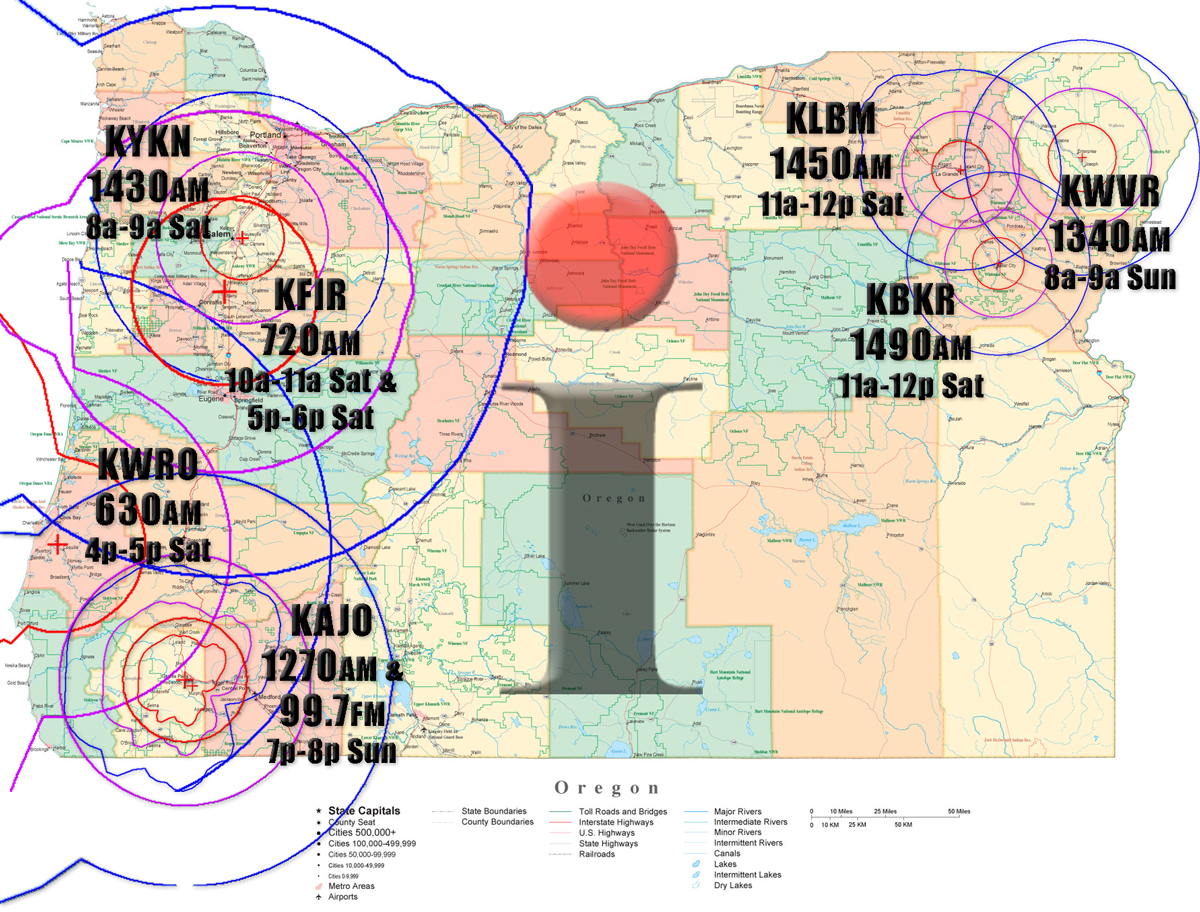
The I Spy Radio Show airs weekends — seven times across seven real radio stations, not internet-only streams. Listen anywhere through the stations’ live streams. See when, where, and how to listen for the full schedule.
Missed it? The podcast posts Mondays, after the broadcast stations air the show — here on this page or on your favorite platform.