The Dangers of Fraud — and the Fight to Stop It
About this episode
The media tell you there’s no election fraud — or, pressed, not enough fraud to change an outcome. So how do they know? Did they examine the ballots? The voter rolls? Or did they take the word of experts hired by the same officials who ran the elections?
This week is about fraud in two forms. First, Florida attorney Peter Ticktin — a friend of President Trump since their military-school days and attorney for former Colorado clerk Tina Peters — returns to answer The Atlantic, which featured him on September 23 in “The Supporters Urging Trump to Declare Martial Law for the Midterms.” Ticktin disputes the magazine’s framing of what he said, and lays out his case on voting-machine vulnerabilities: the cellular modem chips he says sit on ES&S tabulator motherboards, the Dominion election-management software, and his claims of Chinese and Serbian involvement. Mark floats a provocative idea — prove the machines can be flipped by doing it live — and Ticktin rejects it flatly: “We need to be America.” His answer instead is turnout, hand-count audits, and the 2018 national emergency on foreign election interference, which the President extended for another year on August 31.
Then the hour turns to Oregon, where the fraud is paid for with Medicaid dollars. Jeff Eager, founder of Oregon Roundup, updates the story he broke: Uplifting Journey LLC, a Lake Oswego “group home” that billed the Oregon Health Plan $2.3 million in under a year, drew some twenty police calls, and housed three men who, prosecutors allege, went on to kidnap, torture, and shoot a woman in the Seattle area. This summer, prosecutors identified the third man — found dead in a roadside ditch in Crown Point, Indiana.
Eager’s newest reporting follows a related company, Versa Force LLC, whose former residents say they were recruited from Portland homeless service providers, then directed to apply for Washington’s Medicaid program using a Vancouver homeless shelter as their “address.” Why can’t anyone follow the Oregon money? Because roughly ninety percent of it runs through coordinated care organizations that are not subject to public records law. Mark adds one more black box: the state records exemption that has hidden how $1.4 billion in affordable-housing money is spent, while the cost per unit has climbed to about $540,000.
The hour closes on the 5,600 pages of governor’s office emails Eager just pried loose about First Lady Aimee Kotek Wilson’s role in state government — what he can and can’t say yet, how it compares to the Kitzhaber scandal, and how any Oregonian can file a public records request of their own.
In this episode
Media Fraud and The Atlantic’s Hit Piece
Mark on the “trust the experts” defense. Then Peter Ticktin on why the media won’t investigate, President Trump’s speech on China, and the three scenarios for November that The Atlantic attributed to him — including the one he says he never said.
The Nightmare Scenario
Ticktin on the impeach-and-remove scenario from his Las Vegas speech, why he believes Trump won’t leave office again over a rigged election, phone chips in ES&S tabulators, Dominion’s WinEDS software, and the case for hand-count audits.
Could White Hats Prove It on Live TV?
Mark’s provocative proposal to demonstrate a vote flip on air — and Ticktin’s firm no. Plus why turnout still matters, what a 2021 DOJ–DHS report meant by “since 2018,” and the national emergency declared in Executive Order 13848 and extended August 31.
From an Oregon Group Home to an Indiana Ditch
Jeff Eager recaps Uplifting Journey: $2.3 million in Oregon Medicaid billing, twenty police visits, a Seattle-area kidnapping — and the newly identified third man found dead in Indiana. Why the charging records may be stuck in Cook County.
A Medicaid Loophole That Crosses State Lines
Versa Force, a Portland–Tigard house filled from homeless service providers, residents directed to apply for Washington’s Apple Health with a Vancouver shelter address, the CCOs that are exempt from public records law, and $540,000 “affordable” apartments.
5,600 Pages from the Governor’s Office
Eager’s public records haul on First Lady Aimee Kotek Wilson’s role, the Kitzhaber comparison, and a quick how-to on filing your own records request. Mark closes: it’s not just how we elect people — it’s who we elect.
Links & resources mentioned
Peter Ticktin & Election Integrity
- The Supporters Urging Trump to Declare Martial Law for the Midterms (The Atlantic, September 23, 2026 — archived copy, no paywall)
- Key Findings and Recommendations: Foreign Interference Targeting Election Infrastructure or Political Organization, Campaign, or Candidate Infrastructure Related to the 2020 US Federal Elections (PDF) (U.S. Department of Justice & Department of Homeland Security, March 2021)
- Executive Order 13848 — Imposing Certain Sanctions in the Event of Foreign Interference in a United States Election (The American Presidency Project, September 12, 2018)
- Continuation of the National Emergency With Respect to Foreign Interference in or Undermining Public Confidence in United States Elections (Federal Register, September 2, 2026 — signed August 31, 2026)
Jeff Eager & Oregon Roundup — The Medicaid Fraud Investigation
- Oregon Medicaid Fraud? What We Know (Oregon Roundup, December 30, 2025 — the best place to start)
- The Tren de Aragua Trail of Terror (Oregon Roundup, January 4, 2026 — following the alleged gang members, and Uplifting Journey “patients,” from Oregon to Washington)
- Oregon Group Home to Indiana Ditch: Prosecutors ID 3rd Man in Seattle Torture Case (Oregon Roundup, July 29, 2026 — Nelson Daniel Ramos-Rivas, from a Medicaid-funded group home to a roadside ditch)
- EXCLUSIVE: Medicaid “Loophole” Crosses State Lines (Oregon Roundup, April 6, 2026 — Versa Force and the Washington Medicaid applications)
- The Case of the Missing Homeless Medicaid Co. (Oregon Roundup, April 27, 2026 — Versa Force is not in the strip mall its website claims)
- Oregon Roundup on Substack (subscribe for the upcoming governor’s office email story)
Oregon’s Secret Affordable-Housing Spending
- Oregon lawmakers seek to open up affordable housing records following ProPublica’s reporting (OPB / ProPublica, September 17, 2026 — $1.4 billion since 2021, and about $540,000 per unit)
About the guests
Peter Ticktin is a Florida attorney and founder of The Ticktin Law Group. He and Donald Trump were classmates at New York Military Academy as teenagers, and he has represented the President in litigation, including Trump’s 2022 lawsuit against Hillary Clinton. He has served as counsel to former Mesa County, Colorado, clerk Tina Peters, and is a prominent voice in the election integrity movement, pressing for federal action on voting-machine security ahead of the 2026 midterms.
He is a returning I Spy Radio guest.
Jeff Eager is the founder of and lead content creator for Oregon Roundup, a Substack covering Oregon politics and government. He is a business lawyer with Eager Law PC, a former political consultant, and a former mayor of Bend. His reporting on Uplifting Journey and Oregon’s Medicaid oversight gaps — built largely on public records requests — has made him one of the state’s leading independent investigative voices.
He is a returning I Spy Radio guest.
Full transcript ▸
MARK: When media talk dismissively about election fraud and say there isn't fraud, isn't that itself a kind of fraud? It's media fraud. There is election fraud. And when you push them, they admit, “Okay, there is some amount of fraud — but not enough to change outcomes.”
But then you ask them: how do you know there isn't enough to change the outcomes? Have you looked? Have you examined the ballots and the voter rolls? And how do you know those ballots in the ballot box were cast by those voters who should be casting ballots into that ballot box?
And then they say, “Well, no, we didn't personally examine any of that. But the experts did.”
Okay. So who are the experts, and who hired them?
“Well, the state officials hired them.”
You mean the ones who administered the elections hired the experts to examine the elections — the end result of which was the people paid by the elections officials found that the people who paid them to examine the elections did not commit fraud, and there was no fraud in the election. That's your evidence that there is no election fraud?
So let's get this straight. You say there's no fraud, but then there is at least some fraud. You admit you don't know, but you are relying on experts whose work you either did not check, or don't have the expertise yourself to check. So it's just… trust them?
On today's show, we're talking about fraud, and we'd like to start with Peter Ticktin. He is a Florida attorney and a lifelong friend of President Trump — they went to the same military academy back in high school. And Peter Ticktin has been deeply involved in the election integrity movement. Peter, it's great to talk to you again.
PETER TICKTIN: It's my pleasure. I'm glad to be here.
MARK: So I'd like to touch on my open there a little bit. Has any major media source ever done any genuine investigative reporting on voter fraud or election fraud — or, like, global warming and the vaccines? We're supposed to just trust the experts and not question what we're told.
PETER: You're raising a bunch of issues all together — and you do so because you're right about each one of them. Yes. That's what we're expected to do: believe what they tell us, when they don't even have the decency to cover public statements that are issued by President Trump.
I mean, you look at the speech that President Trump gave on July — I'm sorry, was it? Yeah, it was July sixteenth — where he, for the first time, explained that China is involved in our election situation and in our fraud. And they are. The machines that have been made under the auspices of Venezuela, where they had Serbians basically do the programming — and Serbia being a satellite of China at this point. Plus the fact that we know that so many of the parts in these computers come directly from China, which is completely illegal.
MARK: Well, just to go back to the media — they keep claiming that there's no fraud. But have they ever done an actual deep dive, that you know of? Any major media source, like the New York Times, that is out there repeating that there is no election fraud — have they ever honestly looked and done some actual investigations into that?
PETER: No, no, no. They can't do that. They're bought and sold. It's not as though the media is a free, neutral voice that is there to educate the public. We know what the media is now.
I think the people that are best informed are actually going to different videos on YouTube and different podcasts and so on. There's a lot of really good, responsible reporters that are telling the truth, for or against Donald Trump — but they're not going to be found on ABC, CBS, NBC, or public radio or public TV.
MARK: No, sadly enough. Well, speaking of media, there was a hit piece on you in The Atlantic that came out September twenty-third — so good timing on that, at least. We appreciate that. The title of it is “The Supporters Urging Trump to Declare Martial Law for the Midterms.” It's a very ominous one, talking about all these conspiracy theories. And not surprisingly, considering the source, they basically claim that any claims of election fraud are baseless, because there's no evidence of widespread voter fraud, or even really the potential for it.
They zeroed in on what you see as three possible outcomes for this fall's election. So let's start there. What are the three possibilities that you see?
PETER: Okay. One possibility is that the election will be fair. We're not sure exactly what has been negotiated or worked on between China and Donald Trump this week. We're not sure of what's been worked on by the arrest of Maduro, and stopping Venezuela from participating and providing their means of subverting the elections.
So there is the possibility — as in 2024, when members of the Department of Defense were able to neutralize the data center that was located in Belgrade, Serbia, which, for that election, frustrated their ability to control what the machines were doing. That's why Donald Trump is the president of the United States, because of that, in 2024. That was Patrick Byrne who was responsible for that. He's the one that saved America, frankly — because otherwise we'd have President Kamala Harris. We'd have more and more people coming over the border every single day. And we would lose America to the Chinese and to the cabal.
MARK: The other options in there — the first being a smooth election, the second being that Trump takes some actions before the election to prevent cheating. The last one you mentioned is that he might declare martial law on or around November third. And quoting from—
PETER: No, that's not what I said. I didn't say that.
MARK: I know, but that's what they're saying that you said.
PETER: I know, I know. Well, that's because November third is Election Day. What I'm saying is, if it turns out that the elections are rigged again, where the country is to be stolen again… People don't realize that, but the midterms are very dangerous if they flip enough Senate seats — or if the machines do that, or if the voters do it, one way or the other. That's why we need everybody to get out and vote. We need to make sure we keep our senators. But—
MARK: Too big to rig. So let's go ahead and take a break there. I want to come back to this Atlantic article, because it's a real hit piece — and again, just this notion that election fraud couldn't possibly be happening, although there's clearly some things they missed. Everyone stay with us. We'll continue with Peter Ticktin after this.
MARK: And welcome back. We're talking to Peter Ticktin, a lifelong friend of President Trump since they attended the same military academy for high school. Peter is an attorney. He runs the Ticktin Law Group down in Florida, and he's been in the middle of some of the biggest election integrity fights over the last four years, including as lead counsel for Tina Peters.
I'd like to return to that Atlantic article — we'll link that up on today's show page. But if you want to do a search for it, it's “The Supporters Urging Trump to Declare Martial Law for the Midterms.” Cue the spooky music.
So in that article, they say Ticktin described a nightmare scenario in which electronic voting equipment, central to many 2020 conspiracy theories, diverts votes from Republican candidates to Democrats and delivers the party control of Congress. Democrats would then have enough support, including from anti-Trump Republicans, to impeach and remove Trump and Vice President Vance from office. They go on to say that you predict Trump wouldn't stand for it. And quoting you, they say: “There's not another soul on this planet that understands what it is to be the president of the United States and have to leave office for a rigged election so someone else can step in and steal the country.” He then added, “He's not ever going to do that again.”
So talk to us about that. Is that, in fact, representative of what you said? And if Trump was to intervene, how would that play out?
PETER: Yes, it's very much what I said. I just don't believe that Donald Trump would give the country over again, knowing how much harm they would do to the country. Frankly, I mean, his life would be gone. But I don't think that that's what motivates him. Once you get to be eighty years old, surviving for a long term is out of the question one way or the other anyway. And it's not as though he doesn't have the fortitude — the intestinal fortitude — to do what's necessary for America.
I know Donald Trump. I lived with him when we were seventeen, and he's the same guy. He's not afraid. But he's not going to let the country suffer the sacrifices that happened last time — only, going forward, it'd be far worse.
So that's my point. He gave up his office. He had a peaceful transfer of power to people that he knew stole the country — were stealing the country. He knew that the election was rigged. And he knew that it wasn't Biden that fixed the election, because Biden couldn't fix a flat tire. It's not like he did it. So if he didn't do it, who did do it? And we know now, from President Trump's speech on July twenty-six, that it was China that was behind it. So it's an invasion of our country.
MARK: Oh, absolutely. I imagine there's probably some interesting conversations going on at the White House this week, since Xi is right there.
PETER: Yes, he is right there. And believe me, Donald Trump doesn't trust him as far as he can throw him. And he's a heavy man, so I don't think he can throw him very far.
MARK: So The Atlantic interviewed you, apparently, after your speech there in Las Vegas. And of course, they're very dismissive of these ideas that any voting machine could be tampered with — although that's been demonstrated in court. I'm curious if you ever asked them: have you ever even looked at the fact that some of these voting machines have phone chips in them? Does that not make them the least bit curious, that a voting machine would need a phone chip in the first place?
PETER: Right. The ES&S machines — that's what they have on the motherboards of the tabulators. They actually have phone chips. And they have the audacity to tell us that these machines are air-gapped, meaning there's no wires that go to them. But you don't have a wire to your cell phone. These are cell phones, in effect. They have phone chips that are the robust kind that are used by first responders, and they're made in China, and they're in those machines.
But we also know that Dominion machines also allow interference — not exactly in the same way. It uses a program or a system called WinEDS — Windows Election Data System. And we have testimony from Eric Coomer, who was one of the people that worked in the 2020 election as the head of security and the head of product strategy, whatever that means. But we know that he was a programmer that worked on these machines to establish them, with the folks from Serbia who program the machines.
So we know the machines are able to determine the outcome of the elections. And that means that China, not the American people, are behind these. And if that happens to come off again, they will have the ability to not only impeach in the House, but then remove both Donald Trump and JD Vance — after they elect Hakeem Jeffries to be the Speaker of the House. Hakeem Jeffries is third in line. Remove Donald Trump, remove JD Vance, and the president of the United States will be Hakeem Jeffries. And that's the nightmare scenario.
MARK: Oh, absolutely. We've only got a couple minutes left with you in this segment. Could you talk to us a little bit more about that server farm in Serbia that you said was taken out? Why is that not front-page news everywhere? And why not just throw that in the face of organizations like The Atlantic?
PETER: It doesn't matter what you do. The president got on national TV and advised that China was involved in our election theft, and it didn't do any good. Nobody's paying attention. They didn't even show up, and they didn't report about it. So you get the president giving a prime-time speech, and the media don't even report on it.
So we know where they are and what they are. But we have a big base. We're the silent majority, not the loud minority — they're the loud minority. We just need to make sure we get out there. Don't get discouraged because of this, because ultimately the votes will count — especially if Tina Peters gets her way, and after the machines count, we go into an audit of the ballots and count it again by hand.
MARK: Well, I honestly don't know why that's not par for the course in every election. Every single one of them should be hand counted, just to verify. I think they ought to start with that, if nothing else. Okay, let's see what the machines say, and let's see what the humans say. I think that would be a great first step.
Okay, it is time for a break. Is there a simpler means to get to election integrity? We'll talk about that next with Peter Ticktin.
MARK: And welcome back. We're talking about fraud today, and we're doing the election fraud side with Peter Ticktin. He's a Florida attorney and lifelong friend of President Trump. We're talking about that Atlantic article, and the nightmare scenario they talk about is that Trump would have to get involved. We're not exactly sure what that would look like, or what he's already got planned.
But regardless, what they described in that Atlantic article was that electronic voting equipment — central, as they say, to many 2020 conspiracy theories — would divert votes from Republican candidates to Democrats, and then deliver party control of Congress over to the Democrats.
So maybe there's a simpler means to get to election integrity. Why not have white hats in the FBI or DOJ or CIA divert votes in the election machines from Democrats to Republicans? Democrats say it doesn't happen and can't happen. So let's just do it. Hack the elections, flip votes — a live demonstration that yes, this does and can happen. Seeing that effectively live on air would be like watching the airplanes crash into the World Trade Center. It would send a shockwave: these elections can't be trusted. It would force the issue, and demand an immediate course of action to ensure all votes are valid, cast by valid citizens. Thoughts on that?
PETER: Okay. So you've got two parties, Democrats and Republicans. Neither one exists. The Democrat Party is now MAGA, except for certain RINOs that are in there still. And the Democrat Party is made up of Democrat socialists — in other words, communists. They've been taken over by them, and by the causes of the World Economic Forum. I'm not sure exactly who made up the rules for DEI, but this mentality is not part of the American makeup. This is foreign. And they've penetrated most of what we have.
But the point is that MAGA is still America, where the Democrat Party is not. The Democrat Party wants to change everything. They think that communism is a good idea. If they would only go and live in a communist country for a little bit, they'd find out that it's the worst idea.
MARK: Yes. I would be happy to pay tickets for people to go there.
PETER: Okay — count on me, I'll pitch in.
MARK: We'll all chip in.
PETER: Yes. So what we have are two different systems. And for us to take what we have and mirror them — with their lawlessness, and their destruction of America and the destruction of our election systems — would not be a good idea. We need to continue to have a government that is responsible. Because otherwise, we could do it right now. We could just simply do what they're planning to do.
We don't even need to stack the Supreme Court, and neither do they, and they know it. All they need to do is ignore the Supreme Court. The president is the executive branch. They're the ones that have the military. They're the ones that have the ability to police the country in any way they want. If these other people get elected, the way they will police America is going to be horrible.
I mean, it's as stupid as gay people supporting—
MARK: Muslims. Yeah.
PETER: Islam.
MARK: It's like you're supporting things you have no clue what they actually say or mean or do.
PETER: If you go over there and you're gay, they'll throw you off a six-story building. That's what they do to gay people. So do we want to become like them, so we can shock everybody into seeing what the other side is doing? No, no, no — please, God, no. We need to be America. We need to save this country, not destroy it just by different people.
MARK: So, circling back around to my suggestion there. First of all, could the DOJ or FBI or somebody hack those election machines effectively live on air, and say, hey, yes, we can in fact hack these, and we have flipped these votes? Do you think that would send a shockwave through the elections, and finally shock people into, hey, we have got to do something?
PETER: Yeah, I understand. They're not hacking the machines. They control the machines. These machines were invented for them. Produced.
MARK: Well, then why not just prove it? Why not just do it and say—
PETER: We do. We have proved the things that I'm saying. I'm not just saying we have chips on the machines, on their tabulators.
MARK: Well, but I mean, do it on such a scale that it would flip the elections, and the Democrats — and the media — would actually have to admit, okay, this is a real thing.
PETER: Well, those that the media have already caused to have Trump derangement syndrome — for those people, there's no waking them up. They are the way that they are. The only way that we're going to be able to beat them is to get out and vote, and then deal with the fact that there's been interference with the elections, and get to the underlying ballots.
But if our people don't get out and vote because they think, oh, well, it's fixed anyway — well, please, for God's sake, then it's on you, because you'll have destroyed this country by not casting your votes. We need them. If everybody thinks like you, that you don't have to get out there, then we need to change that. So please, for God's sake, wake up and understand your right to vote. Yeah, it's only one vote — what difference does it make? It makes all the difference in the world. Because if you're thinking that way, other people are thinking that way. Reverse your thinking, so that en masse we can get out there and overcome the local stuff — the ballot harvesting — and knock out the machines.
MARK: So we've only got about a minute here with you. There was a report issued by the DOJ in March of 2021 — so you would have Trump crossovers and Biden appointees then starting to administer this. The report is on foreign interference targeting elections. And they say several things there within the recommendations. “Since 2018, election officials, political organizations, and campaigns implemented significant defensive measures,” they say. “Since 2018, election officials have incorporated software bill of goods and breach notifications into acquisitions and contracts.” And “since 2018,” they have “partnered nationwide and worked together in unprecedented ways to combat foreign interference efforts.” They mention “since 2018” a number of times in that 2021 report. So what happened in 2018?
PETER: Well, in 2018, that's where we actually have an executive order that declares that there is an election emergency. So that's already accomplished. What we need is an executive order that declares what needs to be done by the states because of the emergency.
MARK: Well, but the way that they're responding, it sounds like they're admitting that there was a problem uncovered in 2018. That, of course, was the reason for the executive order. But they don't really describe — at least I don't recall them actually saying — yeah, there was foreign interference in 2018.
PETER: Yes, the order in 2018 does say that there's an election emergency. And that was dealt with again on August thirty-first of this year, with another order that extended the order that declared the emergency for another year. So that was August thirty-first that that occurred.
MARK: Well, yeah. And they wouldn't be issuing those if there wasn't actual interference — which, unfortunately, places like The Atlantic have ignored. Unfortunately, we're going to have to leave it there. Peter, I want to thank you so much for your time today.
PETER: It's really my pleasure. It's so important to get the word out. People need to know what's going on. This is a time like no other. And I will tell you that people like Donald Trump — to quote from the Book of Esther — he's here for times such as these. So thank you for getting the word out. It's so important.
MARK: Thank you.
MARK: And welcome back. This is I Spy Radio. We're going to shift gears now a little bit in the types of fraud we're looking at, and we're going to welcome back Jeff Eager. He is the founder of and lead content creator for Oregon Roundup on Substack. He's a business lawyer, former political consultant, and former mayor of Bend, Oregon. Besides being a previous guest on I Spy Radio, his claim to fame was breaking a fraud investigation into a government-funded group home run by members of Tren de Aragua. Jeff, welcome back. Good to talk to you again.
JEFF EAGER: Great to be back. Thanks for having me.
MARK: Absolutely. We're excited to get some updates here, because the last time we talked was way back in mid-April — it seems like years ago now. So remind our audience what exactly it was that you uncovered, and let's get some updates on that.
JEFF: For over a year now, we've been covering this situation where a company by the name of Uplifting Journey LLC operated a house in Lake Oswego, Oregon, where they housed people and, in theory, gave them telehealth counseling from a nurse practitioner somewhere else — probably Texas — and billed Oregon Medicaid, which is the Oregon Health Plan, some $2.3 million for those types of activities in the course of less than a year.
That house in Lake Oswego was visited by Lake Oswego police some twenty times while Uplifting Journey operated it — reports of women screaming in the backyard, van loads of people being unloaded and loaded in the middle of the night, people racing motorcycles up and down the street, drug use, et cetera. Not the kind of thing one would expect in a clinical environment where people are, in theory, receiving Medicaid-funded treatment.
But that's not the weirdest thing about that house. That kind of thing, I think, happens a lot in Oregon, where the controls on Medicaid spending are—
MARK: Missing?
JEFF: …fairly nonexistent. Yes. But the oddest thing about this house is three guys that lived in the house — three guys that were, in theory, receiving this Medicaid-funded treatment from Uplifting Journey. In January of '25, they went up to the Seattle area and kidnapped a woman. They had planned this. They robbed her — she had some gold on her, some cash — and they used a power drill while they had her in their car to force her to give them her PIN number, so they could get into her bank account. And they drove up to the pass east of Seattle, shot her, thought she was dead, left her alongside the highway, and then came back to Oregon and went their different ways.
So all of that we've reported over the last year. The newest thing that came up this summer is that one of those three guys had never been identified. And he was identified this past year by the King County Prosecutor's Office in some random DNA filing. His name is Daniel Ramos Rivas. And it turns out he was murdered in Indiana. They found his body alongside a highway in Indiana, some weeks after all of this went down out here in the Pacific Northwest with the kidnapping and the drilling in the Seattle area.
There are suspects. And I believe, reading between the lines, the suspects are the other two guys who were involved in the kidnapping up in Seattle, who are incarcerated in the Seattle area. But no publicly available charges have been filed that I could find, last time I looked.
What this does is — it doesn't complete the story, but it kind of tells how it all ended. These guys left this Medicaid-funded group home in Oregon, kidnapped this lady, thought they had murdered her, and fled to the Midwest, which we knew they did. But this is what they did to one of their buddies, it appears, once they got to the Midwest: left him dead in a roadside ditch.
MARK: Well — fun people. Getting back to what you said there about the lack of publicly available charges being filed: is that typical, that you wouldn't be able to find what somebody's being held for?
JEFF: Well, maybe, maybe not. What's not clear from my reporting so far is — we know where they found Daniel's body. That was at the intersection of I-65 and US 231 in Crown Point, Indiana, which is near the Illinois border. But the other two were arrested at a Red Roof Inn in Lansing, Illinois, which is like forty-five minutes away. So there's a question as to where — assuming this was a murder — the murder was committed.
Lansing, Illinois is in Cook County, Illinois, which is the same county that houses Chicago. And Chicago, being the way it is, does not make criminal cases available online. So charges, and whatever is happening in a criminal case — which is online in places like King County, Washington, and even in Oregon, if you know how to find it — you cannot get those records online. If there are charges filed, and if those charges are filed in Cook County, which is possible, then those charges are not available online, and I would have to show up at the Cook County Courthouse and say, can I see a copy of this? Literally, that's how you have to get those records.
I know that in Indiana there are no charges in the county where the body was found. So I suspect charges may have been filed in Cook County, and I just can't get them. But I don't know that for sure.
MARK: Well, somehow that doesn't surprise me at all about Illinois. But what we're seeing here in Oregon, from what you described — it's the same recipe, same ingredients as the fraud in Minnesota. You cut police funding. There's no immigration enforcement, and they will actually fight you if you try to enforce against illegal immigrants and get those people removed. You open the door wide to illegals. Add a few handfuls of racism — because you're racist if you look at these illegal foreigners committing the fraud — and then turn a blind eye to the fraud itself. Oh, and attack people exposing the fraud. So it's like we're Minnesota West here.
All right, everyone, stay with us. Same recipe, different bread. There's a new recipe being exposed. We'll talk about that next with Jeff Eager, lead content creator for Oregon Roundup on Substack.
MARK: Jeff Eager is the founder of and lead content creator for Oregon Roundup on Substack. He's a business lawyer, former political consultant, and former mayor of Bend, Oregon.
So, Jeff, you've got another story that you have begun uncovering. This is another Oregon company associated with Uplifting Journey, as I understand it — Versa Force LLC. It operates a group home in the Portland–Tigard area. According to two former residents of the house, they and other residents were solicited to move into the group house from Portland homeless service providers. There's another twist to this, though — but let's go there first. What can you tell us about that situation?
JEFF: This is a separate house in the Portland area that, last time I checked, which was a couple months ago, is still operating. Uplifting Journey abandoned that Lake Oswego house after the attempted murder. This other company, named Versa Force, shares common ownership, or at least leadership, with Uplifting Journey, in the person of this guy that goes by the name of Julius Maximo, who is likely from Uganda originally. I think he lives in Boston, Massachusetts now. He was out here a lot over the last few years in Oregon, setting up these group home things that billed Medicaid.
The way that this Versa Force house worked — it's right on the border of Portland and Tigard — is they would go to homeless service providers in Portland and say, hey, we've got a house for you guys to live in. You just have to do some telehealth counseling. And then they'd load them in a van and take them to this house, which is just — I've been there — a normal cul-de-sac in the Portland–Tigard area. And then they'd have them live there. The only thing they had to do in exchange for living there was go through four hours a day of telehealth counseling. In this one, we know that telehealth was provided by a nurse practitioner out of Texas. And they did that every day.
Versa Force somehow was getting paid. The State of Oregon says that they did not directly reimburse Versa Force. However, something like ninety percent of Oregon Medicaid spending goes through these co-ops, these nonprofits, called coordinated care organizations. And you cannot get public records from them. They are not subject to public records laws.
MARK: Because they're a nonprofit. Yes. Our old friends, the coordinated care organizations. But anyway…
JEFF: And it's just a massive loophole in the Medicaid fraud scene in Oregon.
MARK: It was designed to be that way. The way that bill was put in place back in 2011, I think it was — it was designed to be that way. It was designed to hide money. They put it into a giant pot. You can't see where it's coming from, who gets it, whether the person that's supposed to get it does, in fact, get it. It is a massive loophole. It's a slush fund. A giant slush fund.
JEFF: So it's possible Versa Force was getting paid, directly or indirectly, from the CCO. But what we do know happened — that I think is just blatantly fraudulent and illegal — at the Versa Force house: these homeless folks from Portland are taken to Tigard, and then they are required by Versa Force to apply for State of Washington Medicaid…
MARK: Even though they're living in Oregon.
JEFF: Even though they're living in Oregon. And at least in the case of one of my sources, he and his wife were already on the Oregon Health Plan. They get to the house, and Versa Force tells them, okay, that's fine, but you've got to apply for Apple Health, which is the name of Washington's Medicaid program. And they did that. As far as I can tell, all of the residents of this house had to, as Oregon residents, apply for Washington Medicaid — which is just flatly illegal. You can't be a resident of Oregon and receive Medicaid benefits from the State of Washington. And we know that was happening when they were there.
MARK: Well, doesn't Washington Medicaid, when they're paying things out, have any kind of requirement that you, in fact, live in Washington? Isn't there supposed to be some form that says, hey, I'm at 123 Main Street in downtown Seattle, or whatever address it ought to be in Washington?
JEFF: Yes. And so when these folks applied for Washington Medicaid, they had to provide a Washington address that they said was their residence. Versa Force had them supply an address which — I went to it — is a homeless shelter in Vancouver. And in the case of my source, he had never lived there. He had never been to that address. But that's the address that he filled out on his form for Washington Medicaid, as directed by Versa Force. And so all of that is illegal as all get-out.
MARK: Jeepers. So there's another twist in this — but it is legal, because there's a law in Oregon. Building homes for the homeless is extremely lucrative. Billions have been poured into it, and nothing is solved. But we care, because we spend somebody else's money. It turns out there's a state law that doesn't allow disclosure of how much is spent on homelessness housing. And it's gotten so ridiculous, and so lucrative, that the cost of building one apartment is well north of five hundred thousand dollars. I mean, this is just another open door to commit fraud.
JEFF: Yeah, for sure. What's happened with housing in Oregon, in my view, is a joke. Because like you said, these quote-unquote affordable units cost a lot of money, and it all ends up getting paid by taxpayers one way or another. And a lot of them aren't even full. So you have this homelessness problem in Portland. You have, in some respects, housing shortages in Portland. And the government's just plowing billions of dollars into these quote-unquote affordable housing units, and it costs five, six, seven hundred thousand dollars to create each unit. That's not affordable. The whole system is just broken.
MARK: No, absolutely not. It kind of makes you wonder if these homelessness sites are going to be major ballot drop sites. I'd really like to look at the voter rolls, to see how many of these homeless sites are, in fact, on the voter rolls with registered voters.
All right, everyone, stay with us. There's a new twist coming up that Jeff just mentioned on X. We'll talk about that next.
MARK: And welcome back to our final segment here on I Spy Radio. We're talking today to Jeff Eager. He is the founder of and lead creator for Oregon Roundup on Substack. He's a business lawyer, former political consultant, and former Bend mayor as well. And he's the guy who broke Oregon's Medicaid fraud story.
And now you may be on the cusp of breaking another one, because this morning on X, I came across a post of yours: “Sorry, Oregon's going to have to build a new data center just for me. I just got five thousand pages of email records from the governor's office.” So I assume you weren't investigating how many times she mentioned Trump, because it would be far north of five thousand pages. So what exactly prompted you to start looking into this?
JEFF: So this is a public records request. A lot of what I do to report the stuff I do is make public records requests to these agencies. And this one, to the governor's office, has been pending since June. It was kind of difficult getting the records out of them.
The request was for emails to and from her former chief of staff, Chris Warner, who left June second, that involved Aimee Kotek Wilson. Aimee Kotek Wilson is Tina Kotek's wife. Early in Kotek's term, there was a big scandal, reported originally by Willamette Week, that Aimee had accrued all this power in the governor's office, and that power caused Kotek's chief of staff then — Andrea Cooper was her name — to leave, and then some other top staff. It was a big deal.
So what I'm doing is trying to update that story, more or less. What is Aimee doing in the office? And to provide Oregonians with an update on what the first lady's role is in state government. That's what the purpose of that records request was. And I'm in the process of going through five thousand pages of emails, to write that story eventually.
MARK: I know you just got them, but are you finding anything interesting so far?
JEFF: Yes. I'll withhold the findings for the eventual story that comes out, and I don't even know for sure what the top findings will be. But the fact that I got five thousand pages — it's actually, I think, five thousand six hundred pages of emails, where they're searching for keywords involving the first lady — that I got that volume out of what I think was nine months or a year's worth of emails… Aimee Wilson is very involved in the governor's office, at least as of June second of this year.
MARK: Well, five thousand pages — that's an awful lot of pages for recipes. It's got to be more than just that sort of thing. I think it was — what was it — Kamala that got caught… So, based on publicly available stories that were already out there about her involvement, would you hazard a guess here? Do you think it might have crossed the line into full-on illegality?
JEFF: I'm not in a position to say that right now. Part of it is, Oregon gives a lot of leeway to what the first lady does. And even in that first scandal, the scandal itself wasn't based around illegality. The scandal was based around: why is the governor putting her wife in a leadership position over what they call behavioral health — which means addiction and mental health, basically — when her wife, Aimee, is not, I'm willing to say, the most qualified person to run those types of operations? Especially in a state like Oregon, which suffers worse than any other state, according to some measures, from addiction and mental health problems.
MARK: Well, and just to remind people, this kind of involvement of one's spouse — this is exactly what caused Kitzhaber to be forced to step down. And then we inherited Kate Brown.
JEFF: Yep, that's exactly what went on. What appears to be different about the Kotek situation versus the Kitzhaber situation is, as far as I can tell, there's no money ending up in Aimee's hands as a result of this. That's what got Kitzhaber and his partner in trouble, and got Kate Brown into the governor's mansion.
MARK: When you say no money, are you talking about from government? It's been a long time since I've thought about Kitzhaber and his — I think she was a fiancée at the time. It seems like a lot of that money was coming from outside government and kind of being funneled to her, but it wasn't directly from government.
JEFF: Correct. She was using her position as first lady to—
MARK: Grift.
JEFF: …well, to get paid by people who wanted to influence what the governor was doing. And there's no evidence that anything like that's happened with Aimee Kotek Wilson.
MARK: Or they've just gotten better at hiding it.
JEFF: Yeah, that's always possible as well.
MARK: I mean, you've got to learn from past experiences there. So, we've only got about a minute here with you. For people that would like to look into this kind of fraud — you mentioned public records requests. How would somebody go about doing that?
JEFF: Each state agency, and the governor's office, has a website. So if you just search, like, “OLCC public records request” — for example, the Oregon Liquor and Cannabis Commission — their public records request website will pop up. On most of them, you can just put in your name, address, phone number, and your request, and then hit submit. Now, that's just the first step, and you kind of have to stay on them sometimes about actually producing the records, and they may charge you for the records. But the act of making the request is actually quite simple, in Oregon anyway.
MARK: And as far as the cost — is that dependent on how many pages they find? How do they determine that?
JEFF: I think it's based largely on the volume of production they expect to make. And then sometimes it might be attorney time, because a lot of times they want to have an attorney go through and redact stuff that's not subject to disclosure — maybe confidential. The public records statute has these exemptions for stuff that you don't have to produce. So it's some mishmash of those factors, and probably others, that determines what the agency charges for a public records request.
MARK: Okay. All right, well, Jeff, thank you for what you're doing. And if people want to follow you, they can just head to Substack and look for Oregon Roundup — you'll find them right there. Jeff, thanks again for your time today.
JEFF: Thanks, Mark. Appreciate it.
MARK: Well, isn't that a scary thought? A potential repeat of Kitzhaber. He gets elected, but then they remove him after the election due to scandals, and replace him with Kate Brown, the then–secretary of state.
Getting back to election fraud. Even if you don't want to believe that there might be election fraud — that the elections could be stolen — let's not forget it was the elected government of Barack Obama that invented the entire Russia collusion story.
Impeachment number one was invented, based on false allegations by deep-state Democrat plants misrepresenting a phone call, and then lying about it in committee to force an impeachment vote. Impeachment number two was also invented.
All of that originated with elections — whether those were stolen, or whether they were completely above board. That was the outcome.
It's not just how we elect people. It's who we elect. So let's select the right people, and make it too big to rig. And don't forget those down-ballot races — because, as we say every week, the best information does you no good if you don't use it. Reagan, what do you think?
Catch the show live
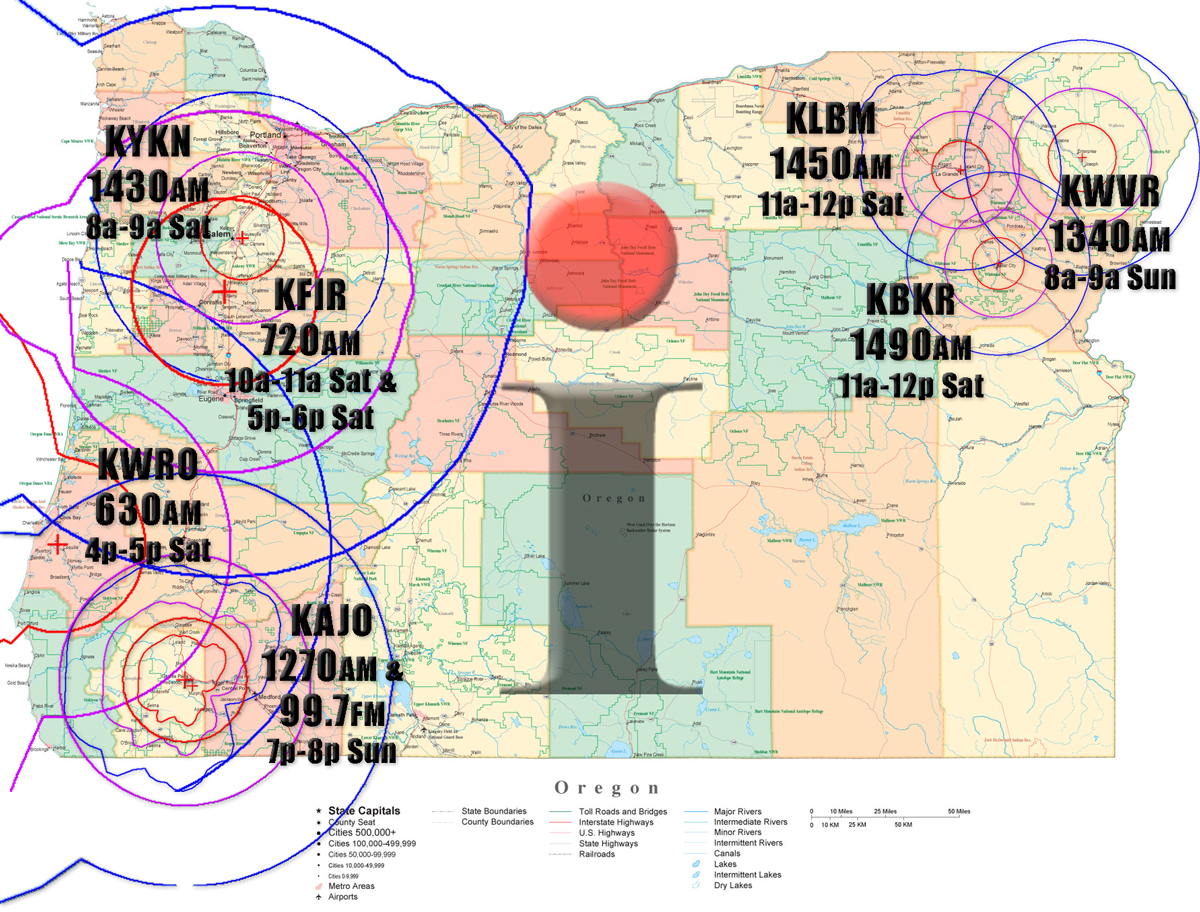
The I Spy Radio Show airs weekends — seven times across seven real radio stations, not internet-only streams. Listen anywhere through the stations’ live streams. See when, where, and how to listen for the full schedule.
Missed it? The podcast posts Mondays, after the broadcast stations air the show — here on this page or on your favorite platform.
★ Named one of FeedSpot’s 30 Best Conservative Talk Shows. Thank you, listeners, for all your support!