Election Autopsy: Ed Diehl on Policy Failures, Referendums, and the Fight Ahead
Outgoing Rep. Ed Diehl of the Oregon Freedom Coalition on what went wrong nationally and in Oregon, and what comes next
About this episode
Election night did not go the way Oregon Republicans hoped. This hour, outgoing Rep. Ed Diehl, president of the Oregon Freedom Coalition, goes through what he says went wrong, nationally and in Oregon, and what conservatives should do in the two years before the next election.
Mark opens with Tuesday’s results and starts at the federal level, where Democrats made big gains. Ed Diehl says he sees no rebuke of Republican ideas and no endorsement of Democratic ones. What he sees, he says, is voters who feel Republicans did not deliver on what they promised, especially on affordability and staying out of wars. Some of those voters sat out the election, and others voted for the other side. Mark and Ed talk about the war in Iran, gas prices as the most effective “mailer” Democrats had, and why Congress has not passed a federal voter ID requirement.
Turning to Oregon, Mark lays out where the Legislature stood on Friday morning: Democrats on track for 39 House seats and 19 Senate seats, one short of two-thirds in each chamber. Ed points to lower turnout among Republicans and non-affiliated voters compared with 2022, and to what he calls a bizarre result: Oregonians rejected the Measure 120 gas tax by 83% in May, then returned the lawmakers who passed it. Ed also says that in every legislative race this year the outcome matched the Democratic-versus-Republican registration of the district, which he says is unusual. They discuss whether Republican candidates should have been more honest about their disagreements with Washington, and why Mark thinks the better message was that 45 other states are doing better than Oregon under the same president.
In the second half of the hour, they turn to what comes next. Ed credits a statewide get-out-the-vote push in the final days, which by his rough count drew several hundred volunteers and about 9,000 doors knocked, and says it should be ten times bigger. He and Mark criticize county parties that spend meetings on parliamentary procedure and platform wording instead of electing Republicans, and Ed lays out his approach: pick the most conservative candidate who can win each seat, start now, and take a hard look at how campaign money and consultants are used. He says he would like to see runoffs for crowded statewide primaries.
Ed then explains what can be referred to voters. In his telling, any bill without an emergency clause can be referred, tax increases cannot carry one, and the unsettled question is what counts as a tax rather than a fee. He argues the Climate Protection Program is a tax routed through a California nonprofit, says the Oregon Freedom Coalition has a constitutional amendment drafted to define the difference, and says supporters of the universal health plan will return to the Legislature in the coming session asking for money to finish their report. Mark and Ed also discuss Measure 111.
They close on the Oregon Freedom Coalition. Ed describes an “action-oriented” group he wants to grow to 100,000 members paying modest annual dues, organized neighborhood by neighborhood in what he calls a cascade model, and he explains the group’s structure: a 501(c)(4) and an education arm, the Oregon Freedom Foundation, a 501(c)(3). Mark finishes with a reminder that the best information does you no good if you don’t use it.
In this episode
Why Republicans Lost Ground Nationally
Mark opens on Tuesday’s results and welcomes outgoing Rep. Ed Diehl. Ed says he sees no rebuke of Republican ideas and no endorsement of Democratic ones, but voters who felt promises on affordability and staying out of wars went undelivered. They discuss the Iran war, gas prices and the stalled voter ID bill.
Oregon’s Results: The Same People, Back in Power
Where the Legislature stands, lower Republican and non-affiliated turnout, and Ed’s puzzle: Oregonians rejected the gas tax 83% to 17%, then returned the lawmakers who passed it. Plus whether Republicans should have run against Trump or against Oregon’s record.
What Republicans Did Right, and What Has to Change
A statewide get-out-the-vote push in the final days, county parties and precinct committee people, and Ed’s case that every meeting should come back to one goal: getting Republicans elected.
Pick Winners, Fix Primaries, Question the Consultants
Start picking candidates for the next cycle now, the most conservative candidate who can win, runoffs for crowded statewide primaries, and campaign dollars Ed says go to people who make a good living losing.
Emergency Clauses, Tax or Fee, and the Universal Health Plan
What can be referred to voters and what can’t, why Ed says the Climate Protection Program is a tax called a fee, his proposed constitutional amendment, and what to expect from the universal health plan in the 2027 session.
Building a 100,000-Member Grassroots Army
Measure 111, why Ed doesn’t see it as a repeal target, the Oregon Freedom Coalition’s membership and “cascade” model, how the 2027 campaign finance changes fit, and Mark’s close.
Key questions about Oregon’s 2026 election and what comes next
How close are Oregon Democrats to a two-thirds majority after the 2026 election?
On unofficial results through the morning of Friday, November 6, Democrats led to hold 39 of 60 House seats (up from 37 sitting members, a count that includes Rep. Cyrus Javadi, who switched from Republican to Democrat in 2025) and 19 of 30 Senate seats (up from 18). Two-thirds is 40 in the House and 20 in the Senate, so they were one seat short in each chamber. Three seats changed from Republican to Democratic at the ballot box: House District 21 (Michael Welsh over Rep. Kevin Mannix), House District 52 (Hank Sanders) and Senate District 11 (Virginia Stapleton). The Republicans' thinnest holds were House District 15 (Shelly Boshart Davis, ahead by 1,165 votes) and Senate District 16 (Courtney Bangs, ahead by 3,319). Results stay unofficial until the counties and the Secretary of State certify them.
What is the difference between a three-fifths and a two-thirds majority in the Oregon Legislature?
Three-fifths of each chamber (36 House members, 18 senators) is enough to pass bills that raise revenue (Oregon Constitution, Article IV, Section 25), and Democrats already hold more than that in both chambers. Two-thirds (40 and 20) is the quorum needed to do business (Article IV, Section 12) and the margin to override a governor's veto (Article V, Section 15b), so a party at two-thirds can act even if the minority stays away. Measure 113, approved in 2022, treats 10 or more unexcused absences from floor sessions as disorderly behavior that disqualifies a legislator from the next term, and the Oregon Supreme Court held in 2024 that the disqualification applies to the member's immediate next term.
What is an emergency clause, and why can't it be used on tax increases?
An emergency clause makes an Oregon law take effect immediately, and a law with one cannot be sent to voters by referendum petition. The Oregon Constitution bars declaring an emergency in “an act regulating taxation or exemption” (Article IX, Section 1a), so tax acts can be referred. Ed Diehl says emergency clauses are being used on things that are not emergencies. He also says the harder question is what counts as a tax: in his telling, the Constitution does not define raising revenue, courts have been left to decide, and the Climate Protection Program is a tax that has been labeled a fee. State officials describe the program differently, as a cap on emissions with a credit-purchase option.
How did Oregon voters treat the gas tax and fee increase, Measure 120?
Measure 120, which would have raised fuel taxes, vehicle registration and title fees, and a payroll tax for public transportation, was rejected in the May 19, 2026 primary. The official abstract of votes shows 1,012,663 No votes to 207,066 Yes, about 83% to 17%, and No won in every one of Oregon's 36 counties.
How did the governor's race turn out?
The Associated Press called the race for Gov. Tina Kotek early on Wednesday, November 4, according to OPB. In OPB's count with 88.69% of the vote reporting, Kotek had 53.31% to Christine Drazan's 43.69%, with Green Party candidate Brett Smith at 2.86%. Drazan said on election night, “This race isn't over,” and had not conceded in that report.
What is changing in Oregon's campaign finance law in 2027?
House Bill 4024, passed in 2024, sets contribution limits for Oregon candidate campaigns for the first time, beginning in January 2027; contributions to measure committees remain unlimited. In 2026 the Legislature enacted House Bill 4018, which raises the limits for multicandidate and small donor committees, adds independent-expenditure-only and recall committees to the category without limits, sets staff-time limits for membership organizations, requires anyone spending $50,000 or more on independent expenditures in a campaign to disclose donors, and delays several HB 4024 provisions, including the online campaign finance dashboard. The legislative summary points to 2031 for several of the delayed provisions. On the show, Ed Diehl said the Oregon Freedom Coalition is structured so there are no restrictions on the funding that can come in, and that the new rules still need to be clearly defined. I Spy Radio has not independently determined how the rules apply to the Coalition.
What does Oregon's Measure 111 say, and does Ed Diehl want to repeal it?
Measure 111, approved by voters on November 8, 2022, added Section 47 to Article I of the Oregon Constitution. It makes it the state's obligation to ensure every Oregon resident has access to cost-effective, clinically appropriate and affordable health care as a fundamental right, and says that obligation must be balanced against the public interest in funding public schools and other essential services. Diehl says the Oregon Freedom Coalition is not targeting it for repeal. He calls it a “nothing burger” that still sets a tone, and says the group's focus would be the tax increases that would fund a universal health plan.
Links & resources mentioned
Our Guest
- Oregon Freedom Coalition (Ed Diehl, president)
Oregon’s 2026 Election Results
- Oregon Secretary of State: General Election results (unofficial until certified)
- Oregon Democrats appear on track to expand supermajority in Legislature (OPB, November 4, 2026)
- 5 takeaways for Oregon and Washington after Tuesday election (OPB, November 2026)
- Early returns show Democrats on track to tighten grip on Oregon Legislature (Willamette Week, November 3, 2026)
- Gov. Kotek says she’s ‘proud’ to serve another term, but Drazan says ‘this race isn’t over’ (OPB, November 4, 2026)
- Kotek takes commanding lead over Drazan in early election returns (Willamette Week, November 3, 2026)
Measure 120 and the May Primary
- Oregon voters reject gas tax, Christine Drazan wins GOP nomination (OPB, May 20, 2026)
The Oregon Constitution: Referrals, Emergency Clauses and the Supermajority Math
- Oregon Constitution (Oregon Legislature — Article I, Section 47 (Measure 111); Article IV, Sections 12 and 25; Article V, Section 15b; Article IX, Section 1a)
Campaign Finance Changes in 2027 and Beyond
- Oregon Overhauls Campaign Finance System for 2027, Imposes Contribution Limits for First Time (Wiley — HB 4024)
- Oregon enacts campaign finance changes, three other election bills in 2026 (Ballotpedia News, April 23, 2026)
- HB 4018 measure analysis (Oregon Legislature, 2026 Regular Session)
- Oregon lawmakers reveal reworked plans to partially delay campaign finance law (Jefferson Public Radio, February 11, 2026)
Climate Protection Program and Universal Health Plan
- Community Climate Investments (Oregon DEQ)
- DEQ selects a California-based nonprofit to lead its climate investment program (Jefferson Public Radio, July 12, 2026)
- Universal Health Plan Governance Board: 2026 meeting materials (Oregon.gov)
- Oregon’s Election 2026: the universal health plan and the Climate Protection Program (I Spy Radio, Show 16-42 — the board’s draft costs and taxes, CALSTART and ICAP)
- Sixteen Years in the Making: Oregon’s March to Socialized Medicine (I Spy Radio, Show 16-31, August 1, 2026)
About the guest
Ed Diehl is the outgoing Republican state representative for Oregon House District 17 and the president of the Oregon Freedom Coalition, a grassroots 501(c)(4) group that, according to Diehl, aims to build a membership of 100,000 Oregonians. The Coalition also has an education arm, the Oregon Freedom Foundation, a 501(c)(3). Diehl ran in the Republican primary for governor on May 19, 2026, finishing second to Christine Drazan.
Full transcript ▸
MARK: To nutshell what happened Tuesday: Never underestimate the power of uninformed people in large groups. That. And Wednesday morning, Iran, China and Russia were all celebrating the Democrats’ victories. To talk about what happened, especially here in Oregon, I’d like to welcome outgoing Representative Ed Diehl. He’s from House District 17. He’s also a former Republican governor’s candidate, and he is the current president of Oregon Freedom Coalition, which we will talk about later in the show. Ed, it is good to talk to you today, even despite the news of what happened.
ED DIEHL: Mark and Karla. Great to be back with you. Yeah, it was a pretty ugly… ugly night.
MARK: So ugly is probably too pretty of a word to say what happened. But anyway, so let’s start with the national level where Democrats had massive gains in the House and Senate, because I think the national sentiment had an impact here in Oregon. And looking at the national level, what do you blame for the losses at the federal level all across the nation?
ED: Well, yeah, I knew it was going to be ugly. I didn’t expect it to be as bad as it was. I don’t think anybody did. But, what I’m seeing I think this is really important. I’m not seeing a rebuke of the Republican ideas. And I’m not seeing an endorsement of the Democrat ideas. Absolutely not. We’re seeing people that feel like we’re not delivering on what we promised. So let’s just talk nationally, you know, J.D. Vance wrote about this and I talked to a young man the other day about this very thing that, there’s a lot of people feel pissed and disenfranchised because they voted for Trump on affordability, on staying out of wars.
And he hasn’t delivered on those things. There’s a list of other things too, but he has not delivered on those things. And so some of those people just sat out the election and other ones voted for the other side. So there is a glimmer of hope here, and I want to talk about that. But that’s what I see when I’m looking at the numbers in Oregon. You know, it’s looking like that the Republican turnout is lower. And the non-affiliated voter turnout is lower. The Democrat turnout appears to be higher than it was in 2022. That’s kind of my baseline. I’m using.
So, if you don’t give people a reason to vote, and if you don’t deliver on what you promise, they’re not going to show up.
MARK: That’s unfortunate. And I agree with you. I think that is probably the number one issue as far as on the national level. Because even if you set aside the Iran war issues and how we got into that, the simple fact was that Republicans were sent to Congress to make changes. And we had controlled the House, we controlled the Senate, and they are the ones who sabotaged Trump’s agenda. How is it that we control the House and the Senate could not pass a simple bill? You must have ID to vote and that’s it. Nothing else added to it. Not reform the entire system, just simply to vote.
You must have valid ID that proves you are a US citizen. Period. And that was something that eighty seven percent of voters across all parties agreed on. And yet we couldn’t do that.
ED: And in blue and blue states are passing that I believe Colorado passed something like that. You’re exactly right. So you vote in these people to get something done and they’re not delivering on it. And, I mean, I still showed up, I still voted, I voted for the best candidates, that were available. I voted for Christine obviously for governor and, our state candidates David Brock Smith, you know, but you’re right. A lot of people don’t feel that way. And, I talked to a young man the other day. I’d like to share this. And he, I was just asking this group what happened?
What do you think happened? And he said a lot of his friends, his young friends college age guys were pissed. And they felt, you know, they’re in Oregon and they felt like, hey, you’re not giving me any good choices here and you’re not delivering on what you said you were going to deliver. I’m going to sit this one out and show the Republicans a lesson, and he tried to convince him otherwise. But a number of them did just sit out and not participate.
MARK: And that’s unfortunate. That’s an unfortunate mindset because you’re you know, every election is the lesser of two evils. And so a lot of times you end up getting what you didn’t vote for. And in this case, you got Democrats in there. And so now you’re you, it’s abusive in its own way, in the sense that, you know, I’m going to show the Republicans, but now, okay, I’ve unleashed the power of the Democrats and I’ve rewarded them by not supporting the Democrat or not supporting the Republicans. The other thing too, about the national level, of course, is the war in Iran.
And I think this also played a large role because it was a tangible issue. Republicans tend to message on things like policies and economics and jobs and all the rest. And that’s not how Democrats approach things. They tend to focus on things that are tangible and they focus in on affordability and that war in Iran. Whoever convinced Trump into going in there, that it was always going to be a difficult sell, especially as that dragged on, because what effectively what they were saying is we prevented something from happening. Well, in the average minded person, it’s in the mind of the average person.
It’s not so much that it’s okay. Well, you’re kind of trying to prove a negative. There was no bomb that went off in New York City. So we can’t see the results of that. We’re effectively taking your word for it that Iran was that close to having nuclear weapons. But in the meantime, I’m getting an effective mailer at least once a week, if not twice a week. Every time I fill up my gas tank. That was far more effective than any political matter that could be sent out, is. Instead, my gas tank costs fifty dollars more every time I fill it up.
ED: You’re exactly right. And that issue has come up. And so when I we’re talking about disaffected conservative voters, that’s one of those issues. They’re not happy with the war. A lot of young men are not were not happy with that war. And that was one of the reasons they stayed out.
MARK: Yeah, well, and it didn’t have to turn into the long term engagement that it did. We it should have been much more like Venezuela. Go in, hit them hard and be gone in hours. And instead this just dragged on. I mean, they took out the leadership, the very first like within the first hour. That’s really all they needed to do, send that message. But instead, this just dragged on and on. And I think whoever was giving him that advice, I think they really failed on that one. Let’s go ahead and take a break. There’s so much more to talk about.
We’re talking about the aftermath of the election we’re doing with Representative Ed Diehl. He’s also the president of Oregon Freedom Coalition. Stay with us.
MARK: And welcome back. This is the I Spy Radio Show talking today to Ed Diehl. He is the outgoing representative of House District 17. He’s also a former Republican governor candidate and is the president of Oregon Freedom Coalition. And we will definitely be talking about that in a later segment here. So let’s shift gears a little bit to Oregon. And the results as of Friday morning, Drazan was down by about eight points. Democrats looked to have flipped two House seats and one Senate seat. Currently, if these hold, the House will have 39 Democrats, 21 Republicans. That is one shy of a two-thirds majority.
And in the Senate, it’s the same thing, one seat shy of a two thirds majority where Democrats will have 19 Republicans, 11. There are a couple of races that are somewhat worrisome. Shelly Boshart Davis, I think she’s only leading by about twelve hundred votes with, I think, roughly fifty three percent counted. So how did we lose ground in an era of Kotek and Oregon at or near the bottom in nearly every state-comparison ranking and things like education and affordability and on down the list. We are near the bottom in all of those. And yet we are putting the same people back in power. In fact, we’ve expanded their power.
ED: Yeah, it’s really frustrating. And you got to wonder why. And I think it goes back there. The national headwinds were very strong. And so our candidates had to really do something to distinguish themselves from what was going on nationally. And I don’t think they did a very good job of that at all. And it’s hard, you know, if you’re a Republican in Oregon, you’re saying, it’s all about affordability. We’re going to make Oregon more affordable. And they go, look, you guys are in charge nationally and you’re screwing things up. So are you really going to make it better? And so we, we’re seeing a lower turnout of Republicans and non-affiliated voters.
That’s what the data is showing us in Oregon. And I’m sure those non-affiliated that didn’t turn out are probably conservative minded, non-affiliated. We’re seeing a higher. And I’m again, I’m comparing with 2022 higher turnout among Democrats. And so if you don’t turn out and vote guess what happens? But even with that mark, this is not Oregonians saying we believe in the socialism. We believe in the Democrat agenda. It’s not the bizarre thing is we had, you know, eighty three percent of Oregonians and every county as well just threw down this gas tax and fee increase, you know, overwhelmingly. And then they turn around and vote back in the same people that voted for it, in fact, and then they added—
MARK: Yeah, it’s political insanity. You are voting for the same people that caused the problems and expecting different results. And the problem is, yeah, it’s not an embrace of Democrats and Democrat policies and socialism, but that’s not how the Democrats take it. They are They’re taking it as. This is a clear mandate from the voters that they that everybody wants Democrat policies, including Democrat socialist policies. And because the everyday Democrat didn’t. You know, and that’s something that I don’t understand, is you kept hearing about these Democrats saying, I don’t embrace socialism. I think we need to distance ourselves from Democratic socialists.
And yet they didn’t vote Republican. You’re not going to change the Democrat Party as long as you keep voting for Democrats, no matter who.
ED: And the other thing I’m seeing, I think this is for the first time in years in Oregon every one of these house seats, and every Senate seat that was up, the outcome aligns with the D versus R numbers in those districts. For example, if it’s a House district that has more Republicans than Democrats, a Republican was elected. If it’s a House district that has more D’s than R’s, a D was elected. Usually some Republicans come away with some of those D plus seats. It did not happen this year. It did not happen this year. And again, I’m, I think what we’re going to see is a lower turnout by R’s and just a lack of enthusiasm by R’s and conservative-minded and non-affiliated.
MARK: Certainly the enthusiasm was not there. So you had said previously that Republicans didn’t do a good job. And I agree with that. I think Democrats did a great job of demonizing Trump and all Republicans by association, to the point that they hated Trump more than they loved Oregon, and they were willing to keep Democrats in power rather. And again, voting for the same people that caused those problems. But I think compounding that, Republicans themselves did everything they could to also distance themselves from Trump. So when Republicans themselves are distancing themselves from Trump’s, oh, don’t, you know, don’t want to be associated with MAGA?
I don’t want to be, you know, Trump is, you know, kind of, you know, he he’s got his problems. When Republicans do that, it sends a very different message than when a Democrat does that. And I think that also did not help.
ED: Yeah, I don’t know. Did you see people? I didn’t I say there was an aversion to associating themselves with Trump. And I, you know, I wanted this to be a local election, a state election and not get bogged down by what’s going on nationally, because we know that was not going to work to our advantage. But, I think that what I think people want to hear from Republicans is just be honest about what’s going on nationally. I’m not happy with some of the things going on nationally. Do I think tariffs are a good thing, helping Oregon in particular? No they’re not.
I’m not a fan of this dragged out war. And when it comes to immigration. And nationalizing the National Guard. You know, those guys report to the governor. Not to the president. And so I think what I would want, what I hope to see is somebody say, yeah, I’m a Republican, but these things aren’t going well. And it’s okay to be critical of them, and show that you’re your own person, you’re your own man. And we never saw that,
MARK: No. And I think the other thing too, that they also did not do is once the Democrats had latched onto the idea of blame Trump for everything. When you look at the statewide comparisons, you know, state to state comparisons, Oregon ranks forty fifth, I think, on average or lower on all of these issues. Affordability, housing. Fifty first in mental health. I mean, for heaven’s sakes. But what you have to look at what Republicans I think ought to have done is say, look, okay. Yeah, there are problems with Trump at the national level, but we’ve got forty five other states all doing better than us.
Trump is the president of every single one of those. This is not Trump’s fault. What’s going on here in Oregon? This is Oregon Democrats fault. They’re the ones that have been in charge. And that message never got out there that I could see.
ED: They tried, we tried, but it obviously fell flat. But you’re exactly right. Our issues are not due to, the national situation. They’re induced by Oregon somehow other states given whatever you think about nationally other states are thriving. Oregon is not Oregon’s failing schools are not the fault of President Trump. The fact jobs aren’t growing here in Oregon is not the fault of President Trump. It’s
MARK: No they’re absolutely
ED: But we all know that, and so do the Democrats. And so that’s why they made it a national election.
MARK: All right. Still lots more to talk about with Ed, talking about the aftermath of the election. Stay with us.
MARK: And welcome back. We’re talking to Ed Diehl. He’s the president of Oregon Freedom Coalition. He’s also the outgoing representative from HD 17. And so, Ed talking about the aftermath of the election here. So looking at the party structure itself and the overall Oregon Republican Party, but also getting down into maybe the county levels as well, because I think that’s where the real politics happens is at that county level. What did Republicans do right this time around and what can they build on, do you think, in the next election?
ED: Well, one glimmer of promise was, I think for the first time in my experience, we had a statewide get out the vote effort in the final days of the election. And, that’s something I felt very strongly about since I got into this game, and the initial responses were, oh, Republicans won’t do that. Well, they will respond if you knock on the door. They’ll fill out their battle ballot and sometimes they’ll give it to you. So that that’s great. This go around, we, you know, I was not organizing it. I did participate and encouraged my followers to participate, but we had five hundred and thirty seven or five hundred and seventy people, I think volunteer and some others were paid canvassers.
I think there were nine thousand doors knocked on. But the thing is that needs to be about ten times bigger than that. Yeah. And, but it’s a start. And so I want to build on that. And, that, that’s part of what this massive grassroots effort is to ultimately be able to have a massive get out the vote effort for a conservative minded folks to get them to the ballot, because they’re not. They’re sitting out.
MARK: Well along those lines let’s shift the discussion to what did Republicans do wrong and what needs to change. And just to kind of lead into that because it ties into the get out the vote efforts. My experience has been with the Republicans is they love to debate. They love to discuss things. They love to talk. And but when it comes down to actually doing something, they are less likely to do that. And that’s very different from what the Democrats. They are little busy bees. They like to be out there knocking on doors and doing all these things. And yeah, they like the debate too, but they like the busy work.
And Republicans have a real resistance to that. And certainly some of these county, the county level Republican parties, they’ve got like one hundred, two hundred and some of the larger ones PCPs every single one of those need to be out there door knocking. And if you’re not door knocking, you should be calling. And yet that sort of thing doesn’t happen. So from your perspective, what did the Republicans do wrong and what needs to change?
ED: Yeah, well. Let’s look. What is the goal of the Republican Party? What is the goal of these county chairs? What’s the goal of the PCP? What is it? It’s to get it should be to get Republicans elected.
MARK: That’s actually in their bylaws. That’s as I understand it from. What I remember is that’s the goal is the whole mission is to get Republicans elected.
ED: And I would expand that to say you identify, the best candidates that can achieve victory and you work to get them elected. That is why you exist as a county group. But yet when you go to these meetings, we’ve talked about it. You know, you can go to a meeting and they’ll spend an hour debating Robert’s Rules of Order, and then they’ll spend time on platform sentences here and there in a platform that is not going to win us races. That is not changing the hearts and minds of anybody.
MARK: And I think it discourages the members, too. Yeah.
ED: And the sad thing is, yeah, and I, there’s great people in the party and I’ve got great relationships with them. But there’s people who join, who want to be engaged and want to be active. And they go to these meetings and they go, this is, this isn’t effective. It’s not helping. And, so that attitude has to change. And I’ve talked a lot about it, and I’m going to continue to talk about it as I go around the state. I’m going to be meeting with all these chairs and say, look, guys, we have to focus on what’s important. We have very little bandwidth and you got to focus it.
You got to laser focus it on what’s important and a policy platform that sits on a shelf and nobody looks at it is not making a difference. It’s a waste of your time.
MARK: Yes. Yeah, I totally agree with that. And I think, you know, I worked, and volunteered with multiple candidates. And what frustrated me was looking at some of these organizations and not just the Republicans, but some of the Republican aligned PACs and whatnot. They had an opportunity to help some of these candidates, and they chose not to. And whether it’s politics or anything else in life, if you have a chance to help somebody and you choose not to, and you’re able to help that person, but you don’t. I find that really reprehensible. I find that unethical and immoral is that you can help, but you choose not to.
And I think when it comes down to the Republicans, I think you hit it on the nail on the head. There is really any kind of organization, whether it’s business or anything else. You have to ask yourself, is what we are doing going to accomplish the goals of the organization? And if it doesn’t, if they’re not, then you have to change what you’re doing.
ED: And in business, you have to respond to those signals or you go out of business. Right. But in politics, you know, as a, as an organization, as a county organization, there’s no feedback loop for that. You lose races, but you’re still coming back to the meeting. So this whole mindset has to really has to change. And it is frustrating when you have, you know, we have hundreds, thousands of people across the state. I would say, how many of those actually got out and knocked on doors or made phone calls. There are many of them that are dedicated and doing that over and over again.
But there’s a much bigger number that are not. And they show up, they do show up for meetings, but they’re not showing up for candidates. And if you’re a PCP in a deep red area, that’s great. That is great. That doesn’t mean that, you don’t need to do things, help get out the vote for those statewide elections or go help a district that’s that needs the help. That may be not even in your district.
MARK: If you’re in a safe district, you should absolutely reallocate those resources. Okay. Let’s go and take a break. We’ll continue this discussion with Ed Diehl. He’s the president of Oregon Freedom Coalition. Find out more about them at OregonFreedom.com.
MARK: And welcome back. Talking about the results of the election today. And we’re doing that with Ed Diehl. He’s the president of the Oregon Freedom Coalition. He’s also the outgoing representative from House District 17 and a former Republican governor candidate as well. So Ed just to kind of tap into what we were talking about in that last discussion in terms of what Republicans could be doing better. A lot of times, from what I see, there is a lot of focus on the beginning of an election cycle in terms of getting your officers elected and so on and all of that, and some maybe some changes to the internal structures and whatnot.
And then the rest of the focus tends to not happen really until the election itself, where they start really start focusing on, you know, okay, so this is what we need to do. There are two years in between. And from what I see, they’re not focusing enough on the steps they need to accomplish what needs to happen at the elections. Like, for example, you could be doing more training, you could be practicing going out to vote. In fact, that’s something that should have happened in the primary. The get out the vote effort should have happened in the primary where you could be training people.
Okay, now you know what to do. Come to general. We’re going to be much better armed and able to do this. So what is your thoughts on that?
ED: Well, starting today, you should be identifying who the candidates are going to be for the next cycle. You start that today and you develop a game plan for each one of those candidates. First off, you got to pick candidates who can win. And my philosophy is you pick the most conservative candidate that can win in any given district, and that’s going to look different district to district. And then you set up a game plan for them to win two years from now. And, that in some cases requires, you know, them building some name awareness in their community. But that should start, that’s got to start now.
It has to start now. So I think that’s number one. And again, it’s getting at the, what is the goal? What is the goal? The goal is to get, Republicans elected. That’s the goal of the Republican Party. Or at least it should be.
MARK: Well, you mentioned, we need to identify candidates that can win. And what are your thoughts on do we need to change how we select those candidates. For example, in the primary. The last governor’s race there was I think nineteen candidates in that race. And Christine Drazan won with, I think twenty two percent of that primary. There were fewer this time around. But do we need some kind of maybe a runoff type thing where we don’t have fifteen, twenty candidates out there splitting the vote, and you’ve got a candidate that most people actually effectively voted against. So do we need some kind of structural changes to that?
ED: I’d love to see runoffs for. Maybe for statewide elections when you have a runoff. It costs money to have a second election. But, when you have a crowded field like you do, just say the Republican governor’s race, that was a crowded field. I really liked the idea of having a runoff. And I think the outcomes would be different if you did that.
MARK: Well, the tendency in the immediate aftermath of a loss like this is to sometimes overreact. So what should we do? Versus what or what should we not be doing?
ED: Well don’t give up hope. And this is what people really have to remember very clearly. This was not a rebuke of the conservative issues and the conservative approach. And this is not a rebuke of policies that we know, we support around taxes and government accountability and public safety and improving education. It’s more a statement of, hey, you guys didn’t get done what you said you wanted to get done. So we end up now with the legislature that, in my opinion and many others, is not representative of the people of Oregon. And it’s kind of a little bit bipolar. You know, we have these we vote against taxes and then elect the same people that put those taxes in place.
What in the world is going on? So what we’re doing at Oregon Freedom Coalition is we’re going to focus on those issues that we know are winning issues around taxes, around government accountability, education and public safety that are issues that the Oregon people agree with and are and they’re popular sixty, forty, seventy, thirty, eighty, twenty issues. And we’re going to put those in front of the legislature with a freedom agenda. And if this legislature refuses to act on those issues, we’re going to take it directly to the people. And we’re building a grassroots army. One hundred thousand people strong, that will push back on this legislature that thinks they have a mandate and they do not have a mandate, but it’s up to Oregonians to join us and get in this fight. Otherwise, we’re going to be railroaded.
MARK: Yeah, I’d like to come back to that in the next segment in a little bit more depth. Before we get there though, it’s not just the party, that I think needs to be changing their approach on things. There are other entities out there and talk to us a little bit about the role of the consultants out there, because they have a huge impact on how these races are operated. Who often runs and where they’re going to put their monies.
ED: It’s very frustrating. I think there’s a lot of people that make a really good living losing. And I really don’t think that we’re making the best use of the campaign dollars that are coming in and, you know, there’s a lot there, Mark, but, we really need to relook at how we’re spending our campaign dollars and probably where we’re spending our campaign dollars.
MARK: Right. And I think you’re I think you nailed it too, is that they make a good living losing. There doesn’t seem to be an incentive to actually win. And some of these consultants, you know, of course they get paid whether or not they win or lose. And some of them will play both sides even, they’ll consult for Democrats versus and they’ll consult for Republicans. I think that’s kind of a major concern. But I know of one consultant in particular that was advising a candidate, the consultant charged about one hundred thousand dollars and they, that candidate ended up losing by about nineteen percent.
That’s a lot of money on a loss. All right, let’s go and take a break. Come back. We’ll be talking about what you can do to get involved. We’re talking about the Oregon Freedom Coalition after this.
MARK: And welcome back. This is the I Spy Radio Show talking today to Representative Ed Diehl. He’s the outgoing representative for House District 17. And he’s also a former Republican governor candidate and the president of Oregon Freedom Coalition. And that’s what we want to talk about in this segment. So, Ed, before we dive into Oregon Freedom Coalition, a large part of what you’re talking about is referring ballots and initiatives to the voters. So what talk to us about that process itself. What can be referred to the voters and what can’t be?
ED: Well, any piece of legislation that does not have an emergency clause on it can be referred. Now that emergency clause is something that’s in our Constitution. But frankly, it’s being abused. It’s being used on all sorts of things that are not emergencies. But one thing that they cannot put an emergency clause on is tax increases. So in practical terms, what it comes down to is tax increases can be referred to voters. And, so every, everything else, if they really want it and they know the people are against it. And so they don’t want it referred, they’ll put an emergency clause on it.
MARK: So in terms of taxes, it can’t be used on they can’t be used in the emergency clause on that. Apparently it can be an emergency to shove boys into girls bathrooms. But anyway, besides the point, but when you look at. So I guess it comes down to how in that situation, how is a tax defined? And for example, if they wanted to codify the climate protection program, that’s a carbon cap and trade scheme, would that be considered a tax or is that more of a fee? Which is that a workaround to get around that emergency clause?
ED: Here’s you’re identifying a problem in the Oregon Constitution that needs to be fixed. And frankly, the Oregon Freedom Coalition has a fix for this. The what our Constitution says is any act, you know, I’m paraphrasing here, but any act that raises revenue is a tax or any act that raises revenue requires three fifths majority vote, and it can’t have an emergency clause. But, that’s in a nutshell. That’s basically it. But what we don’t do very well is define what raising revenue is. And so we’ve left the courts to decide what raising revenue is. So here’s how the CPP gets away with it.
If it is a tax that is routed back to fix the problem it exists for. So it’s not considered a tax. So if you say the sky is falling and I’m going to create this tax, that’s going to fix the sky from falling then the state says it’s not really a tax, it’s a fee. And that’s exactly what they’re doing with the CPP. They’re taking this money and it is a there’s no other way to explain it is a massive tax on Oregonians, and they’re routing it through a nonprofit that will then invest in climate justice
MARK: And out of state non-profit no less.
ED: Yes. And out of a California nonprofit. And they’re going to put that money into what they call climate justice programs. And because of that routing through this nonprofit, they can get away with calling it a fee. Now, I’ve got a constitutional amendment that’s already written up that clearly defines the difference between a tax and fee, and would not allow a governor to do something like the CPP. In fact, it would repeal the CPP if this went into effect. Basically, it wouldn’t repeal it would basically say if such a executive order exists, it has to be approved by the legislature with a three fifths vote or it goes out of effect.
MARK: Yeah, taxation via executive order should not be allowed.
ED: So that’s a real problem we have and it’s got to be fixed. It’s a matter of simply communicating it with the Oregon people so they get it. And that’s what we’re working on.
MARK: So the other big one, of course, is the universal health plan. This is, they conveniently push this off until after the election so people couldn’t see it and vote on it. But this would raise income taxes by doubling them. And same thing with the payroll tax. And there’s a host of other taxes in there too that would go up
ED: And a CAT tax increase. It is.
MARK: CAT taxes. Yep. Is one of them. Hotel tax. And there’s like several others that they’d all be going up. However, I think what they’re trying to do there is they’re not calling it a tax. They’re calling it a home health care contribution or something to that effect. Would that get around the emergency clause?
ED: No, I don’t believe that it would, you can call it whatever the heck you want, but it, it’s obviously a tax.
MARK: Right. So I don’t anticipate them. Oh go ahead. Well, let me just say. So I don’t anticipate them actually passing the full universal health plan in this next one. However, what they will do, they will take it one step at a time. And the first one is to lay the framework for it. And this is in their document, their own documentation. It’s a two stage plan. The first stage is to lay the organizational structure for things, how things would work. They would allocate some money to that, like several billion dollars to do their studies and so on and so forth.
But the actual implementation would not be done until 2030, at which point they are hoping for a president or a Democrat president in 2028. So that’s how I anticipate that ruling out. But it sounds like there’s nothing you could do to actually stop the framework from being implemented. However, if it gets to that tax point, then OFC could do something.
ED: Well, there’s a few things that we need to fight in this coming session around that. And, you’re right, this is a massive takeover of our health care system, and it includes a takeover of Medicare, not just Medicaid, but Medicare and private insurance in the state of Oregon. They, they’re not done with the report and they need to finish it. So this session, they’re going to come back to the legislature and say, hey, we need three million dollars to finish this report, to finish this study that you asked us to do and that we’re late on delivering. So we need to resist funding this thing.
That’s something we can do. I think, they’re, they want to put this framework together. I don’t see it being pushed through, like you said or passed this session, but they want to continue that work. And yes, they are hoping for, a change on the national side and their goal is to nationalize this.
MARK: Oh, absolutely. Yeah. They would have to. It’s so expensive. You would literally have to tax people in other states in order to pay for Oregon’s free health care. All right, everyone, stay with us. We will wrap things up with Ed after this.
MARK: And we’ll go back in our final segment now with Ed Diehl. He is the outgoing representative from House District 17, and he’s also the president of Oregon Freedom Coalition and their website. If you’d like to get involved, OregonFreedom.com. So, Ed, in the time that we have left, let’s talk a little bit about your plans. You mentioned that you’re going to be referring things to the voters whenever it doesn’t have an emergency clause for things like taxes and fee increases, things that they cannot put an emergency clause on. So the big thing that first initiated the universal health plan was Measure 111, and this is where we have now declared that health care is a human right. And it’s a well, it’s a constitutional right anyway, as far as Oregon is concerned. Is that something that you could repeal?
ED: Yes. If they let’s say they did push this through. And what we would be repealing is the tax increases that would be intended to fund it. So most likely those would not be able to have an emergency clause.
MARK: But as far as taking it as far as making that no longer a constitutional right, because that’s not a constitution. A human right is not something that depends on somebody else’s labor, and that’s slavery. But I think that’s the first step because they see Measure 111, this constitutional right to health care. That’s why they’re doing this universal health plan, because they’re saying, look, the voters gave us a mandate that this is a human right, a constitutional right. And so therefore, we are obligated to do this.
ED: And that’s something that the people did vote in. And if you read the words, there’s a lot of weasel words in that amendment. It says health care is a constitutional right. Unless there’s other more important things that you got to pay for. So it’s a nothing burger, but it sets a tone. I agree with you. That is not something we’re targeting to repeal. We have other things that we’re pushing that we know are sixty, forty, seventy, thirty, even eighty, twenty issues with the people of Oregon. But yet this legislature isn’t is refusing to act on them. And it’s going to be even worse this cycle.
And we have to acknowledge that we have a legislature. Like I said before, people voted in legislators that don’t align with their own values and their own policy positions. So this is the glimmer of hope in Oregon. Is that okay? We lost the conservatives, lost elections, but we didn’t lose ideas. People still align with us on tax policy. They align with us on education. They align with us on government accountability. They align with us on public safety, focus on those issues that are important to Oregonians. And if the legislature doesn’t act, we bring it right to the people. And that is exactly what Oregon Freedom Coalition is built to do.
MARK: Right. And so talk to us a little bit more about that in the time that we have left here. So people join. What are some of the things they can actually be doing? Because that seems to be a lot of the focus of this week’s show is getting people to actually do something.
ED: This is an action oriented group. Conservative activists. Okay. And that’s what we’re looking for. We want members who want to act and accomplish big things. And if we build a big enough organization, we can accomplish big things with just a little bit of effort from the individuals. So my vision is one hundred thousand members strong paying a modest annual fee, annual dues, just like public sector union members do. And then a modest commitment of a few hours of time every year. We can do amazing things. I’ll give you an example. If we, if there’s a bill that we want to refer to voters, a massive tax increase, we want to refer to voters, we send out a message to our membership.
They print that a referendum out, they sign it and send it back in fifteen minutes. We have a petition. We have a referendum referred to voters. That is the power that we will have in Oregon Freedom Coalition. But that only comes if we have members that are active. So we’re putting a system in place. I call it the cascade model that organizes organizing citizens neighborhood by neighborhood, community by community, city by city, county by county, and breaking those counties up into regions. This whole cascade model network with a, with systems in place that help them organize and manage and have clear defined goals.
So everybody’s moving in the right direction. That is what we’re building. Mark. And it’s bigger than the Republican Party. It’s we’ve got Republicans, Democrats, Non-affiliated voters. Constitution party folks that are all excited about this idea of focusing on the issues that are important to Oregonians.
MARK: Well, it sounds like you guys are not going to be arguing over Robert’s Rules of Order. It’s my guess. And so I’m there right there with you on that one. So just real quick, there are some changes coming in 2027 to campaign finances. For the first time ever, Oregonians will be limited in the amount of campaign contributions they can give. It had been unlimited. However, from what I read of it so far, political contribution laws actually benefit your organization because some money stays unlimited, including contributions to membership organizations. So I think you are in prime position to make a real difference.
ED: The way we’re structured. Again, you can go to OregonFreedom.com and learn more and join OregonFreedom.com. We have a 501(c)(4), which is the Oregon Freedom Coalition. And then we have a 501(c)(3) nonprofit. Kind of our education arm, the Oregon Freedom Foundation. So yeah, we, we’re structured in a way. That there are no restrictions on the funding that can come in. There are limitations on what we can do, though. Mark. We’re a nonpartisan organization. We fight for freedom, liberty minded policies and issues that are important to all Oregonians. And so that’s why we exist. But you’re exactly right. Those campaign finance changes are coming.
There still needs to be some work to clearly define what that looks like. Yeah. But well, while we can take big donations, our goal is to build this membership with small donations. And, that’s what we’re doing.
MARK: Good. All right. Again that’s OregonFreedom.com. We’ll link that up on today’s show page ISpyRadio.com/16-45. And thanks so much for your time today. Look forward to big changes coming.
ED: You bet. Thank you. Mark.
MARK: There are widespread reports all across the nation where election results look statistically impossible. That story is still developing and we are keeping an eye on it. But the reality is you don’t need voter fraud. When Republicans in Congress set the stage for what happened on Tuesday, when Republicans get office. It’s like watching a football game where the offense takes the field and is afraid to do anything. They don’t end up scoring. Barely manage a few yards and have to punt. Give Democrats the ball and they will sacrifice the next election to get everything they can. Right now, while they have power, Democrats will spend the next two years jamming everything through.
They can because they love Republicans who don’t vote. Not voting is like saying, I know the bridge is out ahead, but I’m not going to slam on the brakes because I don’t like the guy standing there holding the warning sign. Because as we say every week, the best information does you no good if you don’t use it. Reagan, what do you think?
Catch the show live
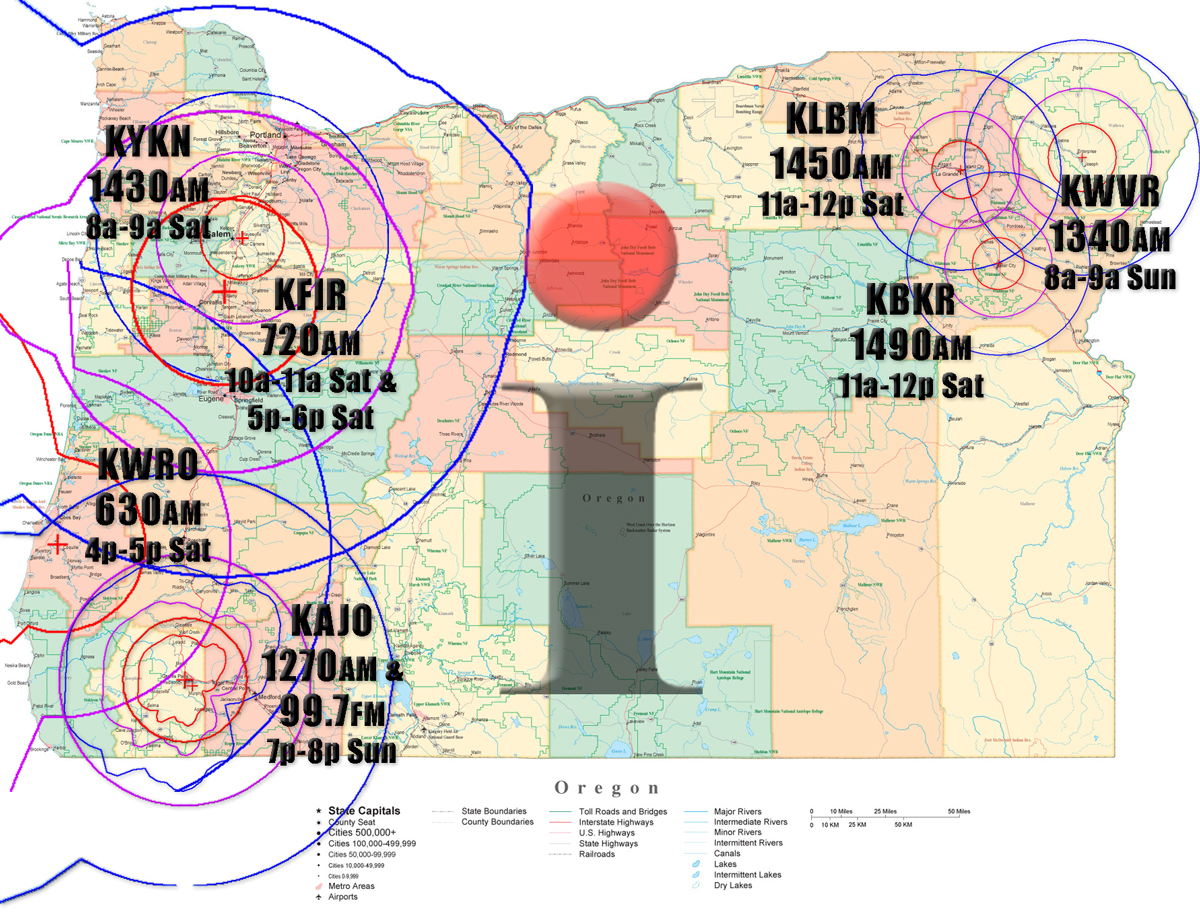
The I Spy Radio Show airs weekends — seven times across seven real radio stations, not internet-only streams. Listen anywhere through the stations’ live streams. See when, where, and how to listen for the full schedule.
Missed it? The podcast posts Mondays, after the broadcast stations air the show — here on this page or on your favorite platform.
★ Named to FeedSpot’s 30 Best Conservative Talk Shows. Thank you, listeners.