Common Sense vs. Crazy — How Policy Becomes Law, and the War Iran Is Waiting Out
Both of today’s conversations land in the same place: good policy dies without the votes to carry it, and those votes come from races most people skip. Doug Blair’s ask is simple — look up how your own members of Congress actually vote, not how they talk.
Check your congressman’s and senator’s scorecard →
And when your ballot arrives, fill it all the way down. There are Oregon House and Senate races this November decided by a few hundred votes — and you don’t have to live in a district to help a candidate in it.
About this episode
Heritage Action sums up American politics in four words: “common sense versus crazy.” This week, how a think tank’s white paper turns into an actual law — and why a regime running out of money is betting everything on the American midterms.
First, Doug Blair — press manager for Heritage Action, the lobbying arm of the Heritage Foundation, and an Oregon native — joins the show for the first time. If Heritage is the brains, Heritage Action is the hands: Doug walks Mark through how model legislation gets sold to state legislators and members of Congress, what the congressional scorecard actually does to a member who talks conservative on Fox News and votes otherwise in Washington, and how the Sentinel grassroots network gets deployed. Then the harder conversation: Doug’s own reporting on how Oregon emptied Dammasch State Hospital onto the streets of Portland, why he thinks Housing First has failed, the three classes of homeless he says require three different answers — and Heritage Action’s top three priorities heading into November: the SAVE Act, codifying border control into law, and keeping advanced AI and semiconductor technology out of Beijing’s hands. Including why the Chinese Communist Party is quietly funding the campaign against American data centers.
Then, Brent Sadler — retired U.S. Navy captain, 26-year submariner, and Senior Research Fellow for Naval Warfare and Advanced Technology at the Heritage Foundation — returns for a status report on the Iran war. He tells Mark it will not become a quagmire, and lays out the arithmetic behind that: a regime bleeding roughly $120–170 million a day in revenue against reserves of about $34 billion, an internal Tehran document putting popular support at 10 percent or less, and a timeline that runs out somewhere between Election Day and early January. Along the way: why Iran is stalling peace talks until after the midterms, whether Iranian operations inside the U.S. can move an American election, why gas prices are still near five dollars in Oregon with the Strait of Hormuz nominally open, what the strike on Saudi Arabia’s East-West pipeline really cost the market, the split the war has opened among conservatives — and Brent’s blunt answer when Mark floats asking Russia for help.
In this episode
The Hands of the Heritage Foundation
No opener this week — straight into it. Oregon native Doug Blair on what the rest of the country pictures when you say you’re from Oregon, how Heritage Action turns policy papers into bills, and the Sentinel army behind it. Then homelessness: the L.A. agency under federal investigation, and why Doug traces Portland’s crisis back to the closing of Dammasch State Hospital.
The Scorecard, and Three Priorities for November
Do members of Congress actually care about a low Heritage Action score? Doug on “creatures of the swamp,” Cliff Bentz’s underwhelming number, and the one-two punch of lobbying plus grassroots. Then the three priorities: the SAVE Act, codifying the border into law, and blocking CCP access to American AI — including Chinese money behind the anti-data-center campaign.
Republicans Were the Roadblock
Bentz at 79 percent, Wyden at zero. How hard it actually was to drag Republicans across the finish line on the One Big Beautiful Bill, what a “key vote” does to a member’s score, and the phone calls Doug enjoys taking. Then the SAVE Act: 83 percent public support, unanimous Democrat opposition, and why that gap exists.
Not a Quagmire — Brent Sadler on Iran
Six months on from his last appearance, Brent Sadler says the Iran war ends in weeks or months, not years. Early signs the regime can’t pay its police and military, small-scale ethnic uprisings in the east and west, the 1979 revolution as a fourteen-month template — and why Americans grading Iranians against American standards will be disappointed.
Stalling Until the Midterms
Iran rejected formal talks on September 15th — Brent thinks they’re waiting for a better deal after November. The financial math that says they can’t wait much past January, a leaked internal poll putting regime support at 10 percent, Iranian influence operations inside the U.S., and why Oregon gas is near five dollars with Hormuz open.
No Boots on the Ground — and the China Play
Market manipulation as an Iranian weapon, why an invasion isn’t even on the president’s menu, the truth about munitions stockpiles running low, and Brent’s flat “don’t” when Mark floats asking Russia for help. Then Mark’s closer on the down-ballot races nobody bothers to fill in.
Links & resources mentioned
Heritage Action — Get Involved
- HeritageAction.com (main site)
- Congressional Scorecard (look up your own representative and senators)
- Key Votes (the votes that determine a member’s score)
- Sentinel Nation (the grassroots network behind Doug’s “clarion call” — training and activism center)
- Current Heritage Action campaigns
- INTERVIEW: Doug Blair on Heritage Action’s top 2026 priorities and how Republicans should win in November (Washington Reporter, Sept. 16, 2026)
Homelessness — Portland, L.A., and Dammasch
- Why Portland’s Homeless Problem Is the Worst in the Nation (Douglas Blair & Joel Griffith, The Daily Signal, Oct. 18, 2019 — the article Doug references)
- Dammasch State Hospital (opened 1961 in Wilsonville, closed 1995)
- 1981: Dammasch Is Being Emptied and Portland Can’t Handle All the Homeless, Jobless and Hopeless Mentally Ill (Willamette Week archive)
- Turner, Kennedy in LA: The Trump Admin Will Not Fund the Failed Homeless Industrial Complex (HUD press release — the speech Mark quotes)
- Scandal-ridden LA homeless agency throws in the towel in bombshell announcement (New York Post via Yahoo, Sept. 17, 2026)
- Karen Bass Avoids House Oversight Probe Amid LA Homeless Agency Collapse (RedState, Sept. 17, 2026)
Election Integrity & the SAVE Act
- H.R. 22 — Safeguard American Voter Eligibility (SAVE) Act (Congress.gov — bill text and status)
- S. 1383 — SAVE America Act, Senate text (GovTrack)
- House Oversight Republicans (X)
Data Centers, AI & Chinese Influence
- $39 Million Was Spent to Turn You Against Data Centers — Here’s Who Was Behind It (The Gateway Pundit, Sept. 2026 — the article Mark cites)
- Foreign-Funded Opposition to U.S. Data Center Expansion (American Energy Institute, April 2026 — the underlying report, PDF)
- Marxist tycoon is funding a China-backed influence campaign against AI data centers (Washington Times, June 30, 2026)
- EPA power plant deregulation (Rapid Response 47, X)
The Good News Nobody Reported
- Income, Poverty and Health Insurance Coverage in the United States: 2025 (U.S. Census Bureau — the primary release)
- Census: U.S. Poverty Rate Hits Lowest on Record as Incomes Set New High (Breitbart, Sept. 16, 2026)
- Census data shows US poverty rate drops to lowest on record, but experts are cautious (Stateline, Sept. 15, 2026)
Brent Sadler & the Iran War
- Brent Sadler — Heritage Foundation (full bio and publications)
- The Key Lesson of the Global War on Terror (Heritage.org, Aug. 28, 2026 — the “people must want freedom” piece Mark references)
- From Before 9/11 to Today, the Navy Is Key Weapon in Fight Against Al Qaeda (Heritage.org, Sept. 10, 2026)
- U.S. Naval Power in the 21st Century: A New Strategy for Facing the Chinese and Russian Threat (Naval Institute Press — Sadler’s book)
Economic Warfare, Oil & the Pipeline
- Treasury Launches Unprecedented Campaign Against Iranian Regime on Economic D-Day (U.S. Treasury, Aug. 24, 2026 — “Operation Economic Outcast”)
- Iran flatly rejects peace talks with U.S. as Yemen war threatens global oil supply (Washington Times, Sept. 15, 2026)
- 2026 East–West Crude Oil Pipeline attack (background and timeline)
- Saudi Arabia closes its East-West pipeline after attacks from Iraq (FDD, Sept. 13, 2026)
- Satellite images show extent of damage to Saudi Arabia’s oil pipeline that bypasses Strait of Hormuz (CNBC, Sept. 14, 2026)
- House passes sweeping Russia sanctions bill honoring Lindsey Graham, sends to Trump (CNBC, Sept. 16, 2026 — the secondary-sanctions bill Sadler discusses)
About the guests
Doug Blair serves as Press Manager for Heritage Action, the lobbying arm of The Heritage Foundation, where he oversees media relations and strategic communications. A veteran communicator, journalist, and interviewer, Blair helps shape national conversations on the conservative movement’s top priorities. An Oregon native, Blair currently lives in Virginia with his wife and two sons.
Brent Sadler is a retired U.S. Navy captain with 26 years of service, including numerous operational tours aboard nuclear-powered submarines, assignments on the personal staffs of senior defense officials, and duty as a military diplomat in Asia. He now specializes in maritime security and the technologies shaping future naval forces, and is the author of U.S. Naval Power in the 21st Century: A New Strategy for Facing the Chinese and Russian Threat (Naval Institute Press).
Full transcript ▸
MARK: I’m going to forgo my usual opener — we’re just going to jump right in. We’ve got two great guests today and lots to talk about with both of them. First up, I’d like to welcome Doug Blair, the press manager for Heritage Action, which is the lobbying arm of the Heritage Foundation, the world’s leading conservative think tank. Doug oversees media relations and strategic communications for them. He’s an Oregon native but currently lives in Virginia with his wife and two sons. Doug, welcome to the show — it’s great to talk to you.
DOUG: Thank you so much. It’s always good to be talking with fellow Oregonians. It just makes me feel like I’m back at home.
MARK: So you escaped Oregon. What’s it like out there, and what do people envision when you say that you’re from Oregon?
DOUG: It’s funny, because whenever I call people here without telling them who I am, they assume that Antifa has gotten their number and that they’re on a list. So I think there is generally an assumption out here that Oregon is run by crazies, that it’s the sort of progressive Mecca, that this is where bad ideas go to thrive. But obviously we know as Oregonians that that’s not the entire story. While it is absolutely true that there are some really bad elements, Oregon has a lot going for it. And as recently as about twenty years ago, Oregon still had a reputation for moderation — we had a Republican senator. Given the mismanagement of the Kotek administration, which was preceded by the Brown administration, I am fully aware of the growing resentment of Democratic mismanagement in the state.
MARK: We have high hopes for this election season. I think it’s going to come down to not only Republicans turning out, but getting NAVs to say, “You know what? Maybe we ought to just try Republicans this time around.” So let’s talk a little bit about Heritage Action. It’s my understanding that you guys have the same five principles that Heritage has — free enterprise, limited government, individual freedom, traditional values, and strong defense. Talk to us a little about what Heritage Action is, what you do, and how you do it.
DOUG: That’s a really good point, that Heritage and Heritage Action both have the same founding principles, because in a sense we are part of the same body. The Heritage Foundation I like to think of as the brains. They’ve got the really smart guys who sit in their offices and think about these problems, and they come up with white papers and policy proposals. But given that they are a 501(c)(3) — this is a very complicated legal system — they can’t necessarily do as much advocacy on behalf of that policy. So that’s where we step in. We are the hands of the Heritage Foundation. We go out into the states and we go into Congress, and we actually lobby members to pass that legislation. We say the Heritage Foundation has come up with this really great idea to reinforce our elections, to shut down the border, to ensure that the Chinese Communist Party doesn’t get access to our AI technology — and we’re the ones who are doing the groundwork when it comes to getting that policy passed.
But the thing is, we can’t do that alone. We are only a couple of people in Washington. It’s a relatively small team, but we have what I would say is the best army of grassroots in the business, and we call them the Sentinels. These are average Americans, just like your listeners, who work with us to contact their legislators, to message their congresspeople, to really get the ball rolling when it comes to showing the political class and the elites that we mean business. We have events frequently, and we train them on going to Congress and going to their state legislatures and testifying. So it’s a two-fisted punch: we have the Heritage Foundation come up with the legislation, the policy proposals, and then we go out there and we actually get it done.
MARK: In terms of taking policy and putting it into action, one of the big things out here that is constantly discussed and nothing ever gets done about is homelessness. I know that you’ve got some expertise in this area, so let’s talk about how this gets fixed, because it’s not working right now. We’ve spent tens of billions of dollars on it to fix it, and yet Portland and L.A. are prime examples of mismanagement.
Let me set this up just a bit. The L.A. Homeless Services Authority is currently being investigated after allegations of fraud and mismanagement. The agency received more than one billion dollars in federal funds since 2021, including two hundred and twenty million in 2024. In June, HUD — that’s Housing and Urban Development — suspended further funding to L.A. homeless agencies until officials could demonstrate adequate safeguards to protect taxpayer dollars. Last week, RFK Jr. went to Southern California with HUD Secretary Scott Turner and gave what the New York Post called a fiery speech. He said, quote: “We cannot solve homelessness by funding systems that perpetuate it. We will fund programs that get people off the streets, into treatment and recovery, and back to self-sufficiency. We will demand results, hold failing programs accountable, and fund what works.” So what works?
DOUG: That’s the million-dollar question, isn’t it? There are multiple different proposals for how you can fix this problem. The one that doesn’t work is this Housing First approach that you hear from a lot of folks up in Portland. But what does work is enforcing the law. So if you look at homelessness as a criminal issue — which a lot of it is — you can say, okay, well, it is illegal to destroy public property, which a lot of these homeless people will do. They’ll go into public parks, they’ll defecate publicly, they’ll shoot up in the middle of St. Johns. And all of a sudden you have a public area that is now unsuitable for public use. Well, that’s illegal. You take those people, you put them in jail.
But secondarily — and this is one of the issues, too — if we just have this cycle of people going into jail, getting out, going back into jail, going back into jail again, it’s not really actually going to solve the problem. So this is where you have to actually make a judgment call, and you say, this person is not going to be able to fit into society.
Many years ago, back in 2019, I wrote an article about one of the biggest things that nobody’s talking about when it comes to the homelessness crisis, but that is actually a really solid connection point where it all went wrong. So in the early sixties — I believe it was 1995, sorry, the 1980s — Dammasch State Hospital was closed. And a lot of the people who were at Dammasch were basically just released into the world. They were released onto the streets of Portland. They said, “Have fun. Go fend for yourself.”
The asylum system wasn’t perfect. It absolutely was definitely problematic. There were elements that were very much like Ken Kesey’s One Flew Over the Cuckoo’s Nest — that a lot of people, I think, when they think of the asylums, they think of that. But there was a sense that these are people who are not able to function properly in society, and they need to be separated. There are certain people that should go to jail, and they should remain in jail as long as they are violent and able to understand their crimes, but still need to be kept away from society. Then there are other people who are so addled by drugs, who are mentally ill, who for no fault of their own are needing to be removed from society. The problem isn’t that they just need some help. The problem is they are never going to be able to fit in, and they need to be removed. And so that’s how you sort of fix a lot of the larger problems.
And then the third class of homeless that I like to talk about are the people who think it’s fun to be a bohemian. These are the people that think, “I’m too good for the system. I’m just not going to do that.” Those people you put in jail until they get their act together, and then you throw them out and they become productive members of society.
MARK: Well, it’s not easy taking policies and then making that real in the real world. So I’d like to talk to you a little bit more about some of the bigger issues that you deal with along that way. Everyone stay with us — we’re going to continue with Doug Blair, the press manager for Heritage Action. You can find out more about them at HeritageAction.com. Stay with us.
MARK: We’re talking with Doug Blair. He’s the press manager for Heritage Action. You can find out more about them by heading to HeritageAction.com, and you can see some of the campaigns they’re currently working on. You can also find your congressional members if you’re not sure — and once you’ve found them, be sure to use the Scorecard tab up at the top to see how they’re doing on conservative issues.
So speaking of that scorecard, I know that’s one of the tools that you guys will use in order to take policy and move that into a bill and then into law. That scorecard, I imagine, has to be a real whip. How big of a tool is that, actually? Do people really hate being called out because of low Heritage Action scores?
DOUG: Well, look, I will flag an interview that we recently did with Anna Paulina Luna. She’s a member from Florida, and I asked her point blank, are these tools useful? Now, I’m sure she wouldn’t say to me, like, “Oh, this is terrible, it’s useless.” But she did explain to me, there are actively members of Congress who feel as if they are above any form of criticism. They do not feel as if they are beholden to their constituents anymore. They are now creatures of the swamp. These are obviously — you know, Trump’s big agenda was to drain the swamp. These are what I would call swamp creatures. And so if you have a scorecard, or you have a way of keeping members accountable, it actually does impact things.
You want to go to the scorecard right now — I mean, given that Oregon has strong Democrat representation, it’s going to be relatively unshocking that they don’t do particularly well. But even when you look at Cliff Bentz, his score on our scorecard is not as good as you would expect for somebody who’s representing a rural place in Oregon. I mean, it’s one of those things where if you have a representative government, even if the rest of the state is very liberal, you should be able to anticipate that your member who represents your conservative values actually does that. So it’s very disappointing when we see members who should be better on conservative values not doing as well as they should.
MARK: Well, I guess it doesn’t really surprise me that some of these people just think they’re above any criticism. You can certainly see that with — well, John Thune, I think, is a big one. I don’t get him. He has been a massive roadblock to so much of what Trump’s agenda has been, and we’ll come back to that, I think, in the next segment. But let’s talk a little bit more about how you guys actually take policies and move them. You get people activated, and then you get a bill written, and then you get that into law — because it’s sort of like any idea: you come up with an idea for an invention, but then you’ve got to create the product, and then you need the business to support that. So talk to us about some of the bigger issues you deal with along that way.
DOUG: Absolutely. So this is sort of like Schoolhouse Rock, how a bill becomes a law. The way that it functions on our end is the Heritage Foundation, like I said, will come up with the policy. My wife used to work in the policy field, and we joke a lot, because I’m in the comms field, about who matters more. And I will always say, well, if you have a good idea, you have to be able to sell it, right? So we’re the salesmen. We’re the ones that go out and sell the model legislation that the Heritage Foundation will do.
The way that we do that is we go to state legislators that we think will be amenable to passing conservative legislation — these are what we call the good guys — and we’ll say to them, this is good policy, here’s why it’s good. And we will have, like I said, a one-two punch approach, where we will do the lobbying ourselves. We’ll go in and we’ll talk to them. But we also activate our grassroots network, the Sentinels, which your listeners can sign up for if they go to our website.
Fundamentally, we believe that the American public deserves to have representative government, and conservative values are what the vast majority of this country wants. As much as the mainstream media is going to try and pretend that this is a democratic-socialist, communist nation, it’s very much not. We are a conservative nation at heart. And so we believe that the American public deserves that type of representation, and we give them the tools to do that.
Now, you asked me what are some of the pieces of legislation or some of the agenda items that we are very much focused on right now. At the moment, we are focused on three big policy areas. The first is the SAVE Act and election integrity. If you don’t trust your elections, if you don’t have confidence in your elections, we do not have a representative democracy anymore. It’s as simple as that.
Secondarily — and that ties very closely into that — is border control. The Trump administration has done a wonderful job at completely closing off the border. We went from a million or so illegals coming into the country under the Biden administration to zero under the Trump administration. But that was done via executive order, which is very easy to overturn. God forbid a Democrat takes power in ’28. So we want to codify that into law.
The third and final one is a little bit disconnected, but it’s still very important to national sovereignty, which is the Chinese Communist Party and their desire to take our AI and semiconductor technology. If they get this technology, they are able to leap over us in terms of AI, and we’re done. That is something that is absolutely essential, that we are in control of our own advanced AI and semiconductor tech. If the Chinese Communist Party gets it, that’s going to be a problem. So those are the three big areas that we focus on at the moment.
MARK: As far as preventing the Chinese from getting the semiconductors and some of the other technology that goes along with AI — I have seen reports, and there was a really good article in the Gateway Pundit about this, where there is some pretty clear evidence that the Chinese are funding some of the anti-data-center movements. Are you guys seeing that yourselves?
DOUG: We are. And so this is where we land on the data centers. Because again, I don’t want to overrun an Oregonian who says, “I don’t want a data center to go into Sisters. I don’t want a data center in The Dalles. I don’t want a data center to appear at Black Butte.” Right? Like, these are the places that are naturally beautiful. They are natural heritage. So we don’t want to foist them onto people that don’t want them.
However, as you said, the Chinese Communist Party has absolutely been putting propaganda out about how impactful these things are, how dangerous they are, how awful they are. And that’s simply not true. There are economic boons here. It is a national security issue that we have access to this tech. It is also essential that we keep up, because the Chinese Communist Party doesn’t have to do that. They just get to go and say, “Whatever, we’re just going to knock down whatever we want.”
So we at Heritage Action believe the best of both worlds can be done here. Americans have always been willing to do what it takes to strive to be excellent, to be number one, to maintain our position as the global hegemon. But we also want to respect the rights of the locals. We don’t want to say we’re going to bulldoze your beautiful landscape to put up a data center, to put up this infrastructure that you don’t want. So we will come to a conclusion where everybody is able to get along on this issue. But yes, we are very much aware that the Chinese Communist Party has its fingers in a lot of this propaganda.
MARK: Yeah, well, AI is not just simply better-looking cat pictures on Facebook. It’s being used and implemented in national security — better missiles, better missile defenses, and all the rest. So it’s highly critical to national defense. Okay, let’s take a break there. Everyone stay with us. We’ll wrap things up with Doug Blair. He’s the press manager for Heritage Action. Stay with us.
MARK: And welcome back. We’ve been talking with Doug Blair. He is the press manager for Heritage Action. They are the boots on the ground of the Heritage Foundation. Heritage writes the policy papers, the blueprint of what we need to do, and Heritage Action then tries to make those policy papers a reality, lobbying Congress to write bills and then get the votes they need to pass those bills into law. You can visit them at HeritageAction.com. That’s HeritageAction.com. It’ll be on today’s show page, ispyradio.com/16-38. And while there, be sure to check your congressman’s or senator’s scorecard at the top of that Heritage Action page. The only Republican from Oregon, Cliff Bentz, scored seventy-nine percent. That’s not great — a C-plus. Ron Wyden scored zero percent. Frankly, I’m surprised he scored that high.
DOUG: Shocker. Negative — negative fifty.
MARK: Yeah, really, it ought to be. So, we talked earlier about some of the roadblocks and whatnot that you guys have to go through in order to get some of these things passed. And surprisingly — or maybe not — one of your bigger roadblocks, it seems, are the Republicans themselves, who ought to be your natural allies. And in 2025, I think one of your big wins, you guys managed to help pass the One Big Beautiful Bill. To me, I just guess when I look at that, it should not have been that hard. How hard was it actually, behind the scenes, to drag Republicans across the finish line on that one?
DOUG: Well, look, I mean, as you said, it should be as natural as peanut butter and jelly that conservatives and Republicans should be able to work together to get conservative legislation passed. That’s why the American public sends conservatives and Republicans to Congress, to do that, right? But I can tell you that it was deeply difficult, Mark. And it was one of those things where we were trying to fight tooth and nail to get this thing passed, because, as you’ve noted on our scorecard, there are members who will go out and say things on Fox News that they do not actually put into practice back in Washington.
And so that’s why I really want people to think about this scorecard and use it as a resource. Because what we do is we key vote, which is where we basically say, this is a piece of legislation that is indicative of your values as a conservative, and if you do not vote for it, we’re going to ding your score. There are plenty of members who, if you didn’t know their voting record, you would say were doing a good job. And they go back to Congress session after session after session, and then they stymie agendas like the Big Beautiful Bill, like the America First agenda from the Trump administration. And they say, “Oh, terrible, we couldn’t get it passed. Oh my gosh, you’ll just have to send us back next time and we’ll fight the good fight again.” Well, if you had done your job, and if you had actually voted to pass this legislation, then we wouldn’t have this problem.
So keeping members accountable is an absolutely essential part of what we do. And it’s something that I take great pride in. When I get a call from a member or a member of staff that says, “Why did you ding us on this?” I get to say to them: because you didn’t vote for conservative legislation. It’s as simple as that. Hang up. Bye. Try better next time.
MARK: Well, voting in elections — you had mentioned earlier that the SAVE Act is your number one priority right now, and I would agree, because if you don’t have secure elections, you can’t trust the outcomes. And it’s something that eighty-three percent of voters want across the board. Eighty-seven percent support photo ID for voters. And yet you look at those numbers and it’s high — even, I think, in the mid-seventies for Democrat support. And yet every Democrat elected politician opposes this. Why is that so hard, to get something that so many people want?
DOUG: This is the dirty little secret of Washington: that they don’t actually care about what makes for good policy. They just care about what gets them the donor dollars. And the Democrats are very much bought out by a lot of these organizations that have problems with voter integrity legislation. They are very much in favor of keeping things the way that they are, because it gives them more power.
Obviously, Democrats in another way also have a motivation to continue to keep voter integrity legislation off the books, because they recognize that it would get rid of people on the ballots that are maybe not supposed to be there. So we saw this take place in New Jersey a couple of months ago, where they were forced to admit that there were at least tens of thousands of non-citizen registered voters, many of whom had actually cast a ballot in elections.
And what I always like to say to people who say, “Oh, well, it’s rare, a couple hundred people who voted fraudulently in an election isn’t a big deal” — when you have elections, not just for president, but for members of Congress, for your local dogcatcher, the mayor, whatever, that are decided by three or four votes, that couple hundred fraudulent ballots starts to look a little bit more impactful.
So we are very much in favor of passing the SAVE Act as soon as possible. We are very much in favor of blue states — because it is mostly a blue state issue — getting their acts together and starting to actually insert these election integrity measures their own voters want. And then finally, we are in favor of prosecuting to the fullest extent of the law anybody who is discovered to have fraudulently cast a ballot or abetted another person in fraudulently casting a ballot. Because, like I said at the very top, if you cannot trust your elections, if you feel as if your vote doesn’t matter, representative democracy dies. It is entirely reliant on trust in elections.
MARK: As far as moving people — because it doesn’t seem like they pay attention, as you say, they’re just out there for the donor dollars — when it comes to the Heritage Action Sentinels, have you guys ever taken a sample of how many Sentinels it usually takes to move a vote?
DOUG: That’s a really good question. I wouldn’t be able to tell you if it’s like we get five people and all of a sudden we get the vote passed. But what I do know for a fact is the more Sentinels and the more grassroots attention we get on an issue, the more likely it is to pass. And that’s kind of why I want to say, like, I couldn’t tell you if it was five or five hundred. It really should just be a concerted effort amongst us as the grassroots and as average Americans to pass the legislation that we care about.
The founders designed our system to be responsive to the will of the people. It is not designed to be controlled by special interests in Washington. It is not designed to be controlled by political elites who haven’t set foot out of Salem in fifty years, right? It is designed for people that are just living their lives, trying to get food on the table, send their kids to school. That is what this system is designed for. And so the more that we are able to gather our strength together, the more that we are able to say to Washington, “You don’t know what you’re talking about. This is what we want. It’s up to you now to pass it” — the better things will be.
So again, this is my clarion call here. Go to HeritageAction.com. Sign up to be a Sentinel. Get involved with the process, because we really cannot do this without you. But gosh, can we do a lot when you join us.
MARK: Oh, absolutely. And we saw that there was finally enough pressure — they got the One Big Beautiful Bill passed. And now if only they could have done that to the SAVE Act. But Congress has up and left Washington until after the election. So, Doug, I want to thank you so much for your time. I really appreciate it.
DOUG: I appreciate you having me on.
MARK: And welcome back. We’re talking now to Brent Sadler. He’s a retired U.S. Navy captain and currently serves as a senior research fellow for Naval Warfare and Advanced Technology at the Heritage Foundation. He specializes in maritime security and the technologies shaping future naval forces. He is also the author of the book U.S. Naval Power in the 21st Century, which outlines a new strategy for addressing threats from China and Russia. Brent, it’s been a while — we talked to you back in March, soon after the Iran war had started. I want to thank you for joining us again.
BRENT: No, absolutely. Thanks for having me back.
MARK: So when we last talked, that was about six weeks into the conflict, and everybody was hoping that the Iran war was going to be a different kind of operation than previous Middle East involvements and operations. So has that hope changed — that this might end up being another quagmire — or do you see an end in sight here?
BRENT: I don’t think it’ll be a quagmire. I mean, there’s only so much capacity and staying power that the Iranian regime has. When that is, specifically, is going to be hard to answer, but it’s not forever, for sure. And it’s certainly not in the order of years. We may be talking weeks, more likely, as to when it becomes a deciding point for that regime.
But the key thing is to keep the pressure. I think the president has found balance in the economic warfare that’s being waged — the naval blockade, responding to attacks or threats before they’re launched against shipping. Having the posture that we have sets things up so that the regional partners, like the Gulf countries, stay on side with us. And at the same time, we’re able to keep the pressure up on the regime as it eventually runs out of resources to sustain itself.
MARK: Well, that was going to be one of my questions, but I was going to save it for a later segment — may as well deal with it now. That’s something that Scott Bessent has pushed. I don’t know who came up with the idea; it wouldn’t surprise me that it was his. The guy’s pretty brilliant, I think. And just so people are aware, this was launched back on August twenty-fourth. It’s a Treasury-led campaign to sever every economic lifeline sustaining the Iranian regime. So my question was going to be — I know you’re more on the military end of things — are you beginning to see some real, genuine impacts from that?
BRENT: Yeah, you get anecdotal. Figuring out what’s going on inside Iran is really tough, but it’s clear that there have been reports for several weeks now that they’re not able to pay their police and many of the services, military as well, and even in some cases I’m hearing about IRGC. So that’s an indication that they don’t have the finances to keep their authority in place. And at some point they’re not able to pay enough people and they just walk, or they’re unable to, or they just don’t enforce the diktat coming out of Tehran. So there’s some indication of that.
There have been episodic — it’s hard to know how serious it is — but there have been indications of gunfights, of ethnic groups like the Baluchis in the east actually taking up arms and fighting. But it’s small-scale stuff when it does pop up on social media. And then, of course, the Azeris, and the Kurds in the western part. But it’s small. It’s not yet at the scale. But this is very much the same kind of pattern that played out in 1979 — a lot of episodic things that took about fourteen months. And for me, the clock really begins in January.
MARK: Why in January?
BRENT: That’s when you had about forty thousand Iranians killed that were protesting against the regime.
MARK: Are you talking about this most recent January, or back in 1979?
BRENT: This most recent January. When I look at our clock — because the 1979 revolution took about fourteen months, and it was not a linear line. So if you kind of glom it and say, okay, let’s just assume much of the Iranian culture and politics is unchanged, realistically it could be almost a year in the current situation. But unlike 1979, you’ve got active combat and world isolation of the economics going on. That wasn’t the case in 1979.
MARK: Well, I think we had talked a little bit about the potential for uprisings. But unlike America, where there are a lot of gun owners, Iran doesn’t have that. Has there been any effort to get them arms that we know about?
BRENT: Well, there’ve been some reports. I mean, the president himself tweeted early on — well, after the first couple of weeks — of trying to get arms to the Kurds. He wasn’t very happy or satisfied with how that panned out. But there’s going to be a lot of disappointments. It’s really for the Iranian people to dictate, and finding the right kind of partner, that’s going to be a challenge. It’s not something that we get right very often. But the key is to provide an opportunity for the Iranian people to take their country back themselves.
MARK: Well, looking back at the early days and weeks of the campaign, are there things that we can see in hindsight that we maybe should have done differently, so we would be further along at this point, or maybe even at peace by now?
BRENT: Yeah, I’m not sure we would have been at peace. I mean, this regime rules by sheer fear and brutality, and they’re not afraid to kill many thousands of their own people to make that point. So don’t underestimate the extent to which this regime is willing to go. I don’t think we would have been at peace by now. But I do think there very likely are options that could have been taken that perhaps might have provided more of an opening. And perhaps even trying to pick a few winners inside Iran more aggressively might have been possible at certain moments. It might still be possible. There’s a huge risk in that. But again, I think the course that we’re on right now — apply the pressure, and when the regime starts to crack, the folks that want to stand up against the regime will make their presence known in the right way.
MARK: You have a recent article talking about the global war on terror and some of these forever wars. As far as Iran’s people are concerned, initially it looked like they were going to rise up and they just really didn’t — and I’m sure they were being brutally slaughtered; as you say, it’s hard to get information out. But you said something really interesting in there, I thought, that was so key: that people really have to want freedom. So do you see that in Iran’s people, or are they just hoping for anybody different?
BRENT: The first thing is, make sure we don’t grade them according to our views and sensitivities about what a free society is. It’s not going to be the same for them. They clearly are at wits’ end — their economy, the corruption, the brutality. All of that, I think, is driving a fairly sizable, I would say majority, of Iranian people to see the regime not as a help or a protector, but as a hindrance and a threat. And that’s a key thing. And so I think they’re looking for options. There’s just not one there, because again, it’s a fractured society. They’ve got ethnic groups, you’ve got religious differences — in some cases that plays; they’re not all Shia.
And so all of that together, it’s like a mosaic. And this is what happened in 1979. You had ideologues, the communists, the socialists that were rising up, and then you had Kurds, and then you had the Arab population, and then you had the more liberal or religiously fanatical side of the Shia movement, that were all vying for leadership of the resistance, or the revolution. So it’s going to be the same. It’s going to be messy. The path to a free society is oftentimes not a very clean, straight line, and I don’t think it’d be any different for the Iranians. But they need to own it. The best thing we can do — I keep coming back to this — is try not to apply American standards, try not to graft our sensitivities, because we’ll be disappointed at best.
MARK: Yeah, absolutely. Okay, let’s go and take a break there. We’re talking today to Brent Sadler. He’s a retired U.S. Navy captain and a senior research fellow for the Heritage Foundation. And coming up next, we’ll talk about the other war — the one here at home. Stay with us.
MARK: And welcome back. We’re talking today to Brent Sadler. He’s a retired U.S. Navy captain, a twenty-six-year Navy vet with numerous operational tours on nuclear-powered submarines. He’s been a member of the personal staffs of senior defense officials and was a military diplomat in Asia. And he now serves as the senior research fellow for the Heritage Foundation.
So I talked about the war at home there. And to get there — some of what we’re seeing is a lot of pressure here on oil and gas prices going up, and that’s been driving people crazy. And there’s also the peace negotiations, which started initially about six weeks in. There was a two-week ceasefire, things were looking a little bit hopeful, and then it just dragged on and off, on-again, off-again type thing. And then just on September fifteenth, Iran’s secretary of the Supreme National Security Council — and I love those long formal names — flatly rejected formal peace talks until all of their conditions are met. So where do you think this peace process actually stands right now? Do you see it happening soon, and do you see it happening before the elections?
BRENT: It’s a great question. I think things are kind of happening quietly — certainly not the MOU anymore, which was probably the most, I guess, energetic kind of peace negotiations. The Pakistanis have been enabling things. The Omanis have been dealing with the Iranians to try to reopen this. So there’s a lot of different types of negotiations going on, but it’s hard to know which one the Iranians are serious about, if any of them. I tend to think that they’re not serious about any of them, and they’re trying to hold out until after our midterm elections, thinking that they can get a better deal on the other side of that. And so this is what I think is the calculation behind them.
MARK: Yeah, and that’s why I mentioned the elections, because it does look like they’re just trying to stall it. How long can they keep that going, though, if that economic pressure is really putting on the amount of pressure it sounds like it is?
BRENT: Yeah. If you look at the math of it, from the economic warfare that’s being done — this is like the naval blockade — they’re losing about a hundred and twenty million to a hundred and seventy million dollars U.S. equivalent from revenue every month. I’m sorry — every day. I take that back: every day. And so that compounds, and they have reserves of about thirty-four billion dollars. And so that was back in January. Let’s assume that that was still the same. Depending on the burn rate of things, and the fact that there’s more going on right now to stress the regime, they can hold out probably till right around the election at the low end of resiliency and financial ability to survive. At the longer end, probably by the end of the year, early January, things will start to break in a way that’s unpredictable in their society.
So that pressure and that kind of longevity — there’s a lot going on there, to be clear. But just on the financial side of things, that’s kind of the timeline. Then you look at the scale of brutality and popular support. A couple months back, there was an internal document that was kind of leaked, or found its way to the West, and that was: what’s the public support for the regime? And this was research done by the regime in Tehran, and it basically said ten percent or less support the Iranian regime in Iran. So popular support’s already tanked.
MARK: Wow, that’s pretty astounding. I’m surprised they aren’t really rising up. But, you know, again, if you don’t have the weapons and you’re going out into the streets against an armed police force, that’s suicidal.
As far as the war at home here is concerned, the other flip side of that, too, is not just the image that Iran is trying to create, but they’ve been known to do operations within the U.S. So are you seeing — is the military seeing — any kind of efforts here within the U.S. by Iranian forces to try to directly influence the elections? Or do we have a pretty good lock on their influence channels?
BRENT: They have meddled in U.S. elections in the past. They definitely had a hand in, and were instigating, some of the pro-Hamas protest riots that we saw after the October seventh attack. So they’re here. They’ve also been called out for cyberattacks in the U.S. before then — some of them they’ve taken credit for, on our services as well, like electric and water, and even trying to hack into government agencies as well. So they’re active on that front.
They will probably not have the ability to influence the elections. The best thing is that they, like the Russians and the Chinese, try to make it so that Americans have less confidence in their processes and democracy. That’s really what their goal is. So it doesn’t really help the Iranians in the near term. But they do see the chance to try to ensure that Trump doesn’t come out of the midterm elections victorious or winning — which means, I guess, the Republicans keeping the House and the Senate — because then they know that that will change the tenor here in D.C. There’ll be a lot of investigations, impeachment trials, that’ll force the United States government to be looking more internally. But I think the Iranians are misjudging, because that doesn’t impact military policies and operations.
MARK: The other part of the war is that I think the Iran war has led to a bit of a split among conservatives, and I think that in itself is kind of its own story. One side is tired of these Middle East wars, and they’ve actually kind of turned anti-Israel as part of that. And then the other side, they’re still hanging in there. And of course there’s a lot of gray areas in between. So one of the big things they’re arguing about right now is that this has just dragged on for months — this is not what we elected. And I think there’s some unity in terms of both sides saying that. The other aspect of that, too, is it’s starting to hit people in their pocketbooks, and that, I think, is the real danger right now. So — allegedly the Strait of Hormuz is open, but why are gas prices still so high?
BRENT: Yeah, there’s a lot behind that. The first thing is most of the price swings up and down are speculative. Because, like, one day there’s a peace deal and the prices drop like a rock. And then the next day an Iranian motorboat shoots a few machine gun rounds at one of the tankers and they bounce off, but the prices skyrocket up. That’s speculation in action.
There is enough supply of petroleum generally on the market, but confidence is definitely not high enough. And the spot prices — when you look at the futures, they’re looking at driving the price down. But fifty to fifty-four percent of the price of our gas at the pump is driven by the price of crude oil. And we’ll see seasonally the prices tend to go down by fifty cents as we get into the school year and move out of the summer demand for energy. That may be overwhelmed by some of the speculation, but also I think there is going to be a supply issue to deal with for crude. For the United States it’s more of the issue here, because we are connected to the global market. So while we have a lot, people are paying top dollar, and our crude goes overseas to whoever pays the highest bid.
And the East-West pipeline that got attacked is probably the most substantive of recent developments or attacks by the Iranians and their proxies, because that cuts off about seven million barrels a day — almost half, I’d say about forty percent, of what was going through the Strait of Hormuz before the conflict started. So that one needs to get back online, and there needs to be more time to allow the energy markets to adjust. The United States can only increase production so fast, and so can other countries, to try to make up for lost petroleum coming out of the Strait of Hormuz.
MARK: Well, I hope they can get a handle on that, because it is certainly, certainly here in Oregon, pinching us. We’re at nearly five bucks a gallon right now. All right, everyone, stay with us. We’ll wrap things up with retired U.S. Navy captain and former U.S. military diplomat in Asia Brent Sadler. He’s a senior research fellow for the Heritage Foundation.
MARK: And welcome back, in our final segment now. We’ve been talking about the Iran war, doing that with Brent Sadler, retired U.S. Navy captain and a senior research fellow for Naval Warfare and Advanced Technology at the Heritage Foundation. And so in that last segment there, we were talking about the price of oil, and you were talking about some of these being, you know, kind of future-oriented, speculative. Are we seeing any kind of market manipulation?
BRENT: I think the Iranians are clearly manipulating the markets. Some of their attacks, I mean, they’re symbolic, or they’re gestures — they’re not really going to sink ships. Other times they actually do, and they do kill sailors. So it’s a lethal business. But they clearly are trying to drive the price up. And, you know, whenever the president says, “I think we’ve got a deal,” and then they do something, it drives the price up and it creates concern. It undermines the confidence — and rightfully so. Many Americans keep hearing the war’s over, we’ve got a deal, and then you see everything kind of fall apart the next day.
This is very much a part of the Iranians’ M.O. on this whole thing. And I think market manipulation is a part of that calculus. It’s also what they’re manipulating the markets for — to influence our elections and political decisions here in the United States. So this is part of their calculus, very clearly.
MARK: As far as the war hopefully coming to an end here — I don’t think anybody wants another Iraq with boots on the ground and an occupying force, and I don’t see that happening here per se. Do you think, as a military expert yourself, air and naval power can finish this? Or are we inevitably heading towards at least some ground troops there in Iran?
BRENT: Well, the first thing is, the president doesn’t have that option of, like, an invasion on the menu. And it’s clearly that no one wants to do that for political reasons, but that option is not even there. He has about fifty thousand ground troops. He’s about five thousand Marines that are specialized at, you know, going in, assaulting land targets and taking targets ashore. And then there’s about forty, forty-five thousand Army troops, more for defensive bases, air defense and things like that. So there’s not the right forces to kind of march into Tehran and dictate terms, and certainly not to occupy the country.
But there are quite a spectrum of options, and they shouldn’t be ruled out publicly, if for nothing else, to cause the Iranians to have to worry about if the Marines arrive at one of their little islands and take out their forces there, or if the Army were to go ashore at some place and hold a lodgment on one of their islands, or maybe ashore where it’s threatening shipping, and then leaves. It causes them to have to worry about a lot of things. And that’s good. That uncertainty is good for us.
But I don’t see it as necessary to get to the other side of this right now. The blockade, the economic warfare that’s being waged, it’s at our initiative. We control how aggressively or how stand-off we are, and the pain is the same on the regime. So I think this course allows the president to have all the initiative. The key thing is we’ve got to keep our forces present in the region. And when we do see a threat to shipping or a threat to our forces, we need to be proactive, not reactive. That’s an important distinction. And I think a couple weeks ago there was an attack as the Iranians were setting up to launch mines into the Strait of Hormuz. We didn’t wait. We attacked them before they did it. And that’s important to continue.
MARK: Well, in terms of offensive capability, there have been reports about missile and ammunition stockpiles running low. What’s the reality and truth of that?
BRENT: Well, this goes back like multiple administrations ago. This has been a problem — I want to say since 2010, 2012. This is not a new thing. And there’s a lot of blame to go around for why we are here today. The key thing is we need to get the production rates way up, and we need to expand the capacity to build not just the exquisite high-end missile, but we need even the basic, like iron bombs, the things you just drop and they blow up when they hit the ground. It’s a problem that’s been far too long ignored.
But one of the key things is, when you hear from the military folks, when they’re asked, “Do you have what you need to wage?” — yeah, you just change the type of weapon that you use, and you change your risk calculation. So rather than launching a missile that can go a thousand miles, like a Tomahawk cruise missile, and take out a bunker, you just change and say, well, we have an iron bomb that we can drop from an A-10 or an F-35. We’ll use that instead. Higher-risk mission, still done. So it just changes how you actually fight.
But the key thing here is the type of weapons that we’re using against the Iranians, and defending against — these aren’t the ones that are being used in high numbers that deter the Chinese. Torpedoes, for one. We only use one of those to sink one ship.
MARK: Right. So real quick, we’ve got less than a minute here with you. This is maybe heretical, but is it time to maybe reach out to Russia on this, get them to apply pressure on Iran in exchange for us helping to apply pressure on Ukraine for their peace deal?
BRENT: Well, everything is connected. It’s actually not the Russians. And certainly trying to get them to, like, “Hey, can you help us?” is extreme weakness. And when they see that, they’re going to double down in the opposite direction. So it’s definitely don’t do that with the Russians, the Iranians, nor the Chinese.
Better is to apply cost. And again, this is what’s important with the Graham bill — more like secondary sanctions on Russian oil. And the idea is to put pressure on the Chinese to say, hey, the war in Ukraine, the war in Iran, none of this is going to be a benefit to you, and the pain is going to start to pile up unless you actually start turning the screws on the Russians and the Iranians to knock it off.
MARK: So it’s not just maximum pressure on Iran — it’s maximum pressure on everybody, it sounds like.
BRENT: On those three. So these secondary sanctions really target China.
MARK: Okay. All right. Unfortunately, we’re up against the clock. Brent Sadler, I want to thank you so much for your time today. This has been great.
BRENT: Thank you. Take care.
MARK: Listening to what both our guests had to say really drives home the point why it is so critical to not vote just for the person at the top of the ticket, whether it’s the president or the governor. People do that and then leave the other votes blank. Look at what happens when they don’t get a legislature they can work with.
Right now, Trump needs far more support in the House and definitely in the Senate. It’s the Republicans in the Senate that have been the roadblock. But just imagine if Trump had five — or ten — more solidly on his side.
Don’t ignore those down-ballot races in this election. Give the next Republican governor a team she can work with to get things done. Because, as we say every week, the best information does you no good if you don’t use it. Reagan, what do you think?
Catch the show live
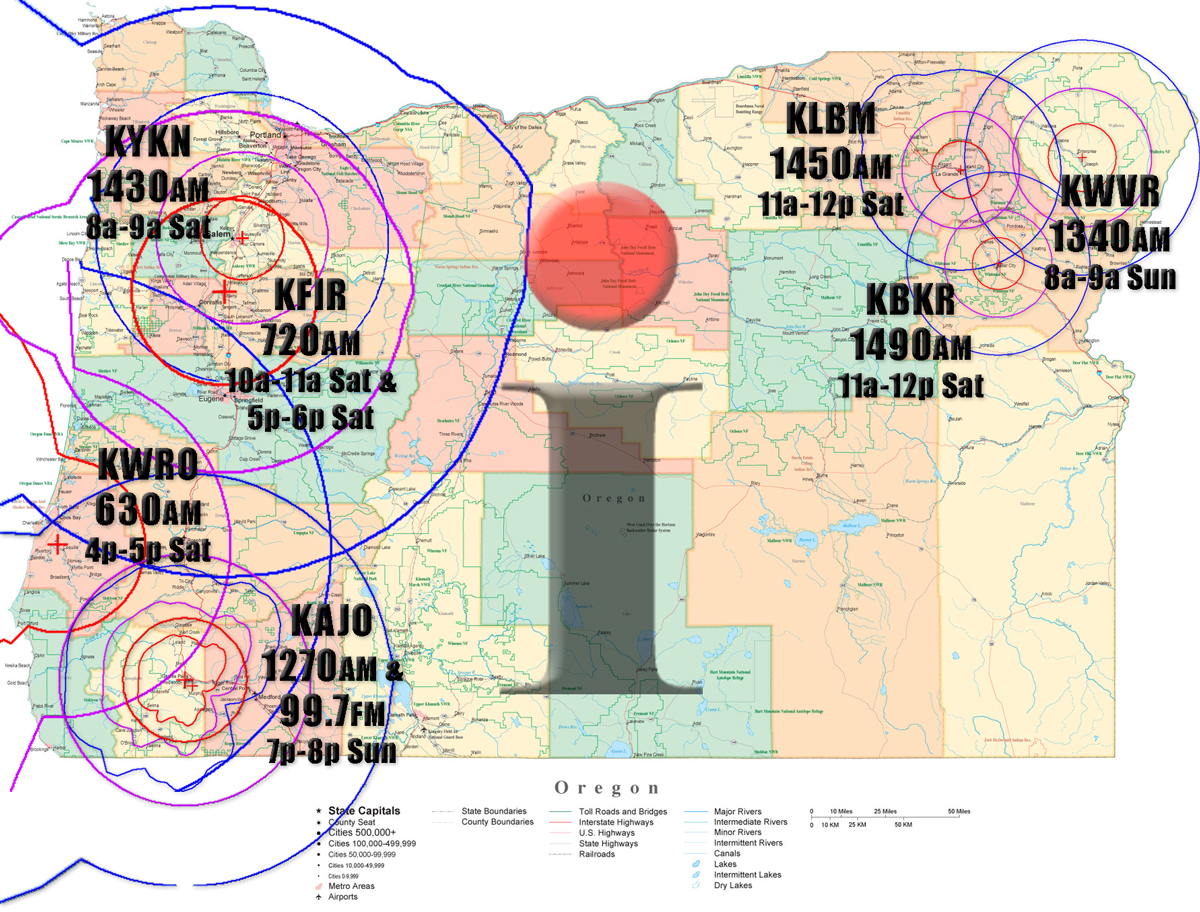
The I Spy Radio Show airs weekends — seven times across seven real radio stations, not internet-only streams. Listen anywhere through the stations’ live streams. See when, where, and how to listen for the full schedule.
Missed it? The podcast posts Mondays, after the broadcast stations air the show — here on this page or on your favorite platform.