Category: Candidates

16-37 This Is Fine — Oregon’s Record Wildfires and the Race for a Veto-Proof Supermajority

16-37 This Is Fine — Oregon’s Record Wildfires and the Race for a Veto-Proof Supermajority

Aired  September 12, 2026
Runtime  ~47:55
Host  Mark Anderson
Guests  Angela Plowhead · Derrick Holdstock

This Election Matters

Angela Plowhead is running to flip one of the most competitive seats in the state — and Democrats are pouring national money into keeping it. If what you hear today concerns you, get involved: donate, volunteer, or just spread the word.

Support Angela Plowhead at Angela4Oregon.com →

And she’s not the only race that matters this November — find other Oregon candidates worth your support and get behind them too.

About this episode

Oregon just burned an area bigger than its entire wilderness system — and in Salem, Democrats are two seats away from a legislative majority so large that no walkout and no governor’s veto could stop them. This week, two conversations about a state running out of checks.

First, Dr. Angela Plowhead — Air Force veteran, clinical psychologist, and Republican candidate for Oregon Senate District 10 — returns to the show to take on incumbent Senator Deb Patterson. Angela and Mark dig into the gas tax Oregonians rejected 83–17 percent at the ballot box, the Climate Protection Program’s spiraling cost to Oregon families and businesses, and the government-run universal health care plan Patterson’s own committee is shepherding toward the Legislature. Then the conversation turns to something bigger: why national Democrats have singled out Patterson’s seat as their only incumbent target race in Oregon — and why the two additional seats they’re chasing would hand Democrats a two-thirds supermajority in the Senate, enough to end Republican walkouts for good and override any governor’s veto, Republican or not.

Then, Derrick Holdstock, owner of Western Fire Resources and a 25-year veteran of wildland firefighting, joins Mark to talk about Oregon’s all-time record 2026 fire season — over 2.5 million acres burned, nearly a third of the entire nation’s total. Derrick takes listeners inside an active fire line, then breaks down what actually went wrong: a dispatch system that keeps closer private fire engines waiting behind public agencies, a profit motive that pulls public fire departments away from their own jurisdictions, the pending federal rollback of the roadless rule, and decades of fuels mitigation that simply never got done. He closes with a concrete, low-cost fix — and a hard question about whether Oregon can ever get back to the fire-quiet decades a previous guest says were no accident.


In this episode

00:44
01

“This Is Fine” — Angela Plowhead Returns

Mark’s opener on Oregon Democrats and complacent Republicans, then Dr. Angela Plowhead on why she’s challenging Deb Patterson, Oregon’s crushing tax burden on small business, and the DSA candidates now running in Oregon — plus the reveal that Patterson is the only incumbent Senate Democrat national Democrats have targeted.

09:36
02

The Gas Tax, and a Climate Program Nobody Voted For

Why 95% public opposition didn’t stop the gas tax — and why Democrats moved Measure 120 off the November ballot. Then the real cost of the Climate Protection Program: $4.9 billion for natural gas alone, a floor of $20 billion across the full fuel sector, and Oregon’s forest fires alone blowing past the entire statewide emissions cap.

17:15
03

Universal Health Care — and the Veto-Proof Endgame

An $85–94 billion-a-year health plan that could more than double Oregon’s budget, and Sen. Patterson’s role steering it. Then the segment’s biggest reveal: why two more Senate seats mean Republicans lose their only remaining check — the walkout — and why a Republican governor’s veto stops mattering at a two-thirds supermajority.

25:41
04

2.5 Million Acres — Meet Derrick Holdstock

Oregon’s wildfire season shattered 2024’s record by 400,000 acres — nearly a third of the entire nation’s 2026 burn. Wildfire contractor Derrick Holdstock joins to talk about Western Fire Resources, what it’s actually like inside an active fire line, and why Oregon dispatches engines from as far away as Texas.

33:10
05

The Dispatch System’s Dirty Secret

Why a wet winter with no snowpack made 2026 worse, not better. Then Derrick lays out the fuels-mitigation gap, how Oregon’s mutual-aid system locks out the closest private engines, and the profit motive that pulls public fire departments away from their own home jurisdictions.

41:00
06

Roads, Climate, and the Fix

The roadless rule’s real effect on fighting fire, the spotted owl’s collapse despite decades of hands-off management, and the CO2 math nobody wants to discuss. Derrick closes with a concrete, low-cost fuels-mitigation plan — and the question of whether Oregon can ever get back to the 35 fire-quiet years a previous guest documented.

Links & resources mentioned

Angela Plowhead for Oregon Senate District 10

The Push for a Veto-Proof Supermajority

Oregon’s Gas Tax & Measure 120

The Climate Protection Program’s Real Cost

Oregon’s Universal Health Care Push

Oregon’s Record 2026 Wildfire Season

Forest Management, the Roadless Rule & Fire History

Derrick Holdstock & Western Fire Resources

About the guests

Dr. Angela Plowhead
Republican Candidate, Oregon Senate District 10

Angela Plowhead is an Air Force veteran and former signals intelligence analyst who went on to become a clinical psychologist specializing in geropsychology, with years of service at VA medical centers before opening her own private practice. A former Vice Chair of the Oregon Republican Party, she also runs a nonprofit focused on veteran suicide prevention and serves on her county’s water board and soil & water conservation district. She is challenging longtime incumbent Sen. Deb Patterson for Oregon’s Senate District 10, covering South and West Salem, Monmouth, and Independence.

Angela4Oregon.com

Derrick Holdstock
Owner, Western Fire Resources

Derrick Holdstock has more than 25 years of wildland fire experience. He owns Western Fire Resources, based in Canadian, Texas, which operates four Type 6 wildland fire engines dispatched nationally — including repeated seasons in the Pacific Northwest — alongside fuels mitigation, prescribed fire, wildfire risk analysis, and fire management planning work. Before starting his company, he served as Regional Fire Management Coordinator for Region 1 of the Texas Parks and Wildlife Department’s Wildlife Division, and earlier worked as a wildlife biologist for Texas Parks and Wildlife in the Texas Panhandle and for the BLM in Elko, Nevada.

WesternFire.us

Full transcript ▸

Segment 1 (00:44)

MARK: If you’ve spent practically any time on social media, you’ve no doubt seen that meme with the dog sitting there at the table with a vacant grin on his face as his house burns down around him. And then in the next frame, it zooms in on him and he says, “This is fine.”

But it’s not fine. Not here in Oregon. But that ought to be the theme meme for Oregon’s Democrats. They know things are bad. They know Oregon is burning down, quite literally, and they just sit there. They are the ones in charge. They are the ones that could have fixed things instead. This is fine. Or that it’s Trump’s fault, even though he’s not the one that’s been in power for the last forty years here in Oregon.

The Democrats are great at pointing fingers. They are great at creating the illusion that everything is always somebody else’s fault. That’s the basis of socialism. It’s someone else’s fault that your life is not as good as it could be. Somebody richer than you has things that you don’t. It’s capitalism’s fault. And somehow, you’re entitled to somebody else’s work and money — especially somebody else’s money.

But to some extent that “This Is Fine” meme ought to also be the meme theme for Republicans — and Republican voters who don’t seem to be taking things seriously when there is so much at stake.

And I think you’ll hear just how much things are at stake if everyday Republican voters don’t step up. Oregon may be unrecognizable if the Democrats’ plans this election play out.

I’d like to welcome back Dr. Angela Plowhead. She’s an Air Force veteran, a former signals intelligence analyst, and a clinical psychologist who has built her career serving veterans through the VA. And this year, she is taking that same fight to Salem, challenging State Senator Deb Patterson in Oregon’s Senate District 10. Angela, it’s great to talk to you again — it’s been a while.

ANGELA: Thank you for having me on. It’s great to be here.

MARK: I’ve always thought it kind of interesting that you’re a signals intelligence analyst and now you’re running for Oregon State Senate. I don’t think there’s a lot of intelligence to analyze in that capitol building right now — certainly not with the current crop of Democrats.

ANGELA: Yeah, there certainly hasn’t been a lot of analysis about what bills will do in the future, and the consequences of them for the Oregonian people. It has been an ongoing challenge for them to see the forest for the trees.

MARK: Why did you decide to step up and run for state Senate? What are some of the key issues that really said, “I’ve got to take on this race”?

ANGELA: The reason I initially got involved in politics several years ago was because, as an intelligence analyst, my target nations were either totalitarian, socialistic, or communistic in nature. And I saw what happened to the people of those nations — they were often starving, didn’t have freedom, weren’t able to have the opportunities that I had because of our Constitution to break free from poverty. They were just stuck with whatever their government decided they should have. I started to see that same mentality take root in America, and that frightened me. I said, “I can’t allow this to happen on my watch — if not me, then who, and if not now, then when?” So I stepped up, got involved, and started working as hard as I could to make a difference. I’m on the water board here in my county, I’ve served on lots of different boards and commissions, I’ve been part of CTEC in our area — the technical portion of education for our high schools — where I helped develop a mental health track, and I still continue to serve on one of their advisory boards. There are so many aspects to what’s happening here in Oregon that could be prevented. We see so many other states that are thriving, and we are languishing here in Oregon. And the only answer ever seems to be, “give us more money, and we’ll solve the problem that we helped create.”

MARK: And looking at that strictly from a business standpoint, how is Oregon supposed to attract new businesses when their solution is just, “give us more taxes” — and it’s not just punishing the business, it’s punishing the employees for daring to live here. And on top of that, we’ve got crappy schools. I don’t see the attraction for Oregon to bring these other businesses in.

ANGELA: There isn’t. I’m a small business owner myself — after I left the VA I opened a private practice, and I employ other clinicians. It’s very difficult to make it here as a small business owner, but small business owners employ nine hundred thousand people in Oregon — that’s like a third of our population. So when you take this large number of employees who are then being forced out of work because their employer has to close shop, or they end up moving to a different state because it’s less tax-heavy — Oregon has the second-highest tax burden in the entire United States. Part of what factors into that is the corporate activities tax, where people are taxed on what they sell, not what they make.

MARK: Yes — a horrid tax.

ANGELA: And it’s set at such a low level that even a small business can hit that threshold — heaven forbid you and your spouse happen to have more than one company that combine to hit it. So this is something that is causing people to have to leave the state because they just can’t afford to live here. And I’m not just talking about business owners — I’m talking about the people employed by those companies, because when the work leaves, where are you going to work? We have some small communities where that’s all you have — a small business owner employing people in the entire town. There are cascading effects to every bill that’s passed, and we seem to have legislators who don’t understand the downstream impacts of the decisions they’re making. I spent my entire career as an analyst, in one form or another, having to analyze the results of a decision.

MARK: Well, one of those cascading effects is going to be the Climate Protection Plan — we’ve talked about that previously, and we’ll get into it in the next segment. But you mentioned signals intelligence — a lot of the countries you were looking into were oppressive regimes. I imagine that’s got to have you especially concerned that you’ve got Democratic Socialists of America candidates running in Oregon’s elections?

ANGELA: Absolutely. When you look at their platform, they’re talking about things that will absolutely decimate our nation — completely doing away with our Constitution. And that’s not hyperbole; they will say that they want to do away with our Constitution. They want to eliminate the presidency, they want to eliminate the Senate, they want to have only the House of Representatives so there are no more checks and balances. They want to do away with the Supreme Court — the way they phrase it is “the judiciary.” They want to get rid of prisons, they want to get rid of any sort of immigration enforcement. And no matter where you stand on immigration, I think most people agree you can’t have violent criminals coming into our nation and harming Americans.

MARK: Right — why is it so hard to just follow the law? We have laws for legal immigration. Just follow the laws; your first act coming here shouldn’t be to break our laws and then claim you want to be an American citizen. One of the reasons we wanted to have you on is that, in our analysis of races — House and Senate — yours is one of the top priorities. That means it’s a competitive race, one to go on offense on. Democrats do have a registration edge in your race — it’s genuine, but it’s something Republicans can overcome; it’s not out of reach. The gas tax backlash is very real, even within your district, which includes the more urban areas of Marion and Polk counties. But one of the reasons we wanted to have you on is that national Democrat money is already engaged in your race — national-level Democrats have named Deb Patterson’s re-election a priority. Were you aware of that?

ANGELA: Yes. And I’ll say she is the only incumbent that has been identified as a target race, because they know this is a vulnerable seat.

MARK: And were you aware that national money’s coming into the race — that they had identified that?

ANGELA: Yes.

MARK: Well, we’ll get into more of the reasons why I think they’ve targeted that race. Everyone stay with us — we’ll continue this discussion with Angela after this.

Segment 2 (09:36)

MARK: And welcome back. We’re talking today to Dr. Angela Plowhead — clinical psychologist and Air Force veteran, now challenging Senator Deb Patterson for Senate District 10 here in Oregon. I want to talk about some of the taxes Democrats are looking at pushing, because taxes are generally a political hot potato — most candidates don’t want to run on “I’m going to raise your taxes, buckle up, buttercup.” It just doesn’t play well. But it really surprised me going into this election just how hungry the Democrats have been for taxpayer dollars — you’d think they’d be a little cautious given they’re trying to run on affordability. But look at the gas tax: there was overwhelming, like 95 percent, public opposition to it in the written testimony leading up to the vote, and they passed it anyway. Then, once it passed, they changed the date for Measure 120 — moved it off the November ballot, where it was supposed to occur, because they didn’t want it on the ballot at the same time they’re trying to get reelected. So they pushed it to May. What are people in your district saying about the gas tax?

ANGELA: As I’m door-knocking and talking with people, meeting them at events, people are very discouraged that we have legislators who want to continually tax them on everything under the sun — they recognize how that impacts their ability to pay their bills and support their families. My opponent was one of the people who stood on the Senate floor and argued for why we needed that gas tax passed — she was apparently okay bringing in members from the hospital to come onto the floor to help make sure it passed. That’s why it’s so critical that we win this race. Winning it will get us out of the super-minority, and will likely get us to fourteen Republican senators and sixteen Democrat senators, which means they’ll have to work across the aisle with us to get things passed. If they’re even missing one person, they can’t pass their agenda. There’s another seat potentially in play that could get us to fifteen-fifteen, and that would be the change of Oregon politics as we know it — we’d actually have balance back in Oregon again.

MARK: That would be nice to get to. I think both the House and Senate are in play if Republicans take these races seriously and don’t focus only on the top-tier races — yours is definitely up there, but there are a lot of other districts in play this year, especially with all the taxes Oregon is trying to push. She tried to characterize her vote on the gas tax as, “we sort of had to do it, we didn’t want to do it, it’s a revenue bill” — but as you said, if one of them had defected, they wouldn’t have gotten it through. Why is it always the taxpayers who have to make the hard choices about what they can afford, instead of the government ever looking at cutting some of its own expenses? It’s never “let’s cut a cost” — it’s always “let’s raise more money.”

ANGELA: And that’s the reason our budget has doubled in the last ten years here in Oregon. We have to start looking at what we need versus what we want. There’s been a lot of mission creep across the board in various departments — we have unelected people making laws, making regulations, making taxes for Oregonians, and that’s not how it should be. That should lie firmly with our legislators, and yet they’ve delegated a lot of their responsibility to administrators and departments, which is how we’ve gotten this creep. They’ve also mandated at the legislative level that departments take on responsibilities that really have nothing to do with their mission — that’s another reason we have such out-of-control taxes right now, and people feel it in their pocketbook. You can look across the border into Idaho and see your gas go down by a dollar just by crossing the border, or your food expenses are so much cheaper, and depending on where you are, your housing can be cheaper too. There are things people can see, and they can’t deny their eyes.

MARK: It’s pretty amazing that the Democrats are convinced people just have more and more money. The gas tax was only going to raise — well, I shouldn’t say “only” — six cents per gallon, which to me is pretty paltry when you look at the much larger program coming down the pike if Democrats stay in charge, especially the governor’s office: the Climate Protection Plan. The number that normally gets put out is four point nine billion dollars over eleven years — but that’s just one small segment of the larger fuel sector; that’s just the natural gas tax that hits you if you have natural gas as your heating element at home or business. That goes up four point nine billion over the first eleven years, and the larger fuel sector is twenty billion over that same period. And that’s the floor, not the ceiling, because it doesn’t even include the industrial compliance that starts in 2028. So you’re talking anywhere from twenty to thirty, maybe forty billion dollars over eleven years — and the Democrats are okay with this. What are your thoughts on the Climate Protection Plan?

ANGELA: We’re already paying double what Washington does, and about six times more than what California does. We’re at a hundred and thirty-six dollars per ton of carbon. Washington is at sixty-five to seventy-one dollars, California is at twenty-eight dollars, and the East Coast is at twenty-five. So why does that even exist? Why is this little state of Oregon — with a population so small compared to these other states — paying so much more, when the reality is we’re not going to have that huge of an impact? We would do better to actually control our forests and do better forest management, so we’re not releasing tons of carbon into the atmosphere through forest fires.

MARK: Exactly — and in fact, Oregon’s forest fires this year far exceeded the entire CO2 emissions cap for the whole state. The cap was twenty-three million metric tons, and the fires emitted well over thirty million tons. But it’s time for a break. The other big-ticket item on the Democrats’ tax-and-spend agenda is universal health care — the single biggest tax Oregon has ever done, or likely ever will do, effectively doubling taxes across the board, all to give away “free” health care. We’ll talk about that next with Angela Plowhead, after this.

Segment 3 (17:15)

MARK: Dr. Angela Plowhead is a former Air Force signals intelligence analyst and now a clinical psychologist running for the state Senate here in Oregon, taking on longtime incumbent Deb Patterson in District 10. We were talking about some of the bigger tax bills the Democrats are floating — starting with the small gas tax, moving to the Climate Protection Program, a minimum of about twenty billion dollars over the next eleven years coming out of Oregon’s economy, all to pretend we’re going to make a difference by taking carbon dioxide out of the air. According to one analyst, Chuck Wiese, you couldn’t even measure the difference Oregon getting rid of all its carbon emissions would make on a worldwide scale. The one thing we haven’t talked about is universal health care — and I think this is part of why the Democrat national organizations have targeted your race, because Senator Patterson chairs the Health Care Committee and was a co-sponsor of the bill that put the governance board in place. This is steering Oregon toward a government-run, single-payer health system. Talk to us about that bill and where Senator Patterson stands on it.

ANGELA: That bill, if they’re able to implement it — and they’ve actually put off their committee’s report that would tell taxpayers how much they’re going to have to pay — is estimated at somewhere around eighty-five to ninety-four billion dollars a year. To put that in perspective, Oregon’s entire budget is about seventy billion annually, so you’re talking about more than doubling Oregon’s annual budget with this one bill. As someone who spent twelve years as a provider in the VA system — the nation’s largest health care system — and as someone who’s been a patient of that system, I can tell you: you’re waiting sometimes months to see your primary care doctor. There’s no “I’m feeling sick, so I’m going to go see my doctor.” There’s no urgent care — you go to the emergency room, and you get a provider who’s been appointed to you. You don’t get to select your own doctor. That’s what they’re talking about taking away — your ability to choose your own health care, to choose your specialist, when you need to see them, and to shop around for a doctor who actually suits your needs. We already have a hard time in this state — we had one of the highest error rates for the Medicaid program run by our state, and we have insurance companies dropping like flies. We’ve lost Moda, we’ve lost Providence, we’ve lost Blue Cross in many areas, including mine — that’s my provider. Even our CEOs can’t stand to stay in business; we’ve lost PacificSource down in the Eugene area. So we have a real issue with how we’re managing the current health care system for people already on some sort of government-supported plan. How in the world do they think they can stand up an entire system to support our whole population? We can’t even do it at the national level, with people who’ve been doing this for decades. It’s not feasible.

MARK: Oregon is the petri dish — the Wuhan lab, nowadays, when it comes to left-wing ideology. They experiment here, do the gain-of-function work, and then push it out to other states. With universal health care, I think that’s some of why they’re so desperate to keep Patterson in place — this experiment has been going on since 2011, and when you look at the problems since they first started down that road, it’s by design: put in policies that guarantee things get more expensive, then say, “well, health care is just so expensive, the only way we can afford this is if government pays for everything and makes it free” — leaving out the part about doubling everybody’s taxes. I think this is why the National Democratic Committee has identified Oregon to pick up additional seats — not just to keep Patterson, your opponent, but to pick up other races here in the House and Senate. When I first started researching this general election a few months back, I was surprised to see national-level Democrats getting involved in Oregon, where they already have a majority, with the goal of expanding it further. Initially I chalked it up to greed, or maybe protecting some vulnerable seats. But digging deeper for today’s show, it turns out Democrats want to pick up two seats in the Senate — and why? Because two seats gets them from the current three-fifths majority to a two-thirds supermajority. At three-fifths, Democrats can pass tax increases all they want, and Republicans can’t stop it — we saw that. But at two-thirds, Republicans can’t stop anything, period, because the one tool they have right now — walking out to deny quorum — no longer works; you don’t need a single Republican in the building. That danger is even more alarming in the House, where they only need to pick up three seats to hit that same two-thirds majority. No Republicans needed in either chamber. And if you get a Democrat supermajority in the House and the Senate, even if we manage to elect a Republican governor, she can veto everything they put in front of her — but it won’t matter, because at two-thirds, they can override those vetoes. That’s the key point here, and it ought to concern every Oregonian. We’ve only covered three of the massive spending programs they’ve already said they want. Add a supermajority, and add in even further-left Democratic Socialists to the mix, and Oregon will be unrecognizable in two years.

ANGELA: Absolutely — but this is also an opening and an opportunity for us to capture those seats, and we’ve been working extremely hard in my race to make that happen. The polling shows it: Christine Drazan wins my district, and I win my district. We continue messaging the way we’ve been messaging, which is pointing out Deb Patterson’s record — she’s been one of the chief sponsors of bills that have made Oregon less safe, made education worse, harmed our health care outcomes and access. She’s even harmed our environment by closing down the only incinerator we had in Oregon — which means our medical waste is now being trucked to Arizona, and our law enforcement has no place to confiscate drugs and guns. We’re putting Marion County — one of the largest counties in my area — into Coffin Butte, which only has about six years of capacity left, with no plan for what happens next. That’s the kind of thing I’m talking about when I say this race is critical, not just for Polk and Marion counties, but for our state — and that’s been recognized on both the Democrat and Republican side, and nationally, like you just talked about. This is the only Senate race with an incumbent that’s been targeted by the DNC.

MARK: I find it — well, I shouldn’t find it surprising — that she doesn’t seem to be listening to her constituents, since her own district voted against the 2022 measure to make health care a constitutional right here in Oregon. It’s time for those voters to rise up and say no to Deb Patterson. Thank you so much for your time — could you give us your website?

ANGELA: Yes, it’s Angela4Oregon.com. As you just heard, we’re facing stiff competition, and we need people to help support this race and get us over the line. Please go make a donation, volunteer to help — we’d love all the support we can get at Angela4Oregon.com.

MARK: All right, thank you — we’ll put that up on our website as well. Angela, thank you again.

ANGELA: Thank you for having me.

Segment 4 (25:41)

MARK: In 2024, Oregon set a record for acres burned — two point zero eight million acres. But we learned nothing from that, and did nothing. This year, we not only broke that record, we shattered it — torching another four hundred thousand acres beyond the old record. Officially, as of September 4th, over two point five million acres burned. Gone. To give you an idea of what a colossal failure Oregon’s allegedly environmental Democrat leaders are: nationally, in 2026, a total of roughly eight point three million acres had burned as of last week. Oregon’s two point five million acres accounts for nearly a third of that entire national total. Oregon’s burn is three times the next-closest incompetent state — Washington, at eight hundred fifty thousand acres — and nearly ten times California’s mere two hundred seventy-three thousand acres. Oregon has forty-nine federally designated wilderness areas totaling almost exactly two point five million acres. Two point five million acres is about four percent of Oregon’s entire landmass — in two fire seasons, we’ve allowed almost eight percent of Oregon to go up in smoke. Two point five million acres is not one but two entire states of Delaware. That is some astounding, willful incompetence. To talk about this, I’d like to welcome Derrick Holdstock to the show. He has more than twenty-five years of fire experience and is the owner of Western Fire Resources, based in the city of Canadian, Texas. Derrick, it’s great to talk to you — welcome to the show.

DERRICK: Well, I sure appreciate you having me on.

MARK: Absolutely. So tell us about your company and what you do in fire response and mitigation.

DERRICK: As you said, we’re based out of Canadian, Texas — you can reach us at WesternFire.us. Canadian, Texas is along the Canadian River in the northeast Texas Panhandle, and we operate four Type 6 wildland fire engines with personnel that can be dispatched nationally, including to the Pacific Northwest. This fire season, we worked the Second Flat Fire near Burns, Oregon; two years ago, we sent a couple of engines up to the Battle Mountain Complex near Ukiah, Oregon, while another went to Washington. Beyond fire suppression, we also do fuels-mitigation projects — broadcast and prescribed fire, pile burning, wildfire risk analyses, fire management planning, and even expert witness services. So we’re involved in both active wildfire response and the longer-term work of reducing fuel so the next fire is more manageable.

MARK: I think what most people would love to hear right now is what it’s like to be out there on the front lines — what it’s actually like inside an active fire, the decision-making under that kind of pressure, and the closest call you’ve had.

DERRICK: Oh, wow. It changes day by day. Some days are very low-pressure on the fire line — a lot of long work, mop-up and things like that. Other days, fires are rolling, and it’s more reactive than deliberate — though there’s still a lot of thinking, a lot of command and control. Most of wildland firefighting is based on military concepts, which helps things flow better: you know who your incident commander is, and you know your chain of command. A lot of times you’re just focused on the job you’re doing. The closest call — we were burned over in an engine before, back when I was working for the state of Texas, for Texas Parks and Wildlife, before I owned a contract company. We had an engine burned over when there was a sudden wind shift, and that coincided with a breakdown in communication — one of my crew members had bumped the radio to a different channel, so by the time we realized the wind shift had occurred, we didn’t have a chance to back into our own black, and we just got burned over.

MARK: Jeepers. Wow — I can’t imagine what that must be like, to be in the thick of things like that. You mentioned working for Texas Parks and Wildlife as a fire manager, so you’ve got experience from both the private and public sector sides. It’s nearly twelve hundred miles in a straight line from Canadian, Texas to central Oregon, east of the Cascades — some fifteen hundred if you drive it. I know government doesn’t always respect taxpayer dollars, but why does Oregon rely on companies like yours that far away?

DERRICK: There are seven hundred and thirty-three private engines under contract in the United States right now, and they’re all over the place — Oregon has a bunch, I’ll be honest with you; there are a bunch of engines in Oregon and Washington. But when it comes down to Preparedness Level 5 — the highest level of national preparedness — it’s all hands on deck, and we’re not going to be ordered first, obviously, because that’s a long mobilization. But we’ll definitely be ordered when they’re out of resources. Typically we’re dispatched out of the Southwest and spend most of our time in New Mexico and, to some extent, Arizona — but we can go national when the need is there.

MARK: Well, it’s not just you — Oregon this year brought in fire crews and equipment from nearby California and Nevada, but some from much further away: Minnesota, Louisiana, Alabama, Tennessee, Georgia, even Florida. Does Texas hire fire crews from Oregon?

DERRICK: Actually — we were talking before this started about the Smokehouse Creek Fire that burned through my hometown of Canadian. Yes: Texas doesn’t use contractors, but when they politely asked us to leave, after we’d mobilized through our county judge, Oregon engines actually replaced us. They ordered Oregon engines to replace us.

MARK: I guess you think about that and it just seems kind of crazy that crews have to travel that far. Can you make some sense of it?

DERRICK: I would love to. In the past, we’ve always looked at something called the “closest forces concept” — for initial attack, that makes the most sense: you get your local jurisdiction resources, then any mutual aid resources in the local area, and then you start ordering what you need. In the past it’s always been closest resources; they’re slowly getting away from that, to where it’s “closest government resources,” and in some cases they don’t even worry about distance. That’s been unfortunate, because it delays fire response. But when you’re talking about extended attack, or non-emergency things like ordering for pre-positioning or fuels work, it actually makes more sense to get resources from further away — because if you’re ordering resources in due to fire danger, the local resources probably have fire danger in their own jurisdiction too. So a lot of times you try to get resources from places that currently don’t have fire danger to come in and do those non-emergency things.

MARK: Well, “lack of current fire danger” doesn’t seem to describe Oregon — certainly not this year; it was just kind of everywhere. All right, everyone, stay with us — we’ll continue this discussion with Derrick Holdstock, who has more than twenty-five years of experience fighting wildfires. You’d think maybe Oregon’s policymakers might want to listen to what he has to say.

Segment 5 (33:10)

MARK: And welcome back — this is the I Spy Radio Show, talking today with Derrick Holdstock, who has more than twenty-five years of experience and is the owner of Western Fire Resources, based out of Canadian, Texas. Derrick, as I mentioned last segment, Oregon set an all-time record for fires this year — two point five million acres, well past the previous record set in 2024. Talk to us about Oregon’s 2026 wildfire season and how it differed from previous seasons, other than being record-setting.

DERRICK: Going into the 2026 season, most predictions focused on the lack of snowpack across the West and how that would accelerate the start of fire season — which did come true; fire season started earlier. But what was largely missed is that overall moisture wasn’t lacking — precipitation that would normally have fallen as snow came as rain this past winter, and that grew a tremendous amount of fine fuels, which drove the lower-elevation fires in the sagebrush and pinyon-juniper communities. From a weather standpoint, July and August were pretty typical — the usual summer pattern of a heat dome setting up for a week or more, followed by lightning and critical dry fuels, hot, dry, windy days. We’re currently in a cool, wet spell, but the thing a lot of people missed is that even without snowpack, the moisture was still there, and it grew fine fuels.

MARK: Literal fuel to the fire. So could Oregon have done anything different from a forest management standpoint — this year, or in years past?

DERRICK: Fuels management is a big deal, and I think part of it is a fuels-management issue and part of it is a dispatching issue. Fuels management takes many forms — commercial logging gets all the press, but things like tree thinning, prepping roads as potential fire lines, and building fuel breaks near communities and other values at risk are a big part of the picture, because all of that contributes to how easy or difficult it is to stop a fire. From a dispatching standpoint, Oregon extensively uses the Emergency Conflagration Act and EMAC — the Emergency Management Assistance Compact — both designed to bring in mutual-aid resources from other government agencies. Conflagration mobilizes fire departments from within Oregon; EMAC brings in out-of-state government resources. But in both cases, local private resources can’t be ordered. As good as these mechanisms sound on the surface, they often delay response, because the closer private resources are completely excluded. On July 16th, when everything blew up in Oregon for the next few weeks, all I kept hearing from Oregon company owners was how they could see the fire from where they were, but these fires were ordering department resources from across the state, or in some cases from out of state. There is a way for private engines to get mobilized through the interagency dispatch system — but if you look at the Northwest Mobilization Guide, which I can give you a link to, there’s a carve-out for initial attack. Normally it’s going to be your federal agencies, your state agencies, then fire departments, and contractors last — but for initial attack, it’s supposed to be closest resource. So the two questions I have are: first, if the mobilization guide carves out an exception for initial attack, why weren’t more close, private resources ordered immediately — what was the holdup? And second, what’s even the purpose of requesting state and fire department resources for non-initial-attack work, when those resources have responsibilities in their home jurisdictions — wildfire or all-hazard response, fuels mitigation, preparedness, prevention, whatever it may be? Private resources don’t carry those obligations, because they don’t have a home jurisdiction to protect — so they’re much better suited for non-emergency or slower-paced things, like extended attack or pre-positioned fuels work.

MARK: As far as fuels management — that’s something previous guests have said is sorely lacking nowadays. We certainly saw that down in Los Angeles with their fires, where they hadn’t been cleaning up fuel in those forests, and pretty soon large parts of the city were on fire. So why is there resistance to doing that, if it can prevent these massive, multi-million-acre fires?

DERRICK: There’s going to be all kinds of reasons — you hear there might be environmental reasons, or backlash. A lot of it is a capacity thing. I’ll be honest with you — I was on a fire this summer, and the person I was talking to wasn’t from Oregon, but was with an agency, and they mentioned they were getting paid twenty-four-hour shifts just to man their station. I said, “well, that’s probably really good from a management standpoint, because you could get out there and do some fuels management” — and they just kind of chuckled and said, “not if we’re getting paid twenty-four hours to sit at the station.” So even when there is money available, a lot of that work just doesn’t get done by the agencies. And obviously that’s not everybody — that’s probably just an isolated case, but it does happen.

MARK: Doesn’t sound like they’re doing much other than sitting there playing solitaire, on the off chance a spark starts somewhere. I don’t know — that sounds a lot like things we’ve heard happening here in Oregon. We were talking a little before the show — are our state and federal fire department resources incentivized to leave their jurisdictions to fight fire or pre-position elsewhere?

DERRICK: There is, and it’s kind of a dirty little secret. State and fire department resources have created a profit motive to leave their home jurisdictions. State agencies are a little more careful about covering their own ground first, but for many fire departments, this cash cow has begun to take precedence over local protection responsibilities. As government agencies, it’s reasonable to expect that the ordering jurisdiction reimburses the actual expenses and maybe some reasonable depreciation — most agreements cover this — but there’s also something called an “hourly rate,” which is extra money above and beyond that. If you think about a contractor: they’re paying payroll, payroll taxes, benefits, fuel, travel, maintenance, supplies — all of that is directly related to the incident and gets reimbursed to public agencies too. But a private contractor also has to purchase their own equipment, pay interest on those loans and lines of credit, carry all kinds of insurance, cover repairs and registrations and taxes — things that are usually covered by a department’s local tax base, or that they’re simply exempt from. So these hourly rates turn out to be almost pure profit. I put together a bit of an analysis last year and found that these public fire departments are making about two to four times the profit that a private company can make on these fires, after expenses.

MARK: Well — okay, we’re coming up on a break, so let’s go ahead and do that. We’ll continue our discussion with Derrick Holdstock, owner of Western Fire Resources. Oregon set a record this year for acres burned — Democratic environmental policies at work for you.

Segment 6 (41:00)

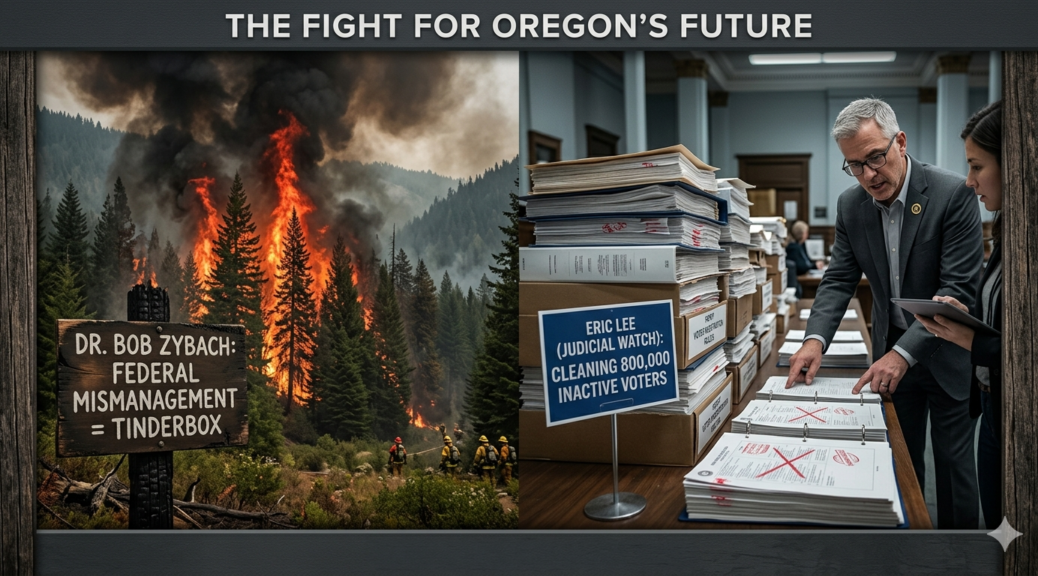
MARK: And welcome back. In our final segment, we’re talking today to Derrick Holdstock — he has more than twenty-five years of experience and is the owner of Western Fire Resources; his website, if you’d like to visit, is WesternFire.us. A previous guest, Dr. Bob Zybach, has said that between 1952 and 1987 — thirty-five years — Oregon had only one catastrophic wildfire, and he attributes that largely to forest management. So one of the things that’s never made sense to me is this idea of the roadless rule — how important is it, going out there fighting these fires, to have good road access? And yet we’ve decided not to have roads in a lot of these wilderness areas.

DERRICK: It’s huge — and it’s not just roads, but brushed-out roads, because roads create a mineral firebreak simply because there are no surface fuels on the ground. But beyond that, if you needed to use a road — say, to do a defensive firing operation — you need to take the side of the road you’re going to burn off of and remove the ladder fuels, because ladder fuels are what take a surface fire up into the canopy. You need to remove limbs, small trees, brush. The problem with roads in roadless areas is the roads are still there, and they’re still largely open on the surface, but all the brush has encroached — so they’re pretty useless as fire lines as they currently stand.

MARK: One of the things that seems to pervade so much of environmental thinking, certainly in places like Oregon, is this notion that we need to leave nature alone, and it’s okay that fires happen. There was a famous case back in — I think the eighties, maybe the nineties — up in Yellowstone, where they just let all those acres go up in flames, and defended it as a good thing: forests need fires. But in Oregon, we’ve decided not to touch our acres, supposedly in defense of the spotted owl. When you let millions of acres go up in flames, it tends to impact their habitat — and recently, Oregon State researchers have said the spotted owl is effectively extinct. So I don’t see how this idea of just letting the fires be, without access, is a good idea for fighting these forest fires, or even remotely a good idea environmentally.

DERRICK: Yeah — you hear the same thing in the climate change debate. One thing that’s absolutely irrefutable is that fuel cannot burn if it’s not there. So even if we give the climate-change claims the benefit of the doubt, properly managed fuels are still the only practical way to keep fires small. I don’t care how hot it is, how dry it is, how much wind there is, how much lightning there is — if the fuels lack the continuity and arrangement to sustain extreme fire behavior, extreme fire behavior can’t happen. And the way to get at that is either fuels mitigation, or allowing certain fires to burn at manageable levels — which, when there are houses in the way, is really hard to do in a lot of cases. In the past, there was so much low-intensity fire that there really weren’t a lot of extreme fires, because that undergrowth was kept managed. But as we’ve suppressed fires and taken management out of the system, the fuel has just grown up, and it’s hard not to have big fires now.

MARK: We only have a couple of minutes left, and you’ve laid out a lot of things that are broken — the fuels mitigation nobody’s doing, the dispatch system issues. So what are some of the solutions, from your perspective?

DERRICK: First, I think payments to government agencies should be limited to the true cost of response plus reasonable depreciation, because government agencies aren’t businesses, and removing the profit motive would stop them from acting like one. We should always order the closest resources first — and then, once you get into extended attack, some of those closer resources need to be returned to their home stations so they can cover new starts, while resources that responded later can handle the extended attack. Private resources don’t have a jurisdiction to cover, so that works for them. As far as fuels management — one of the highest-impact things we could do, year-round or at least during the snow-free season, is prep roads as fire lines. If you could order, say, private engines — there are seven hundred and thirty-three of them — for pre-position on initial attack, and have them spend their days prepping roads and doing priority fuels work in communities, you could get roughly a hundred feet on either side of primary and secondary roads on Forest Service and public lands done in a ten-to-fifteen-year timeframe, for only two to three percent of our current wildfire budget. That would result in a network of pre-prepped fire lines immediately available for direct attack or defensive firing, and it would lower suppression costs through smaller fires — it would pay for itself over time.

MARK: Derrick, unfortunately we’re up against the clock — this has really been fascinating, and thank you for what you do. You’re literally putting your life on the line to mitigate against stupid environmental policies.

DERRICK: Absolutely — I appreciate you having me on.

There’s an inherent problem with government and government spending. Government spends money to fix problems. But the problem with that thinking is that you need problems — if there aren’t problems, you don’t need to spend other people’s money. So if you solve the problems… you can probably figure that one out for yourself.

Getting back to this election: as I’ve watched politics from behind the curtain, I can tell you there are few things more frustrating than knowing there are people out there who could help — but don’t. So I hope you’ll take this election seriously. Find some candidates to get behind — if you need help finding those, we’ve got some identified for you. Remember, you don’t have to be in their district to help.

Take this election seriously, before it’s too late — because, as we say every week, the best information does you no good if you don’t use it. Reagan, what do you think?

Catch the show live
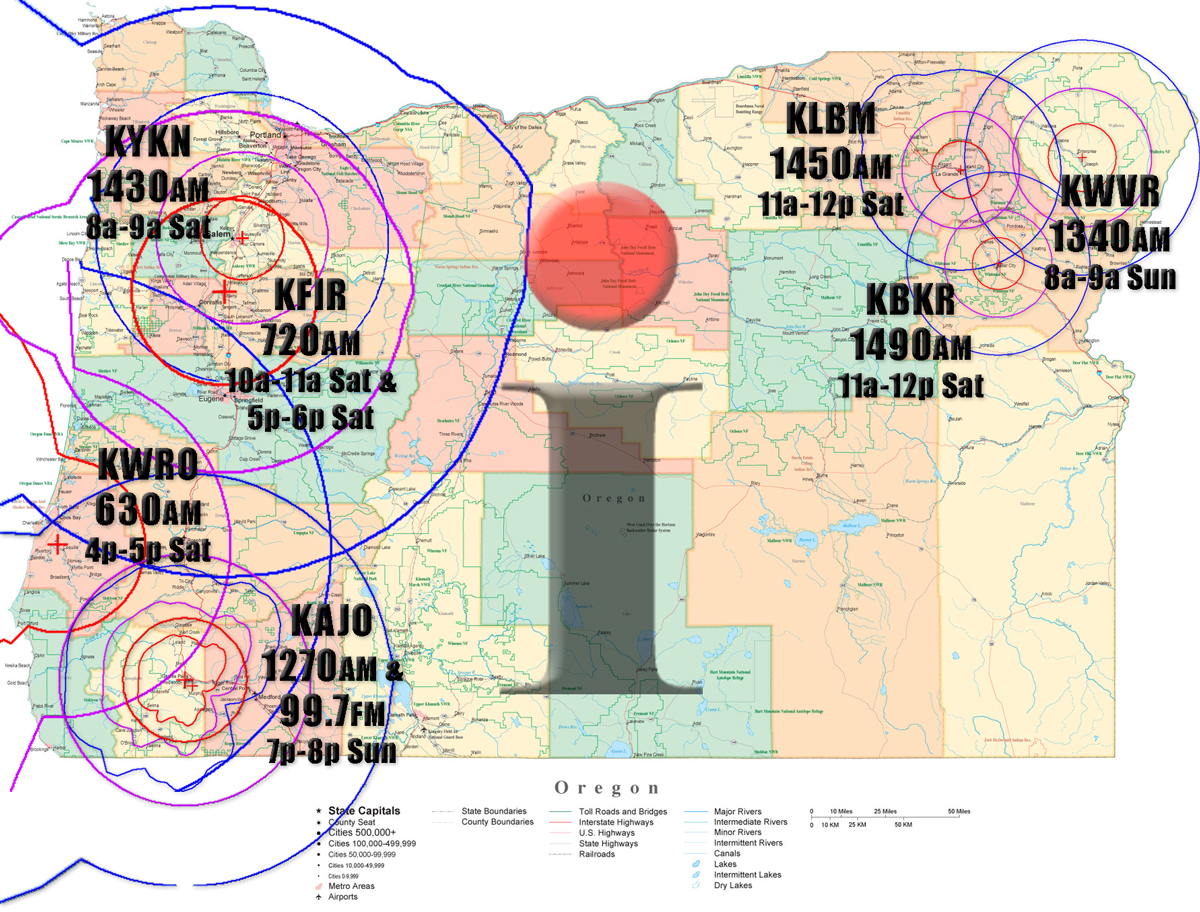

Map of I Spy Radio broadcast areas and air times

The I Spy Radio Show airs weekends — seven times across seven real radio stations, not internet-only streams. Listen anywhere through the stations’ live streams. See when, where, and how to listen for the full schedule.

Missed it? The podcast posts Mondays, after the broadcast stations air the show — here on this page or on your favorite platform.

I Spy Radio  —  Keeping an Eye on Big Government
16-29 Breaking the Spell — Mike Gonzalez on the Rise of Socialism in America

16-29 Breaking the Spell — Mike Gonzalez on the Rise of Socialism in America

Breaking the Spell — Mike Gonzalez on the Rise of Socialism in America

Aired  July 18–19, 2026
Runtime  ~48 min
Host  Mark Anderson
Guest  Mike Gonzalez, The Heritage Foundation
Listen  See our network of stations, areas, times and livestream options

About this episode

Mike Gonzalez fled Communist Cuba with his family when he was twelve years old. Now a senior fellow at The Heritage Foundation, he joins Mark to explain why socialism is winning young voters who’ve never lived under it — and why that’s no accident.

Mark and Mike Gonzalez, the Angeles T. Arredondo E Pluribus Unum Senior Fellow at The Heritage Foundation and co-author of NextGen Marxism, trace how a cultural takeover of institutions like the Smithsonian is reshaping how young Americans see their own country, and how billions in taxpayer dollars — from USAID to the Corporation for Public Broadcasting to a $2.8 billion “climate justice” grant program — have quietly subsidized the activist ecosystem behind it. They dig into whether socialist candidates actually win head-to-head races against Republicans or whether vote-splitting and ranked-choice voting are doing the real work, and bring it home to Oregon: the primary upset of a sitting Democratic state senator, an open Portland House seat, and a sitting DSA incumbent since 2022 — plus Portland DSA’s open push for single-payer health care here in Oregon.

The back half of the show is built around what Mark calls “breaking the spell” — a set of direct, personal questions aimed at disarming committed socialists, including two on-air hypothetical tests: would they personally give away 90–95% of their own income today, and would they accept a nine-month wait for surgery under the kind of socialized medicine they’re proposing for everyone else? The show closes with Gonzalez’s practical, on-the-ground advice for pushing back — at school board meetings, at the ballot box, and in conversations with friends and family who’ve bought into the utopia.

In this episode

00:44
01

Fleeing Cuba — From Journalist to Fighting Socialism Full-Time

Gonzalez on leaving Cuba at twelve, his path from the Wall Street Journal to Heritage, and how the Smithsonian became his current fight. Plus: the deep-blue primary playbook behind Darializa Chevalier’s win over a three-term incumbent in New York.

10:29
02

Why Socialism Is Winning Now — and the Smithsonian’s $1.1 Billion Question

The Cold War generation gap, the manufactured “Hispanic” census category, and the White House’s 160-page report on the National Museum of American History — plus whether institutions that keep indoctrinating should lose public funding.

18:08
03

Follow the Money — USAID, CPB, and the $303 Billion Question

How defunding USAID correlated with seven straight conservative wins in Latin America, the OMB’s push to do the same thing domestically, and the $303 billion a year flowing to more than 100,000 NGOs — compared to what conservative causes receive.

25:51
04

Do They Win Head-to-Head? Vote-Splitting, the Democratic Civil War, and Oregon

Why every headline socialist win is a safe-seat primary, the academic case for ranked-choice voting as a deliberate DSA strategy, and whether establishment Democrats like Shapiro and Fetterman can actually stop the party’s leftward drift.

33:20
05

Breaking the Spell, Part 1 — The Hypocrisy Tests

What actually disarms a committed socialist, Gonzalez’s own family history with envy and expropriation in Cuba, and Mark’s two on-air tests: giving away your own wealth, and waiting nine months for surgery — plus Oregon’s own push for single-payer health care.

40:46
06

Breaking the Spell, Part 2 — What Actually Works

Practical, local-level advice for pushing back — school boards, syllabi, parent-teacher nights — plus whether “communist” is the right line of attack given capitalism’s own sliding favorability numbers, and Gonzalez’s closing message to young Americans.

Links & resources mentioned

Mike Gonzalez & The Heritage Foundation

  • Mike Gonzalez (heritage.org staff bio)
  • The Heritage Foundation
  • NextGen Marxism: What It Is and How to Combat It (with Katharine Gorka, Encounter Books, April 2024)
  • The Plot to Change America: How Identity Politics is Dividing the Land of the Free (Encounter Books, 2020)

The Smithsonian & “Saving America’s Story”

Follow the Money

Elections, Vote-Splitting & Oregon

Oregon’s Universal Health Care Push

  • Right to Health Care constitutional amendment (Measure 111, 2022) — Universal Health Plan Governance Board created by HB 1089 (2023); single-payer plan due to the Legislature by September 2026

About the guest

Mike Gonzalez
Angeles T. Arredondo E Pluribus Unum Senior Fellow  ·  The Heritage Foundation

Mike Gonzalez fled Communist Cuba with his family as a child. A former journalist who wrote for the Wall Street Journal, he is now the Angeles T. Arredondo E Pluribus Unum Senior Fellow at The Heritage Foundation, where his current work centers on the Smithsonian Institution and the census’s racial and ethnic categories. He is co-author, with Katharine Gorka, of NextGen Marxism: What It Is and How to Combat It (Encounter Books, 2024), and author of The Plot to Change America: How Identity Politics is Dividing the Land of the Free (Encounter Books, 2020).

heritage.org/staff/mike-gonzalez

Full transcript ▸

Segment 01 · Fleeing Cuba — From Journalist to Fighting Socialism Full-Time · 00:44

Mark:

Let’s say that you wanted to destroy America, but you didn’t want America to know that you wanted to destroy America. How would you do it?

Well, one of the first things you would need to do is figure out how to get money. A lot of money. And nothing bothersome like going out and earning it, or developing a billion-dollar company — that’s a lot of hard work. Besides, you’re going to need much more than that, because destroying America is going to require reprogramming people, distorting their view of reality, and getting them to believe a lie.

We’ve talked about that before — we interviewed one of the co-authors of the book Disinformation. This was a Soviet program back when the Soviet Union was still around, and that kind of disinformation is a key part of socialism or communism, if you prefer — they’re the same thing. But to do that, you need a tremendous amount of resources and money, because doing it on a country-wide scale is not easy or inexpensive. And you’ll need allies — the media, universities, clever marketing slogans. So you need a lot of money.

Now, what’s the largest business in America with practically a bottomless checkbook? No, it’s not SpaceX or Google or one of the new AI companies. It’s the American government. They spend trillions of dollars every year — so much they can barely keep track of it. You don’t need a trillion dollars every year, that would be too obvious. But you do need to bleed off money by the billions — hundreds of billions of dollars every year.

And that’s easy — fraud, or setting up imaginary problems like Climate Change, telling people if we don’t do something the world is going to end. You scare people into believing things that simply aren’t real. And you need enemies — what better enemy than America itself, since that’s what you’re trying to destroy. But you can’t make it too obvious that you’re just voting to give Democrats money. Instead you need a network of shell companies — nonprofits. And you need laws to protect how all of that public money gets sent to them, and how it’s spent, and who they give it to.

On today’s show, we’re taking a deeper look at socialism. The goal today is to give you some idea of what you’re facing, because it’s coming here — especially right here in Oregon — unless people wake up and realize what the stakes are and do something about it.

As we say all too often here on I Spy Radio, the fight for freedom is an everyday fight. So to talk about the rise of socialism in America, I’d like to welcome Mike Gonzalez, the Angeles T. Arredondo E Pluribus Unum Senior Fellow at The Heritage Foundation. That is quite a mouthful, but it’s great to have you. Thanks for joining us.

Mike Gonzalez:

Mark, thanks a lot for having me on. Arredondo — it is a mouthful, but it’s a very nice family name.

Mark:

Oh, yeah, I have no doubt about it. So, we know you’re busy getting ready to testify in front of Congress, so we really appreciate you joining us here. As I understand things, you and your family left Cuba — so how old were you when that happened?

Mike Gonzalez:

Oh my God, it’s so long ago — I was twelve years old when I left. That’s not exactly last week, if you look at me.

Mark:

So do you have any memories of it yourself, or is most of what you know entirely secondhand, from your family and what they’ve told you over the years?

Mike Gonzalez:

No, no, no — I have many, many memories, most of them very bad, because communism is a horrible thing and we shouldn’t be inviting it into this country. But there you are. I still have searing memories of what that was like in the sixties.

Mark:

Well, the owner of one of the stations we air on grew up back in Romania when it was still behind the Iron Curtain, and he left when he turned twenty-one, if I remember right. So in terms of what you experienced, are there details that have really stuck with you as you’ve gotten older and started studying socialism for a living — things that just jump out and say, oh my gosh, people really need to know this?

Mike Gonzalez:

Well, socialism has evolved from the socialism that I experienced — I experienced a revolution, like the communism it used to be. You talk about your friend in Romania — we all have war stories to trade. I was just in the Czech Republic two weeks ago; we say we’re members of a club nobody wants to be a member of. So it’s socialism today, and I’ve written a few books about how this has undergone an evolution — a huge change that’s more cultural. It affects our cultural institutions. The work I’m occupied with right now is the Smithsonian. The Trump administration, quite rightly I think, has focused on the Smithsonian Institution, which is the world’s largest museum complex, and cultural Marxists have taken it over. They’ve tried to use history and these museums that the nation has entrusted to them for societal change — that’s what cultural Marxists do. They try to use the culture, the educational system, to change how people think from within. It’s no longer a revolution like my family experienced — but if you change how people believe, then you have millions of voters voting for someone like Zohran Mamdani, or for Katie Wilson, or for Graham Platner, or for Darializa Chevalier. And they’ve been told by their cultural institutions that this is good, that this is how society needs to change — that American culture needs to change. That’s what I’ve gained through my studies, not through personal experience.

Mark:

Well, I think so much of what today’s socialists think — when it comes to why they want socialism — is because they have no experience with it. It’s really very much this imaginary utopia. So what’s the reaction of today’s socialist wannabes when you tell them, hey, have you ever lived in a socialist country or experienced it? Because my family has.

Mike Gonzalez:

Well, they don’t, really. First they’ll say platitudes like, “that wasn’t really socialism,” or “it’ll be different this time, we know what we’re doing.” Or they’ll say what happened in Cuba was actually pretty good — it was an attempt at equality, and you’re just a malcontent, you should go build socialism in Cuba. They’ll say a number of things that evade reality. To quote scripture, they know not what they do.

Mark:

Yeah, or what they espouse. You’ve got a recent book out with Katharine Gorka, NextGen Marxism, and I got a really interesting review from a Manhattan Institute fellow saying it shows readers the nature of the beast, and how to fight it. I’d like to come back to that in more depth later in the show — but for now, can you give our listeners a preview? What are some of the things that work to stop the socialists?

Mike Gonzalez:

Well, I think what Trump is doing — you have to take the cultural institutions back. You have to clean out the universities, clean out the Smithsonian, and that’s what’s being done right now. The administration looks serious about taking back an institution that belongs to the American people, not to these Marxists. I’m testifying in Congress twice next week on this issue. So all of these things — fighting the universities, the Smithsonian, the K-through-12 school system, bringing down the Department of Education, fighting the teachers unions — all of it matters. That’s the way to do it. But you also have to run candidates against these people. Darializa Chevalier is going to be elected — she’s in a very deeply blue district in New York. She won the primary because nobody turned out to vote except her followers. She beat Adriano Espaillat, a working-class guy who’d held that seat for three terms, was an appropriator, brought a lot of bacon to his district. And yet her very organized, very disciplined followers were able to beat him in the primary. And once you win a Democratic primary in a deep blue district, you win. She’s going to win the election. She’s going to be in Congress.

Mark:

Absolutely. Okay, stay with us — today’s show is all about socialism and defeating it. Coming up: why is socialism gaining so much ground in today’s America?

Segment 02 · Why Socialism Is Winning Now — and the Smithsonian’s $1.1 Billion Question · 10:29

Mark:

Our guest today is Mike Gonzalez, senior fellow with the Heritage Foundation, and we’re talking about the rise of socialism — later on we’ll ask him about stopping it. So, Mike, socialism isn’t new — Bernie Sanders has been selling this since the 1980s. So the question isn’t whether socialism exists in America, it’s why it’s suddenly appealing and gaining ground, especially with people under thirty. I’ve got a theory on this: I don’t think this current push for socialism would have gone anywhere in the years right after the fall of the Soviet Union, when most adults had grown up in the shadow of the Cold War and understood personally what the fight against communism actually was. Young people today just don’t have that reference point. Do you think that’s one reason this is working now — that they just have no clue what they’ve actually fallen in love with — or is there something else driving it?

Mike Gonzalez:

This is a variety of things. Yes, we were fighting the Soviet Union — American people saw that the Soviet Union and the countries behind the Iron Curtain lacked freedom and were economically backward, all the things that happened under communism. But these things were also taught in school. In the 1970s, in high school, I was taught a class — Americanism versus Communism — it was mandatory. People were taught the nature of communism; immigrants were taught to assimilate. All of these things have disappeared. The left has won a number of key, very important victories that have left us without any weapons to fight communism. So all of this has to be reversed. I’m about to get busy trying to get rid of the racial categories in the U.S. census — categories like “Hispanic,” for example, are fake, synthetic categories the left created in the 1970s to balkanize the nation, to drive us apart, to make sure we had no assimilation ethos anymore. We have to be serious about getting rid of all of these things.

Mark:

Well, I know that Hispanics used to be considered Caucasian, and then that got split out, as you say —

Mike Gonzalez:

There were no Hispanics. There are no Hispanics. There’s no Hispanic cuisine, no Hispanic food, no Hispanic culture, no Hispanic history. If you were a person of African descent from the Caribbean or South America, you were considered a person of African descent. If you were of European descent, you were considered a person of European descent. This is what the left did — they were very methodical about it. They created “Hispanic” in 1977 through the Office of Management and Budget, and then they said, we’re going to retroactively change history. For example, we celebrated the 250th anniversary of America, and people were talking about Bernardo de Gálvez, a general who won many victories on the side of the colonists, and people were saying, well, there’s your Hispanic general. No — he was not a Hispanic general, he was from Spain. My own ancestor, who fought alongside him at Baton Rouge and Pensacola, was from Cuba. Hispanics did not exist at that time. But the left is very clever — they talk about Hispanic participation in the Civil War. How could there be Hispanics? The category hadn’t been created yet.

Mark:

Well, just to get back to what you talked about, because I think this culture war is so important — that’s one of the reasons this is taking hold. You had a really interesting article, and I think you were on Fox News talking about this too — the White House put out a report called “Saving America’s Story,” accusing the Smithsonian’s National Museum of American History of — well, we talked about that in the previous segment, but it really strikes me that this is so key to why socialism takes hold: they have to erase the past, or rewrite it, to cast America as the villain instead of the hero. That’s not an accident — it’s standard operating procedure for socialism, communism, Marxism, whatever form it takes, because they need villains. That’s part of good story-crafting — you’ve got to have a villain to rise up against. So they’ve recast America as the villain, and they need people not to know how good things used to be, when socialism inevitably failed. Is that a fair read?

Mike Gonzalez:

I urge everybody listening to my voice right now to go to the White House website and find this report on the Smithsonian and read it, because it’s a really important report — a hundred and sixty pages long, five hundred and fifty-two endnotes. It quotes the leaders of the Smithsonian, and all of them say they want to use the Smithsonian — not just Smithsonian history itself, but history as a tool for change. They want to change America systemically, and they’re going to use this huge museum complex, and history itself, the past, to create societal change in America. And they’re doing this with our money — 1.1 billion dollars of our money that we give them every year.

Mark:

Yep, I was just going to point that out — this is what they’re doing with America’s tax money, to rewrite America’s history. There was a really interesting line from an article by the Victims of Communism Memorial Foundation that called schools and universities, quote, “the epicenters of indoctrination.” And if that’s true — getting back to funding — should schools and universities that keep doing this lose all public financing, including things like research grants?

Mike Gonzalez:

Yeah, absolutely. With the Smithsonian — we defunded the Corporation for Public Broadcasting last year, and it should have been defunded, because they were using taxpayer money for biased reporting, and we don’t need to pay a news outlet to do that. However, we can’t do the same thing with the Smithsonian. The Smithsonian is really important — societies and cultures need national museums. They need museums that preserve, collect, and curate national history and heritage to transmit it to future generations. Museums play a key role in that. When Africa became decolonized, the first thing those countries did was create national museums. When the communists took over mainland China in 1949, the Nationalists saved hundreds of thousands of artifacts from five thousand years of continuous history across all the dynasties and brought them to Taipei — I’ve been to that museum — so that the Chinese in the future would know what Chinese culture and heritage was. So we cannot just defund the Smithsonian. We just need to fire the leadership.

Mark:

Yeah, absolutely. Okay, I do want to come back to the money side of things and how we are funding our own demise. That’s next, with Mike Gonzalez, senior fellow at the Heritage Foundation, talking about the dangerous rise of socialism.

Segment 03 · Follow the Money — USAID, CPB, and the $303 Billion Question · 18:08

Mark:

And welcome back — this is the I Spy Radio Show, talking today to Mike Gonzalez, senior fellow with the Heritage Foundation. His family fled Cuba after socialism, or communism, took over there — doesn’t matter what you call it, there are different degrees of the same immoral system that doesn’t recognize individual rights, the very thing America was founded on. And now socialism is on the rise right here. In the last segment we talked about the money and the public funding of organizations that hate America — the Smithsonian, public schools out there trying to change not just history but how people learn and think about America. I think that’s really endemic to why socialism keeps growing — we’re funding our enemies. And aside from the fact that socialism itself is a parasite, a tick that can only survive by feeding on the back of capitalism — when we talk about the public funding of these organizations that hate us, it’s much more than just these institutions. For decades we’ve been funding things like green energy and climate change, and none of that money ends up on the right — it’s all going to the left, and we’re talking trillions of dollars. Al Gore himself said that about six hundred billion dollars from the Inflation Reduction Act — one bill from the Biden administration — was going to give them six hundred and thirty-some billion dollars, and it’s actually even more than that, because some of those tax credits would have kept going forever had the Trump administration not pulled them. One estimate I saw was over one point two trillion dollars that would have gone to the left. Do you think the Trump administration is finally wising up to the fact that we’ve got to stop giving taxpayer money to people within the country who hate the country?

Mike Gonzalez:

This is something the left has been very, very good at, and the right just doesn’t know how to do — and we shouldn’t do it either. But the left has created a machine for giving taxpayer money to its pet causes and pet organizations. The main example of this is USAID, the U.S. Agency for International Development. When Trump, Marco Rubio, and Elon Musk came in in January 2025, one of the first things they did was dismantle USAID. Since then — and a good paper is waiting to be written on the correlation — we’ve had seven victories in a row by conservative candidates in Latin America. I was just an hour ago with the new foreign minister, who’s about to become the new president of Colombia, taking over from the communist Petro. When Petro ran in 2022, our government sent thirty million dollars through USAID — sent it straight to the left in Colombia. We did this constantly. Now that USAID is no longer there to finance their institutions, they’ve lost seven presidential elections in a row. We need to get wise. And we’re doing this internally too, by the way — OMB, the Office of Management and Budget, has just proposed a rule to do the same thing with domestic funding — to dry up the funding for these institutions domestically, not just internationally.

Mark:

Well, I’m really encouraged to hear that, because feeding taxpayer dollars to the left and these organizations eventually filters down to campaigns. I came across one non-profit research group that found at least thirty-five thousand nonprofits get half or more of their revenue from federal taxpayers, and that taxpayer financing provides roughly three hundred and three billion dollars a year to more than a hundred thousand NGOs. That’s a tremendous amount of money — and I don’t know of any funding at all that goes to the NRA from U.S. taxpayer dollars, or to pro-life groups, or to conservative evangelical churches, getting even one billion dollars. And here you’ve got three hundred and three billion dollars a year going to a hundred thousand NGOs. That’s pretty hard to overcome.

Mike Gonzalez:

Right, and we have to stop doing that. I think this is another great thing President Trump — he’s not perfect, but he’s doing a lot of intelligent things, and the people around him are doing a lot of intelligent things too. One of them is getting rid of this machine that funds the left with money collected from all Americans — the CPB, the Corporation for Public Broadcasting, money from all Americans going to fund radio and TV stations that were inimical to the wishes and interests of the average American citizen. No more of that.

Mark:

Well, that’s so encouraging to hear that Trump is finally waking up to that — and I think he’s surrounded himself with much better, more competent people this time around than he had in his first administration.

Mike Gonzalez:

Absolutely.

Mark:

I think it’s places like Congress, in both the Senate and the House, that seem to be resistant to this. I’d like to think they’re finally going to start pulling the plug on this, because there’s another one I came across too — I mentioned the six hundred and some billion dollars from just one bill, the Inflation Reduction Act. There was a separate two-point-eight-billion-dollar Environmental and Climate Justice program tied to funding groups like the Climate Justice Alliance, and those payments are currently on hold because it’s tied up in the courts. But if this isn’t fixed legislatively — and it’s got to be fixed legislatively, not just administratively —

Mike Gonzalez:

Well, I agree with that — things are going to have to be codified by Congress. For example, that OMB rule I just mentioned will have to be codified by Congress too. In the meantime, the president is going to have to act through executive orders. You see how difficult it is just to pass the SAVE Act, even though Republicans have had majorities in the House and the Senate. This should be a gimme by now. And by the way, it’s not just people on the Hill opposing the president — there are people deeply embedded in the bureaucracy who are still there. For example — and I think we’re going to hear more about this, breaking new ground here — money is still going out from the State Department to fund some of these leftover programs. I’m not the guy doing that research, but I know people who are. If that’s true, that’s career officials deeply embedded at the State Department trying to do what they can to sabotage and subvert the policy of the elected government of the United States.

Mark:

Yeah, that is absolutely shocking, and yet not surprising. Socialism is the opposite of America’s founding, so in order to pull it off here, you’ve got to have people on the inside taking it down from within. All right, it’s time for a break — coming up, we’re going to talk more about how socialism wins at the ballot box. Stay with us.

Segment 04 · Do They Win Head-to-Head? Vote-Splitting, the Democratic Civil War, and Oregon · 25:51

Mark:

Mike Gonzalez, senior fellow with the Heritage Foundation, is our guest today. We’re talking about the rise of socialism here in America, which was founded on the exact opposite values of what socialism’s values are, if you can call them that. Mike, we talked earlier about them winning elections, and you’d mentioned that when a socialist wins in a deep blue district, it’s an automatic shoo-in that they’re going to win the election.

Mike Gonzalez:

If they win the primary — if they win the primary.

Mark:

Right — if they win the primary, then it’s a shoo-in for them to win the general, and boom, they’re in Congress, or whatever office at the state level. So I went looking for a single documented case this cycle of a democratic socialist beating a Republican head-to-head in a genuinely competitive district — not a safe seat, and not a multi-candidate plurality like when Mamdani won against two other opponents. I couldn’t find one. Every headline win is a Democratic primary in an already safe blue seat. Are you aware of any cases where they’ve actually won against a Republican in a general election?

Mike Gonzalez:

Well, they beat the Republican in New York.

Mark:

Well, yeah, but that was a plurality — I’m talking about a head-to-head.

Mike Gonzalez:

No — he got over fifty percent of the vote.

Mark:

Yeah, I wasn’t clear there — I meant a plurality of candidates, not a plurality of the vote totals. There were three candidates in that race, and I was wondering if you knew of a place where there was a real head-to-head in a competitive district — someplace like New York City, which was never going to be competitive for Republicans anyway. I mention that because what we’re seeing here in places like Oregon — there was a real push last year to get ranked-choice voting; Portland is actually using it now — and there’s some genuine academic research behind this. It goes back to things like Duverger’s Law and Arrow’s Impossibility Theorem, which show that once you’ve got three or more names on a ballot, that election can be manipulated, and a candidate with genuine minority support can win outright. Do you think that’s the actual mechanical reason DSA has been pushing so hard for things like ranked-choice voting and multi-candidate strategies — not idealism, but simple math and statistics?

Mike Gonzalez:

What I’ve seen — the people who put that strategy together, for example, there was a guy named Daniel Moraff, one of three people who helped build it. He wrote a long piece for In These Times, a communist magazine, about nine years ago, laying out the strategy. The strategy was to win in the primaries in very blue districts. They figured out the Green Party doesn’t win, the third party never wins. But if you take over the Democratic Party with a socialist candidate, a DSA candidate — and this is a takeover, by the way, a zombie takeover of an existing party — and you win in these blue districts, then you’re assured of winning. We’ve got another example in the Democratic primary in the city where I am right now — the mayor was DSA, the one who won, I forget her name. There’s no doubt in my mind, or in anybody’s mind — I’m not a betting man, but I’m not going to bet against her being elected in November, because ninety-four percent of Washington voted for Kamala Harris. Let that sink in — that’s not ninety-four percent of any one race, that’s all of D.C.’s voters. Ninety-four percent voted for Kamala Harris. You’re telling me they’re not going to elect the socialist mayor? No — they will elect the socialist mayor. So the blueprint this guy Moraff set up, I think, is working really well for them.


Mark:

Well, one of the things I hear on occasion is people like James Carville out there aghast at what’s happening — that the socialists are starting to win. I’m not sure how seriously I take that, because the Democrats have been lurching left just fine for a couple of decades now. Ever since Clinton left office, they’ve been marching steadily to the left, and now all of a sudden they’ve got these socialist candidates and — surprise, surprise — they’re winning. Well, you’ve been telling them for the last two decades that that’s perfectly fine. So do you think there’s an actual struggle within the Democratic Party — that they’re genuinely concerned about these democratic socialists — or are they perfectly fine with this?

Mike Gonzalez:

Well, the governor of Pennsylvania, Josh Shapiro, is fighting this. Rahm Emanuel is fighting this. One of the senators from Pennsylvania, John Fetterman, is fighting this. God knows Chuck Schumer and Hakeem Jeffries are not fighting it, but you have enough Democrats of renown — I just named four of them — who are saying, no, we cannot allow the DSA to take the party over. It’s going to be a lot of fun watching what they do.

Mark:

But at the same time, you’ve got, as you mentioned, D.C. voting ninety-four percent for Kamala Harris. So I question whether the average Democrat is really going to say, “I am so committed to fighting socialism within our own party that I’m willing to vote for a Republican instead of a socialist,” when it comes to the general.

Mike Gonzalez:

Oh, no, no, no — that’s not going to happen. That, in my opinion, will not happen. They will not vote for a Republican. I’m looking out the window at the Capitol right now, in the city where I am — they will not vote for the Republican. Let me take that to the bank, man.

Mark:

Right. But in the broader national sense, do you think enough Democrats will say we need to take this seriously enough that we will, in fact, vote for a Republican over a socialist?

Mike Gonzalez:

No, that’s not going to happen. What some of them will do is fight internally — the people I just mentioned, Shapiro, Rahm Emanuel, John Fetterman, they’ll fight internally. When it comes to final election day, Republican versus a DSA candidate, maybe some will stay home. I don’t think we’re that divided right now — the Democrats have really energized against Trump, the same way we’re energized for Trump. And the reason for that is Trump gets things accomplished. The reason people love him is he gets things accomplished, and the reason people hate him is he gets things accomplished.

Mark:

Our guest today is Mike Gonzalez from the Heritage Foundation. Coming up, we’re going to pick his brain on how to deprogram a socialist — we know some people break away. What works, and what doesn’t.

Segment 05 · Breaking the Spell, Part 1 — The Hypocrisy Tests · 33:20

Mark:

There’s a saying that goes something like, “those who don’t understand socialism are socialists, and those who do understand it are not.” Our guest today is Mike Gonzalez — his family escaped Cuba when he was twelve, and he’s now a senior fellow at the Heritage Foundation. Is there a specific question, or a specific thing you say to a committed socialist, that you’ve found genuinely disarms them — where you can actually see the light switch on behind their eyes about what socialism really is?

Mike Gonzalez:

Look — if you’ve been taught by the schools, the universities, the cultural institutions, the media, that this country is systemically racist, that it’s structurally oppressive, that slavery and Jim Crow delegitimize this country from the beginning, and that’s become your faith, and you believe in a worldly utopia — there’s not a lot that can be said to convince you otherwise. But I have seen people convinced in socialist countries — when they get sent to the gulag, or when their father gets shot by a firing squad, or when their wife or husband goes to the authorities and spies on them. When you come up against the reality of socialism — the gulags, people snitching on you, people taking your farm or your cows away — then you can become convinced. But in terms of rhetoric, we have to take the institutions back — I keep coming back to that. We have to take the cultural institutions back, the universities back, the K-through-12 schools back, the museums back, the art houses and entertainment houses back. Because once people are indoctrinated, nothing will change — unless they end up in a gulag in Siberia.

Mark:

Well, there’s a whole field of study about changing people’s minds once they’ve been made up, and I like how you framed it — it really is its own religion, and trying to get somebody to change their religion once they’ve grown up in it is very difficult. So is the process to just chip away at their beliefs — does that work?

Mike Gonzalez:

I’ll just say what I said — no, you have to actually put them on a train to Siberia.

Mark:

Well, I’d hope that would wake them up, although for some people I’m not entirely sure. But let’s do a little brainstorming — here’s a test. In terms of messaging, if somebody wants to redistribute the wealth of the rich, what about asking them if they’d personally be willing to give away ninety-five percent of their own income starting today, with no complaints? If you confront somebody with a scenario like that — where the rich and wealthy give up ninety percent or more of their wealth, and eventually that wealth runs out and they have to turn to people like the person you’re talking to — are you willing to give up ninety percent of your income? Does that have any effect?

Mike Gonzalez:

I have strong memories from the sixties — I don’t think a lot of people were bothered that my family’s house and everything else was taken away. This envy is behind a lot of this, but we rarely write about envy, and yet it’s a driver of a lot of these policies and politics. I remember a lot of people who quietly went along and thought it was good that they took the farm away, good that the country took it away, good that they took the car away. Sorry to reveal the human condition to you, but there it is.

Mark:

Yeah, it’s socialism at its core — it’s really completely self-centered. They promote it as something great for all of society, but it’s very selfish — it’s “me first, you’ve got things, I want it.” I think Margaret Thatcher was the one who said it’s the politics of envy and greed, and I think that’s exactly right. So when you look at places like the socialized countries — Canada, the UK, so much of the EU — they’ve got nationalized health care, and that’s a big thing happening right now here in Oregon too. In fact, the Portland chapter of the Democratic Socialists of America is now openly pushing for a switch to single-payer, universal health care, free access for everybody, right here in Oregon. It’ll only cost eighty-three billion dollars a year — but that’s beside the point. So again, to try to chip away at their mindset: based on what happens in these socialized countries, ask them — if they needed a serious operation, would they be willing to accept a nine-month to a year-long wait, and let other people go first, the way people generally do under socialized medicine in Canada and elsewhere? Would that shock them into some kind of sense of reality?

Mike Gonzalez:

No — again, no. If you’re in Canada right now and you want to leave, you have to pay an exit tax. So say you have a portfolio — a million dollars made up of American companies, Amazon, General Motors, Toys R Us, whatever — you have to act as though you’re selling that portfolio and pay the Canadian government the tax on it before you’re allowed to move. And Canadians are okay with that.

Mark:

Well, they’re trying that same thing in California — Newsom wanted some kind of exit tax too, because so many millionaires were leaving, and he wanted them to pay an extra tax on the way out. I think that stalled, but last I knew he was at least trying it.

Mike Gonzalez:

Yeah, because that’s what happens — why did the Berlin Wall go up? When governments do these things, people flee. Why did my parents flee? Marx wrote about this in the Manifesto — he said people are going to react badly when their property is taken away, and that’s why he said himself there will be a need for “despotic inroads.” That’s the English translation — there’s going to be a need for despotism, because people don’t react well to having their stuff taken away.

Mark:

Yeah, you know, in some ways it’d be nice if schools actually taught the Communist Manifesto for what it really says, not just what people imagine it says.

Mike Gonzalez:

Right.

Mark:

Okay, let’s take a break. Then we’ll wrap things up with Mike Gonzalez, senior fellow with the Heritage Foundation, talking about breaking the spell of socialism. Coming up: some of the practical things you can do.

Segment 06 · Breaking the Spell, Part 2 — What Actually Works · 40:46

Mark:

And welcome back — our final segment now with Mike Gonzalez, senior fellow with the Heritage Foundation. We’ve been talking really since the start of the show about how to defeat socialism, and your book review, as I said, promised readers would learn how to fight it. In your experience, can you give our audience some practical steps — things they can be doing? What actually works to push back against this at the local level, maybe with friends and neighbors or family members — a lot of families are dealing with this too — and what tends not to work?

Mike Gonzalez:

I think you have to monitor what your children are studying. You have to ask inquisitive questions — “what did you learn today, let me see your homework.” You have to attend the Board of Education meetings. You have to go to parent-teacher night. You have to look at the syllabus your kid has for a class at Cornell or Penn State. You have to not abdicate your role as a parent — you have to follow these things very closely.

Mark:

Well, definitely — knowing what your kids are being taught is absolutely key to stopping this at the next generation. So, in terms of political strategy — because we’ve got three now, well, there was one Democratic Socialists of America candidate already, she’s been that since 2022. And now we’ve got two districts where they flipped the incumbent — one was a sitting incumbent, and the other was the handpicked successor to a retiring incumbent — and those are both now DSA candidates, and they’re going to win because they’re in deep blue districts. Trump, Vance, and NRCC Chairman Richard Hudson have all leaned hard into calling this movement communist ahead of the midterms, but Hudson said the Democrats are making it easy for us. I kind of think that’s a bit naive, because there’ve been polls showing capitalism’s favorability among adults down to fifty-four percent overall, and only forty-two percent among Democrats. Do you agree that this line of attack — leaning into “communist” and assuming this is a shoo-in because Democrats are going so far left — is going to work? Or if not, how should they change their strategy?

Mike Gonzalez:

That’s a good point. Capitalism — nobody defends capitalism anymore, not even the right. The right is beginning to attack capitalism too. If even conservatives don’t defend capitalism, well, the left surely isn’t going to defend it. So capitalism isn’t winning right now, because people don’t understand — first of all, “capitalism” is the left’s word for it. It’s the word the left came up with to describe our free-market system, our system of freedom. I own this phone in my hand right now — I can sell it to you for whatever I want, you can offer whatever you want, we agree on a price, you walk away happy, I walk away happy. There’s no victim there — there are two winners. If you explain things like that to people, they get it. But I do think you make a good point that we need to keep calling them communists — we need to insist on calling them Marxists and communists, we can’t back away from that. But then we also have to talk about everything else that comes with communism — the imprisonment, the gulags, all of the soul-killing that comes with it.

Mark:

Yeah, absolutely. So, final question — I’d like to bring this back to where we started. Knowing everything your family went through in Cuba, what do you most want Americans, especially young Americans, to understand before they cast a vote for any socialist?

Mike Gonzalez:

Marx and Engels did not make a distinction between socialism and communism — to them it was the same thing. I’ve heard people defending the DSA saying, “this isn’t the socialism of gulags.” No — it’s always the socialism of gulags. Always. Because of what Marx said — that when you take people’s property away, people get upset, and you need to introduce despotism. So there will always be repression, there will always be — freedom of speech will have to go, all of our basic freedoms will be suppressed. That’s baked into the system — that’s not a bug, that’s a feature. Communists like Marcuse will tell you this when they have a moment of candor — they’ll tell you.

Mark:

Yeah. Unfortunately, it’s time for us to go. Thank you so much — we really appreciate your time today.

Mike Gonzalez:

Thank you — thank you very much. Bye, guys.

Mark (close):

Socialism often starts in poor and poorly run countries, because people see the few rich and believe it’s those rich — and the political system — holding them down. Which is why it’s a little odd to think that socialism is gaining ground here in America.

Until you understand how the left is undermining America’s success and our future generations. Because kids today have it easy — by and large, they don’t have to work, unlike when we were kids. And because of that, they don’t develop a real sense of how hard it can be to earn a dollar.

People who know how hard it is to earn a living are far less likely to want to take away somebody else’s living. The left knows that — that’s why they push higher and higher minimum wage laws, twenty dollars or more. You don’t start at the bottom — you start out at forty thousand dollars a year with no skills and no training. You start out middle class. There’s no reason to work to get ahead — you’re already ahead.

So their early thinking isn’t informed by an appreciation of hard work — it starts instead with, why aren’t I getting even more? It’s unfair that I’m not.

Our guest today talked about how it seems the only way to truly get through to a wannabe socialist is to send them to a concentration camp, the gulags. Then they’ll understand what an all-powerful government can and will do to citizens who only have the rights government gave them — not rights from God, rights from the government.

And let’s not forget — that’s exactly what the left and the Biden administration wanted to do back during COVID, to send people who wouldn’t take the vaccine off to concentration camps. So to think this could never happen here is a mistake. Remember, it almost did. Which is why you need to take this seriously.

Because as we say every week, the best information does you no good if you don’t use it.

Reagan, what do you think?

Catch the show live


Map of I Spy Radio broadcast areas and air times

The I Spy Radio Show airs weekends — seven times across seven real radio stations, not internet-only streams. Listen anywhere through the stations’ live streams. See when, where, and how to listen for the full schedule.

Missed it? The podcast posts Mondays, after the broadcast stations air the show — here on this page or on your favorite platform.
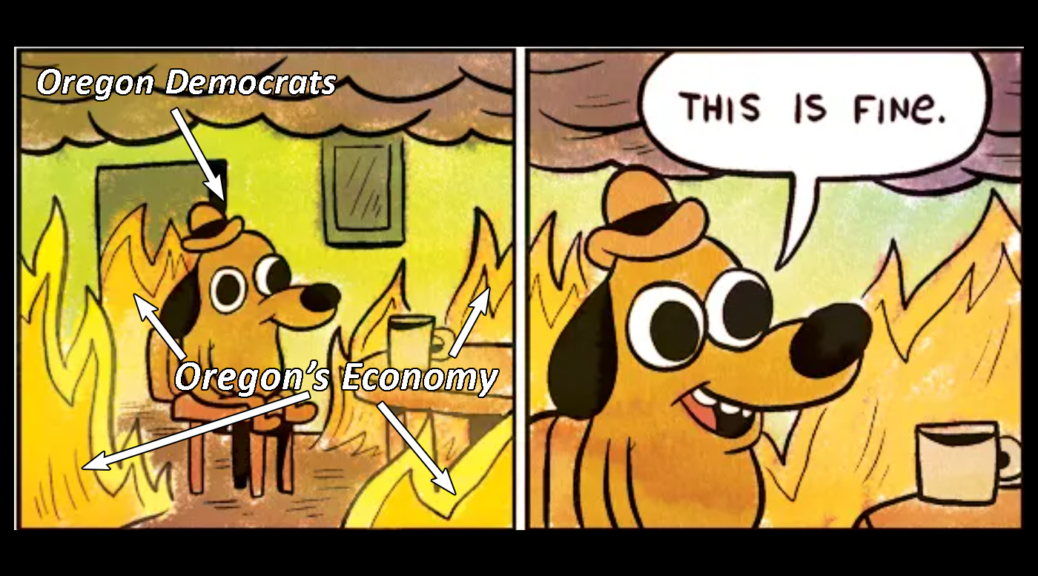
Music: Codename Dougwood by Shane Ivers — https://www.silvermansound.com


16-21 The Ground Game Unfiltered

16-21 The Ground Game Unfiltered

Primary Results and What Now to Win?

Release Date: May 23, 2026

Duration: 47:55

Host: Mark Anderson

Guests: Dr. Jerome Corsi and Ed Diehl, Oregon governor candidate

About This Episode

On Show 16-21, we start out by breaking down the high-stakes primary results across six states: Pennsylvania, Georgia, Alabama, Kentucky, Idaho, and of course Oregon.First, national political analyst Dr. Jerome Corsi joins us to dissect the Republican landscape heading into the midterms. What does a 37-0 endorsement record say about the party’s current leadership? Plus, we dive into the upcoming Texas Senate runoff, the legal battles surrounding Oregon’s redistricting maps, and recent shocking claims regarding the 2020 election evidence file. And what about the oft-promised evidence of fraud in the 2020 election? Now acting AG Todd Blanche says they have it. Okay. So do they have it or not?

Then, we pivot to local ground zero with Ed Diehl, fresh off his second-place finish in the Oregon gubernatorial primary. Ed pulls back the curtain on his race to discuss what went wrong on election night, the impact of shadow campaigns and funding, whether Oregon should switch to a runoff model, and how the ORP handles candidate qualifications.

Show Notes

  • 00:00 – Primary night recap – elections in six states, including Oregon. Thomas Massie is out —  is he seriously considering a run for president and is anyone taking him seriously. Mitch already retired. His MAGA replacement won yugely. Is there still a lane for the establishment Republicans.
  • 8:48 – Todd Blanche announced on Fox Business they have the evidence of 2020 voter fraud. So release it already.
  • 16:57 – The impact of SCOTUS allowing congressional districts to be redrawn to eliminate race-based districts. What kind of impact that will really have. Can any racist redistricting survive?
  • 24:13 – Oregon’s Republican primary race for governor with Ed Diehl. He was building momentum and might have won if the election had gone on another two weeks. Dissecting what happened.
  • 31:22 – About those shadow campaigns and the fake Dudley poll… Fixing Oregon’s primary system. What can Republicans do – and what about adding a runoff election?
  • 39:56 – The incredible success of the No Gas Tax referendum. New ballot initiatives. What next to win in November?

Transcript

Opener with Jerome Corsi:

It was primary night in six states Tuesday — Pennsylvania, Georgia, Alabama, Kentucky, Idaho, and Oregon — and if you were watching the results come in, you saw something that hasn’t happened much in American political history: a sitting president going a perfect thirty-seven and zero in a single primary night. Not a lame duck. Not a party looking for a new direction. A party that has consolidated around one man and his agenda. If only people elected to congress and the senate would also consolidate around President Trump and his agenda we could actually get things done.

Dr. Jerome Corsi has a Harvard PhD in political science, he’s written about 30-some books, including multiple NYT bestsellers. He is the founder & CEO of CorsiNation.com. And be sure to go to his election integrity website, Gods Five Stones dot com. Dr Corsi it is always great to talk to you.

Opener with Ed Diehl:

Whenever elections come and go I always can’t help but think of that quote from Plato’s famous work, The Republic written some 350 years before Christ. He cites Socrates: “One of the penalties for refusing to participate in politics is that you end up being governed by your inferiors.”

Socrates argues that truly wise and virtuous individuals do not seek power for personal gain. Instead, they only accept leadership roles out of necessity—fearing that if they don’t, they will be ruled by people worse than themselves. The “penalty” is a natural consequence of civic withdrawal: the vacuum of responsible leadership is filled by those driven by ambition, rhetoric, or self-interest rather than wisdom. Or what’s best for the people who elect them.

Subscribe:
Apple Podcasts | Spotify | iHeart | Amazon | TuneIn | And every major podcast platform — just search for “I Spy Radio Show”

If you enjoy our content, help others discover the show! Give us a like and subscribe or leave us a review on your favorite podcast platform—or drop a comment below. That really helps us get a bump up in the ol’ algorithms when platforms suggest shows to others.

Additional Show Notes

Dr. Jerome Corsi’s websites are www.CorsiNation.com and www.GodsFiveStones.com.

Georgia where candidates did not receive a majority and headed to a runoff (see Trump’s primary power reigns — with an asterisk (MS Now, May 19, 2026)

President Trump Goes 37-0 in Tuesday GOP Primaries (WLT Report, May 20, 2026)

“Stolen 2020 Election Proof Deja vu, Pt 1” (Substack, Jerome Corsi, May 19, 2026)

“Deep State Admits Voter Fraud is Real – Dr. Jerome Corsi” (USA Watchdog, May 20, 2026)


16-20 Oregon’s Future: Forest Mismanagement & Election Integrity

16-20 Oregon’s Future: Forest Mismanagement & Election Integrity

Oregon’s Future: Forest Mismanagement and Election Integrity

Release Date: May 16, 2026

Duration: 47:55

Host: Mark Anderson

Guests: Dr. Bob Zybach, forester, National Wildfire Alliance and Eric Lee, senior attorney for Judicial Watch’s Election Integrity Team


About This Episode

On Show 16-20, this week, we dive deep into two major fights for Oregon’s future: the mismanagement of our timber landscape and the critical battle over the integrity of our voter rolls.

First, we sit down with Dr. Bob Zybach, who is running for Lane County Commissioner. For decades, Zybach has documented the federal failures that have turned Oregon’s lush forests into tinderboxes. We discuss the real cost of federal forest mismanagement, the status of the National Wildfire Alliance’s work with the Trump administration, and the startling truth about the billions spent on the spotted owl recovery. If you live in Lane County or care about our O&C lands, you need to hear what Zybach says every voter must understand before the May 19th election.

Then, Eric Lee, Senior Attorney for Judicial Watch, joins us to sound the alarm on election integrity. Following a landmark legal victory and settlement against the state of Oregon over its 800,000 inactive voters, Lee breaks down what it takes to actually clean the rolls. And he tells us what’s actually in the settlement agreement that will hold Oregon accountable. We’ll discuss how President Trump’s recent Executive Order and the SAVE Act impact mail-in voting vulnerabilities.

Tune in to hear how demanding accountability for our forests and security at the ballot box will safeguard a promising future for Oregon.

Transcript

(Opener with Bob Zybach) Oregon was once one of the most productive timber states in the nation — and in many ways it still could be. In fact Oregon was the top or “most” in a lot of thing. Forests, timber, high tech. education, etc. The forests are still there. The growing capacity is still there.

The problem is the policy. Oregon keeps saying it wants jobs — but then does nothing to take advantage of the free-money that grows in our forests at a rate of 9 billion board feet per year.

And few people in Oregon have watched that decline as closely, or fought it as long, as our next guest. Dr. Bob Zybach is a forester whose academic focus is catastrophic wildfire in Oregon, and he’s been working with the National Wildfire Alliance to push back.

(Opener with Eric Lee) Our second guest today is a man who has been working to do something Oregon’s Secretary of State refused to do: clean up Oregon’s voter rolls. Which is always weird when govt which creates the laws — doesn’t follow their own laws.

Eric Lee is a senior attorney with Judicial Watch’s election integrity team. Eric, welcome back to I Spy Radio. … So when we last talked, Judicial Watch had a lawsuit pending against Oregon to force them to remove 800,000 inactive registrations from the voter rolls…


Subscribe:
Apple Podcasts | Spotify | iHeart | Amazon | TuneIn | And every major podcast platform — just search for “I Spy Radio Show”

If you enjoy our content, help others discover the show! Give us a like and subscribe or leave us a review on your favorite podcast platform—or drop a comment below. That really helps us get a bump up in the ol’ algorithms when platforms suggest shows to others.


16-09 Problem Lovers vs Problem Solvers | Exposing Oregon Democrats’ Damage

16-09 Problem Lovers vs Problem Solvers | Exposing Oregon Democrats’ Damage

Exposing Oregon Democrats’ Damage | The Problem Lovers

Release Date: February 28, 2026

Duration: 47:55

Host: Mark Anderson

Guests: Ed Diehl (Oregon state representative and gubernatorial candidate)


About This Episode

On Show 16-09, Oregon’s legislature has had some intense hearings along with a couple of dramatic walk outs. But then walk-back-ins. What? To give insights into what’s been happening, we welcome back Representative Ed Diehl, who’s also running for Oregon’s Governor. We get updates on what’s going on with SB 1599—the Democrat’s continuing fight against Democracy to move the No the Gas Tax ballot initiative from November to May — and the plans of what will happen if Governor Kotek signs it. It’s just more of Oregon Democrats hating democracy and destroying Oregon.

Show Notes

  • 00:00 – Jumping right in — Oregon’s horrid economy, Portland in a doom loop, no help on the horizon. “Is Oregon’s economy bad enough to swing an election?” article and just how badly Oregon democrats have failed Oregon.
  • 08:12 – A business owner is sick of his West Coast blue state and is wants to relocate his company — and its 1,000 employees. The shocking details of the economic hit a state like Oregon would take on just three aspects: wages, state taxes, and housing. And the incredible benefit to employees by just stepping across state lines.
  • 16:44 – Trump and Republicans just gave Americans a bunch of tax breaks. No tax on tips, no tax on overtime, etc. But also big cuts and incentives to businesses. Except not in Oregon. Democrats are lusting for money. It will steal $300 million from Oregon businesses. But they already have plans to spend twice that. No wonder Kotek’s own “prosperity council” asks, “What the heck are you doing…?”
  • 25:17 – Democrats hate democracy so much they are ignoring 250,000+ signatures and overwhelming opposition in public testimony (more than 95%!) and are trying to move the No Gas Tax referendum from the November’s general election to the May 2026 primary. The status of SB 1599, the bill to move it, the illegality of doing so, and how Ed plans to fight it.
  • 33:42 – Oregon has a national reputation for some pretty crazy ideas. Initiative Petition 28 (IP 28) may just top them all. With more than 95,000 signatures already, it is well on its way to reach the 117,000 needed to qualify for the ballot. Are Democrats suddenly Islamaphobes? One of the clearest examples yet of Oregon as the Wuhan Lab of leftist policies. They experiment on it here, develop gain of function, and then infect other states.
  • 39:32 – The gun bill that would create a two-tiered system of gun ownership. If you haven’t bought a gun yet in Oregon, you might not be able to if this passes. Don’t miss the closer!

Transcript

There’s a lot to talk about today and some of these questions are gonna take a bit of a setup so I’m going to forgo my normal opener and let’s get right to it.

I’d like to welcome back Representative Ed Diehl, from house district 17 E Marion County and parts of northern Linn County. And in case you’ve been hiding under a rock he’s also running for governor. Ed welcome back — with so much going on it’s really great to talk to you and we appreciate you taking the time in what I know is a very hectic week.

On today’s show we want to talk about the Democrats decoupling Oregon businesses from federal tax breaks in Trump’s One Big Beautiful Bill, SB 1599 and the walkout, Oregon’s economy IP 28 and if we can get to it the gun bill especially Jason Kropf’s behavior around that.

Because I think it will help people put things into context and make more sense of what the Democrats are doing around decoupling and the no gas tax referendum and the damage those will cause to an already damaged system

Mark Hester worked for 20 years at The Oregonian but is now a contributor to Oregon roundup. He has a really good article, titled “Is Oregon’s economy bad enough to swing an election?”

How bad is Oregon’s economy” he asks. It should be the number one question voters ask before this year’s statewide elections.

He says by just about any measure organ is nearing the pain threshold for anyone who is not a public employee. Look at Oregon’s trajectory relative to other states

Oregon’s December unemployment rate a 5.2% was better than only two states New Jersey and California. We’re the third worst.

Broader employment statistics are even more alarming. Portland ranked fourth worst among metro areas for job losses in 2025 with a decline of 8800

Oregon business bankruptcies rose 25% in 2025 — four times faster than the national average.

Companies that aren’t filing bankruptcy are struggling. Intel and Nike used to power Oregon’s economy but both are struggling. And there are no new companies on the horizon to replace them as the premiere attractions to shore up Oregon’s economy.

Over 1/3 of offices in Portland urban area were vacant last year. Portland is ranked the second worst commercial real estate market in the nation. Migration is stagnant at best. Portland has become unattractive to newcomers at exactly the time it needs them most.

After hearing what I just read… you’re running for governor — are you sure you want the job? Got to be daunting just to hear just how bad it is.

Subscribe:
Apple Podcasts | Spotify | iHeart | Amazon | TuneIn | And every major podcast platform — just search for “I Spy Radio Show”

If you enjoy our content, help others discover the show! Give us a like and subscribe or leave us a review on your favorite podcast platform—or drop a comment below. That really helps us get a bump up in the ol’ algorithms when platforms suggest shows to others.

Show Notes, Research, Links Mentioned, and Related

  • Find out more about Ed Diehl — eddiehl.com/about
  • Ed on the No Gas Tax Petition: “The Oregon Senate has just passed SB 1599, defying the clear will of over 250,000 petitioners…” (via X, Feb 23, 2026)
  • Is Oregon’s economy bad enough to swing an election?  (Oregon Roundup, Feb 25, 2026)
  • People are fleeing from California, Oregon and coming to Idaho: Gov. Brad Little | America Right Now (Newsmax YT channel, February 21, 2026)
  • House Republicans boycott Oregon Legislature over workplace complaint, gas tax vote (OPB, February 23, 2026)
  • Oregon House Republicans stage walkout as gas tax election, gun control votes near (Oregon Capital Chronicle, February 23, 2026)
  • Kotek’s “economic advisory council” are not happy with her and the Democrats decoupling Oregon from the tax cuts in Trump’s One Big Beautiful Bill. Why? Because she put the council together to figure out some ways Oregon might attract businesses to Oregon. But then Kotek and the Democrats take away business tax cuts Republicans in Congress just passed. “Some Members of Kotek’s Prosperity Council Unhappy About Tax Change” (Willamette Week, Feb 26, 2026)
    • Like we said, Kotek wanted it for show. Not solutions.

The Insanity of IP 28

  • Oregon IP28A direct threat to animal ownership and agriculture (Oregon Horse Council, December 30, 2025)
    • “Oregon Initiative Petition 28 (IP28) …  represents one of the most aggressive assaults on animal ownership, agriculture, and private property rights ever proposed through a state ballot initiative. … It aims to criminalize lawful animal use, dismantle food production, and promote a long-standing animal liberation agenda through voter confusion rather than legislative debate.”
  • Oregon Update: “Animal Cruelty” Ballot Measure Inching Closer to Qualifying- Do Not Sign! (American Kennel Club, January 23, 2026)
    • “Removes the word “intentional”, thereby criminalizing even unintentional harm or neglect of any animal including wildlife.”
  • Only Two Groups Have Submitted Signatures for 2026 Ballot Initiatives. They Aim at Very Different Issues. (Willamette Week, January 28, 2026)
    • “[Co-Chief petitioner, David] “Michelson says he’s ‘under no illusion that IP 28 will pass this year,’ but making the ballot would start a conversation that he hopes will eventually lead to success.”
  • Animal-Rights Activists Are Attempting a Ban So Absurd That It Would Affect ‘Every Oregonian’ (Outdoor Life, February 2, 2026)
    • One line item, for instance, would reclassify animal husbandry practices as “sexual assault of an animal.” That would cripple everyone from bird dog breeders to livestock producers. Other provisions would outlaw rodeos, [and] make it illegal to trap or kill pests like mice.
    • “The Oregon hunters association had this to say: ‘It would create a “no-kill” sanctuary state, forcing Oregonians into a vegan diet or or to have their meat and dairy products shipped in from other states’.”
  • Don’t Be Fooled By Initiative Petition 28, The Oregon Hunting And Fishing Ban Proposal (Northwest Sportsman, February 20, 2026)


Show 16-04 Podcast – Why Republicans Winning Oregon Elections Just Got More Likely

Show 16-04 Podcast – Why Republicans Winning Oregon Elections Just Got More Likely

Why Republicans Winning Oregon Elections Just Got More Likely

Release Date: January 24, 2026

Duration: 47:55

Host: Mark Anderson

Guests: Rep. Ed Diehl, candidate for Oregon governor, and Eric Lee, senior attorney on Judicial Watch’s election integrity team


About This Episode

Election integrity laws are about to change — for the good. The timing could not be better. Right when a Republican candidate with a proven ability to draw independents and Democrats decided to run for Oregon’s governor. And at a time Oregon Democrats are doing their best to sabotage their own chances by punishing Oregonian to cling to power. Even more, the federal lawsuits to restore trust in our elections haven’t even really gotten started.

Show Notes

  • 00:00 – Representative Ed Diehl announces his run for Oregon governor — what happened to change him from a no to a yes?
  • 09:18 – The highly successful No Gas Tax referendum drew support from all political parties. So how to convert support for that issue into support for him as a governor candidate for Oregon?
  • 16:31 – Oregon Democrats are committing political suicide more on how they are punishing Oregon businesses and the Oregonians who work at them.
  • 24:39 – Eric Lee, senior attorney on Judicial Watch’s election integrity team discusses last week’s SCOTUS ruling and how Bost v. Illinois was so huge for election integrity. Why the rules have now changed.
  • 31:45 – The avalanche of election integrity lawsuits about to come. Judicial Watch sued Oregon to clean up the voter rolls; Oregon surprised court watchers by suddenly announcing they would remove 800,000 inactive voters—about 20–25% of registered voters.
  • 39:09 – Did Oregon’s Secretary of State just blab a little too much and admit Oregon is at fault? That 800,00? That’s just the start. Discovery is underway right now. And did the Secretary of State also open the door to another Judicial Watch lawsuit by violating another federal law?

Transcript

(Opener) There’s a buzz phrase in government that you probably heard. Evidence based. And they use that buzz phrase because what they really want is for you not to question their policies.

Evidence based refers, allegedly, making government policy and spending decisions based on evidence — like data and research (which govt pays someone to do), and so-called “proven results” rather than on ideology, intuition, or anecdote.

Now just to easily disprove the notion of evidence based — when’s the last time democrats push through government policy that supported (or, more to the point, funded) any ideology on the right.

There is overwhelming evidence for conservative, pro-growth economic policies — like lowering taxes and cutting government spending is good for economies and good for people. Instead, Democrats want to raise taxes and increase government spending — the exact opposite of what the evidence shows.

Instead, it’s about things like climate change, which they plan to fix through carbon credits, which fund Democrats. Or Green energy (which isn’t green — and funds Democrats). Or funding the homeless-industrial complex of non-profits, which happen to be Democrats.

Well, the real evidence is in. And it’s fraud and its government incompetence. And we’d planned to talk an awful lot about fraud on today’s show and then, well… the best-laid plans of mice and men, or politicians and radio hosts, sometimes go awry.

Because the last time we talked to representative Ed Diehl back in December, we wanted to get him on our calendar to continue our discussion about fraud, and to get some insights into legislative days at the capital, and what devious schemes those Democrats are up to now. So we threw around some dates and settled on today—we’re talking Wednesday afternoon, January 21st—and we were all set to continue that discussion but then a little something came up.

And I don’t know how we don’t start off with this huge news, even though this show won’t air until the weekend after the big reveal. So, Ed welcome back, and for those who don’t already know by now go ahead and tell ‘em.

Download the Show

Don’t use podcast platforms? No problem! Download Show 16-04. That link will open in a new tab where you can listen right in your browser or download it if you prefer.

Additional Show Notes

For research, links mentioned during the show, additional commentary, etc., head to this page.

Subscribe:
Apple Podcasts | Spotify | iHeart | Amazon | TuneIn | RSS | And every major podcast platform — just search for “I Spy Radio Show”

If you enjoy our content, help others discover the show! Give us a like and subscribe or leave us a review. That really helps us get a bump up in the ol’ algorithms when platforms suggest shows to others.

16-04 Why Republicans Winning Oregon Elections Just Got More Likely

16-04 Why Republicans Winning Oregon Elections Just Got More Likely

Show 16-04 Summary:  This week, it’s Oregon’s all important 2026 elections — and why things will change. We start with Representative Ed Diehl (HD17) to talk about his decision to run for Oregon’s governor. Can he win? Find out why we certainly think he will not only win the primary, he will win the general. But can he really win in a state known for its lack of election integrity? Including having what Judicial Watch called “the dirtiest voter rolls in the nation.” We talk with Judicial Watch’s senior attorney, Eric Lee, about their lawsuit — and why last week’s SCOTUS ruling opens the door to fundamentally changing elections. Including right here in Oregon.

Map showing the radio stations broadcast areas and air time for the I Spy Radio Show.
I Spy Radio broadcast areas. Click for full-size.

The I Spy Radio Show airs weekends, seven times over the weekend, on seven different stations. Listen anywhere through the stations’ live streams! Check out when, where, and how to listen to the I Spy Radio Show. Podcast available Mondays after the show airs on our network of stations.

Air Dates: January 24th & 25th, 2026 | Guests: Ed Diehl & Eric Lee

This Week – Republicans Winning Oregon’s Elections

When we last talked to Ed Diehl at the end of December, we scheduled this week to continue our discussion on fraud in Oregon (hold our beer, Minnesota) and legislative days in Salem. But the night before our interview on Wednesday, news broke he was going to run for Oregon governor.

How do we not talk about that? We have been urging Ed to run for governor for at least a couple of years. We talk about his race, what changed his mind, and his competition—both Republican and Democrat. Plus, we do get a chance to talk about fraud, including what he will do about it as governor.

Plus, we talk about that all-important No Gas tax petition drive that will not only help Ed Diehl win Oregon’s 2026 governor’s race, but help sink Democrats. Democrats might not lose their majorities in the house or senate—although they just might find themselves in the minority after November—hey will definitely lose their super majorities in both chambers.

Want to find out more about Ed Diehl, candidate for Oregon governor? Head to Ed’s website. Remember: deep pocket donors wait to see how many smaller donors are sending in money. They need to see that interest. It’s their way of judging a candidate’s chances before committing bigger money.

Then we welcome back Eric Lee, senior attorney on Judicial Watch’s election integrity team, to discuss their lawsuit against Oregon to force them to clean up their voter rolls. And there was a major admission on Oregon’s part about its dirty rolls just last week. Whoops.

But before we get there, we get Eric’s take on last week’s SCOTUS ruling in Bost v. Illinois Board of Elections. On the surface, it was about whether a candidate had standing. But dig a little (which the leftstream media did its best not to do) and it is much. much bigger. How much bigger? Enough that it could fundamentally change elections. And people might just trust them again.

The I Spy Radio Show Podcast Version

Mondays, after our network of radio stations have aired the show, I Spy Radio is now available on your favorite podcasting platform, or you can grab it right here. See the full list of podcast options.

Show Notes: Research, Links Mentioned & Additional Info

15-44 How to Win (and NOT to Win) Oregon

15-44 How to Win (and NOT to Win) Oregon

Show 15-44 Summary: .When it comes to Republicans’ chances in Oregon for statewide races, they don’t need Democrats to defeat them. Because Republicans can, and all too often are, their own worst enemies. After Christine Drazan’s announcement this week that she is officially running once again for governor, there is already a slew of social media posts by Republicans saying they will never vote for her. Which is a great way not to win. So how do Republicans win? We talk with a long-time Republican consultant and a a recent “outsider” Oregon political activist to get their thoughts.

Map showing the radio stations broadcast areas and air time for the I Spy Radio Show.
Current I Spy Radio broadcast areas. Click for full-size map.

The I Spy Radio Show airs weekends, seven times over the weekend, on seven different stations. Listen anywhere through the stations’ live streams! Check out when, where, and how to listen to the I Spy Radio Show. Podcast available Mondays after the show airs on our network of stations.

Air Dates: November 1st & 2nd, 2025 | Guests: Greg Leo & Chuck Wiese

This Week – Can Oregon Republicans Not Kill Their Chances?

Republicans can save Oregon but they have to save each other first. And that means stop savaging each other in the primaries.

Primaries are different than general elections. In general elections, you are voting for who wins. In primaries, you are voting for who competes. You are selecting your team while the other parties select their team.

But all too often, Republicans—more so than the sheep-like Democrats who will vote for anyone (or anything) with a “D” in front of their name—savage and tear down the other Republican candidates in favor of their choice. They announce they will never vote for “the other guy” that their Republican teammates chose.  And proceed to savage the other candidates, tearing them down. And inadvertently planting seeds why no one should vote for them in the general.

Is it more important to win the election? Or that your candidate wins?

Don’t discourage. Encourage.

Republican “Insider” and “Outsider” Views

Christine Drazan officially entered the race for Oregon’s governor this week. (Which as no surprise. No serious person thought she wouldn’t.) Up until then, Danielle Bethell, a Marion County Commissioner, was the only legitimate candidate. But what immediately obvious was the hateful comments — not by Democrats. But by Republicans.

Danielle  Bethell’s campaign website – daniellebethellforgovernor.com
Christine Drazan’s campaign website – christinefororegon.com

We talk first to Greg Leo, a long-time political communications expert who got his start in the Reagan White House. He also spent a lot of time working within and for in the Oregon Republican Party as their communications director. Now, he’s a political consultant. We get his take on Christine Drazan entering the race, how to stop Republicans from spoiling their fellow Republicans’ chances, and what Republicans can do to actual win. That means wooing Democrats and non-affiliated voters. Could an actual conservative Republican do that?

Then we talk with Chuck Wiese, a conservative Republican. But someone who is not involved in Republican party politics. But Chuck is becoming more and more of a political activists, having supported and been part of multiple lawsuits against Oregon, focusing especially on election integrity.

We know Chuck is no fan of Drazan, base don how she ran last time. To get his vote, what does she have to do different this time? How can she prove herself to him—one of her biggest doubters? And can Republicans put aside their differences and preferences to focus on winning the general election?

Because Oregon really and literally cannot afford another Democrat governor.

The I Spy Radio Show Podcast Version

Trapped under a heavy object? Missed the show? Don’t worry—catch the podcast version. Mondays, after our network of radio stations have aired the show, I Spy Radio is now available on your favorite podcasting platform, or you can grab it right here. See the full list of podcast options.

Show Notes: Research, Links Mentioned & Additional Info

  • Greg will be speaking at the Capital City Republican Women’s luncheon on Nov. 13th. Meeting runs from 11:30 am – 1:00 pm. Lunch is optional but is $14.00 if you’d like to eat. To attend, please RSVP by sending an email to ccrwsalem@reagon.com.
  • Learn more about America’s 250th! Head to America250.org for events, state pages, and how you can get involved!
  • Danielle  Bethell’s campaign website – daniellebethellforgovernor.com
  • Christine Drazan’s campaign website – christinefororegon.com


15-39 We’re Not at War. But We’re at War.

15-39 We’re Not at War. But We’re at War.

Show 15-39 Summary: It’s a shocking reality that the political Left sees violence and murder as acceptable response to speech they disagree with. The rise in far-left political violence will only get worse. This week, we reach out to a psychologist to better understand how people have been brainwashed by violent Antifa offshoot groups. But conservatives. especially Christians, sitting quietly and not getting involved is no longer an option. We talk with a trainer who helps engage conservatives to impact their communities and society.

Map showing the radio stations broadcast areas and air time for the I Spy Radio Show.
Current I Spy Radio broadcast areas. Click for full-size map.

The I Spy Radio Show airs weekends, seven times over the weekend, on seven different stations. Listen anywhere through the stations’ live streams! Check out when, where, and how to listen to the I Spy Radio Show. Podcast available Mondays after the show airs on our network of stations.

Air Dates: September 27th & 28th, 2025 | Guests: Angela Plowhead & Scott Allen

This Week –Far-Left Political Violence: We’re Not at War, But We Are

In the wake of Charlie Kirk’s murder, many people are still shocked at how the Land of Free Speech got to the point where someone was murdered for his speech. Too many people had no idea just how dangerous Antifa really was. And how their further-left spinoffs are actively training their members to kill.

How did we get here?

That’s easy. The Right has been too tolerant. And too silent. Well, it’s time for the Right and Middle to rise up. And to stop being silent.

A Psychologist on the Left’s Manipulation and Violence

For people familiar with Far-Left, Marxist ideology, it is no surprise the Left lies, manipulates, and exploits society’s most vulnerable. But unlike years past, they have first isolated confused children, convinced them to hate who they really because they are “in the wrong body.” And then manipulate them to channel their hate and anger toward society and authority.

But it’s not just youth. The Left uses clever marketing and the media to confuse vulnerable seniors into thinking policies that are actually good for seniors are somehow bad for them. Which is why the largest demographic that hates Trump are American seniors. Democrats who shriek “disinformation” misinform seniors about Trump’s tariffs, no tax on social security, and more. And convince them Trump is cutting Medicare. He’s not. He’s removing people on Medicare/Medicaid and Social Security who legally should not be getting it. And by removing them, there is more money for those who deserve it.

Tune in to hear psychologist Dr. Angela Plowhead examine the Left’s manipulation. It is truly dangerous. And will lead to more violence and killing. But also hear her solutions to reach out to manipulated seniors and break through their mental blocks.

Keep an eye on Angela. She is running for office in Oregon’s Senate District 10. Her campaign site is Angela4Oregon.com.

Oregon desperately needs common-sense conservatives like Angela Plowhead in office. Help her get there with a donation.

Not Sure What to Do? Get Some Training

Tired of sitting quietly while the Left rampages? You should be. Like any abuser, silence emboldens the Far Left. There are some trainings coming up in the Willamette Valley for conservatives and Christians to learn how to engage and impact their communities. We talk with Scott Allen, the president of the Disciple Nations Alliance who will be leading the training along with Tim Throckmorton, the National Director for Church Engagement & Community Impact for the Family Research Council.

The Far-Left sees your silence about their ideology as permission. And that can and does lead to violence. We are seeing it. And we need to find ways to stop it.

Scott talks to us about the need to get engaged, to not be silent, and also discusses Marxist ideology. The violence we’re seeing now is Neo-Marxism at its worst. (Is there a good side to Marxism?) This trainings will give conservatives, Christians, church leaders, the knowledge and tools to impact their communities.

To learn more, read the workshop flyer and about the trainers (PDFs)
The trainings will be held October 13th, in NE Portland and October 14th in Salem and Corvallis
The events are free to attend. (Donations gladly accepted!)

It’s time. Time to rise up. Not sure where to start? Getting some knowledge is always a good place to start. As long as you can use it.

The I Spy Radio Show Podcast Version

Trapped under a heavy object? Missed the show? Don’t worry—catch the podcast version. Mondays, after our network of radio stations have aired the show, I Spy Radio is now available on your favorite podcasting platform, or you can grab it right here. See the full list of podcast options.

Show Notes: Research, Links Mentioned & Additional Info

  • Angela’s campaign website is Angela4Oregon.com. You can help her win by making a donation. Every bit helps. *Remember: big donors need to see excitement and support for a candidate before they’ll contribute. So don’t think your donation is too small. It’s not. Because your help can lead to bigger fish.
  • Get involved, get trained! Stop surrendering to the Far Left. Staying silent gives permission. Learn more about upcoming community impact trainings  read the workshop flyer and about the trainers (PDFs). Be sure to share and get the word out!
  • Armed Queers group trains radical Marxists to shoot (Just the News, Sept 15, 2025)
  • Worse than Antifa: Inside the new breed (NY Post, Aug 27, 2025)
15-30 Russia Collusion Hoax Declassification Reality Check | What Now?

15-30 Russia Collusion Hoax Declassification Reality Check | What Now?

Show 15-30 Summary: Finally, the real truth comes out about the Russia Collusion Hoax. Newly declassified documents from Director of Intelligence, Tulsi Gabbard, confirm what we have been saying. The evidence finally and truly reveals Obama’s deep involvement in the Russia hoax. But what do the documents actually say? Did he actually direct it? Or just some minions under him? We ask Mike Howell, president of the Oversight Project, about things to get a reality check. And what now? The word treason is being thrown around. What would it take to get there? And if not treason, what can Obama and his co-conspirators be charged with? Or will democrats once again attack democracy and get away with it?

Map showing the radio stations broadcast areas and air time for the I Spy Radio Show.
Current I Spy Radio broadcast areas. Click for full-size map.

The I Spy Radio Show airs weekends, seven times over the weekend, on seven different stations. Listen anywhere through the stations’ live streams! Check out when, where, and how to listen to the I Spy Radio Show. Podcast available Mondays after the show airs on our network of stations.

Original Air Dates: July 26th & 27th, 2025 | Guest: Mike Howell

This Week – Russia Collusion Hoax Exposed

The Russia collusion hoax evidence was declassified. On one level, it’s not new news. We knew the Obama administration, working with the Hillary Clinton campaign, created and entirely false disinformation campaign to smear candidate Donald Trump with “Russia collusion” to steal the 2016 presidential election.That’s been known since Congressman Devin Nunes went to the White House with the evidence he had seen.And that broke the scandal wide open.

Rather than “Russia collusion” it was quite the opposite. At a White House meeting in July 2016, CIA chief, John Brennan shared what the CIA had learned from Russian sources. Hillary Clinton, in an attempt to distract from her email scandal, planned to smear Trump with “Russia collusion.” Obama, Biden, Susan Rice, and the heads of the intelligence committees leaped into action to give credibility to the smear. Despite knowing that it was a political smear and a lie, James Comey launched the FBI’s Crossfire Hurricane investigation into Trump three days after that meeting. And the Russia collusion hoax was born.

If you heard our previous shows on disinformation you know this is how disinformation works. There must be a a grain of truth — meaning a grounding in reality. By opening the investigation. Obama, Comey, and their minions in the intelligence community gave that grain of truth to Hillary’s smear. Without which it never would have worked. Think about it. Who in their right mind would trust anything Hillary had to say.

Learn more about disinformation. Democrats and their Desperate Disinformation Ploy (Disinformation, Part 1) and Disinformation in Action: Recognize it, Fight it (Part II)

But an FBI investigation into Trump-Russia collusion? And judges issuing FISA warrants? And multiple intelligence agencies all working hard to stop the Russians from interfering in our elections? Suddenly, the dynamics change. Maybe Hillary is on to something. Maybe she’s telling the truth. And maybe she’s a hero, trying to save democracy.All that rather than what it really was. A complete lie. And an attack on democratic elections. Led by democrats.

But what does the declassification and release of all this evidence for conspiracy mean in reality? What now? Trump and Gabbard are both throwing around the word “treason.” Does this rise to treason? If so, what then? If not, what does this conspiracy rise to?

Tune in to find out!

Oversight Project – Russia Hoax Reality Check

We talk with Mike Howell, the president of the Oversight Project. Check out the great work they do to expose corruption at www.itsyourgov.org.

What do the declassified emails and documents actually say? (You can read them yourself; see the links in the show notes section, below.) There is talk of treason.

The I Spy Radio Show Podcast Version

Trapped under a heavy object? Missed the show? Don’t worry—catch the podcast version. Mondays, after our network of radio stations have aired the show, I Spy Radio is now available on your favorite podcasting platform, or you can grab it right here. See the full list of podcast options.

Show Notes: Research, Links Mentioned & Additional Info

  • Mike Howell is the president of the Oversight Project. They were the ones who exposed Biden’s autopen scandal, a phone associated with Butler shooter tracking to a building with an FBI office, and more. Check out Oversight’s other great investigations at ItsYourGov.org
  • THIS: We have been saying this for years. John Brennan’s hand written notes revealed everything you need to know about the Russia collusion hoax. It was a lie. And everything that followed from that WH Meeting was a lie.
  • DNI Release: “Americans will finally learn the truth about how in 2016, intelligence was politicized and weaponized by [Obama]” (Tulsi Gabbard X Post, via Thread Reader, July 18. 2025)
    • “For months preceding the 2016 election, the Intelligence Community shared a consensus view: Russia lacked the intent and capability to hack U.S. elections. But weeks after President Trump’s historic 2016 victory defeating Hillary Clinton, everything changed.
    • Read the declassified info and reports:
      • Director of National Intelligence, Tulsi Gabbard, declassified Evidence from 2016 Russia collusion hoax showing Obama’s direct involvement: DNI, July 18 2025 (PDF)
      • Director of National Intelligence, Tulsi Gabbard, declassified House Intelligence Report: DNI, July 22, 2025 (PDF)
      • Timeline of the Russia Hoax based on newly declassified evidence from DNI Tulsi Gabbard: DNI, July 18, 2025 (PDF)
  • Read Hans von Spakovsky’s article mentioned during the show: Could Obama Be Prosecuted Over the Russian Hoax? A Look at the Law (The Daily Signal, July 23, 2025)

Other Voices Discussing the Russia Collusion Hoax