Tag: American Revolution

America at 250 — The Revolution as Seen Through Everyday Colonists’ Eyes

America at 250 — The Revolution as Seen Through Everyday Colonists’ Eyes

I Spy Radio Show | Keeping an Eye on Big Government
Show 16-26

America at 250 — The Revolution as Seen Through Everyday Colonists’ Eyes

Aired  July 4–6, 2026
Runtime  47:50
Host  Mark Anderson
Guest  Greg Leo
Listen  See our network of stations, areas, times and livestream options

Listen to this episode (Available Mondays after airing on our network of stations)


Player block is self-contained and swappable. When the site goes static,
replace this <audio> element with the Podlove Web Player to get chapter
navigation and transcript sync — the chapter data below already feeds it.

About this episode

On America’s 250th anniversary, we go past the mythology to ask: what actually drove ordinary people to take on the most powerful empire on earth?

The Declaration of Independence is a document most Americans think they know — but its list of grievances wasn’t written for philosophers. It was written for farmers who couldn’t sell their own crops, merchants who watched their livelihoods strangled from 3,000 miles away, and tradesmen like Paul Revere whose first major ride came the day after the Boston Tea Party, not the night the lanterns were hung in Old North Church. Mark and returning Fourth of July guest Greg Leo work through the Revolution from the ground up: the militias who held the line while a real army was being built, the colonial farmers for whom land ownership was the American Dream the King kept trying to close off, and the merchants and craftsmen whose 100-year tradition of self-directed trade was suddenly taxed and restricted into rebellion.

The conversation moves from the specific grievances of the Declaration to the foundational idea behind all of them — that rights come from the Creator, not the Crown — and takes a hard look at the claim that the founders were merely deists. Hint: the peer-reviewed data says otherwise. The show closes with Oregon’s own threads back to 1776: William Cannon, the only Revolutionary War veteran known buried in the Pacific Northwest; Marion County, named for the “Swamp Fox” who pushed Cornwallis to Yorktown; and Mount Hood — named, in an irony of history, for the British admiral whose defeat made American independence possible.


In this episode

00:00
01

Ordinary People, Extraordinary Times

Mark’s opener on the militias, farmers, merchants, and tradesmen who made independence possible — then Greg Leo on why land ownership made the Revolution more existential for colonists than any abstract ideal.

00:00
02

Paul Revere and Benjamin Franklin — Up Close

Revere’s real first ride (December 1773, the day after the Tea Party), how British economic policy turned a silversmith into a revolutionary, and Franklin’s extraordinary arc from runaway apprentice to statesman — and why he chose to spend his wealth building a nation rather than enjoying it.

00:00
03

The Grievances — Read Through Everyday Colonists’ Eyes

No taxation without representation, the Quartering Act, the Proclamation of 1763 cutting off westward expansion, and the strangling of colonial maritime trade — each grievance mapped to the people it actually hurt most.

00:00
04

A Nation of Laws, Not Men — and the Echoes Today

How the specific abuses in the Declaration found their way into the Constitution as safeguards, the parallels between colonial two-tier justice and what Americans see today, and why Abigail Adams’s famous warning to John still resonates.

00:00
05

The Faith of the Founders — What the Data Actually Shows

Were the founders deists or practicing Christians? The Lutz/Hyneman study, the role of political sermons as the op-eds of their day, and why the biblical framework wasn’t just private faith — it was the public political language of the Revolution.

00:00
06

Oregon’s Threads Back to 1776

William Cannon — Revolutionary War veteran, Champoeg voter, and the only man of his generation known buried in the Pacific Northwest. Marion County and its namesake Francis Marion, the Swamp Fox. And Mount Hood, named for the British admiral whose defeat at the Battle of the Virginia Capes ended the war.

Links & resources mentioned

Greg Leo & The Leo Company

America’s 250th — Oregon Events

  • The Sounds of Liberty — Liberty Bell ringing at the Oregon State Capitol (July 4, 2026, 10:30 a.m.; declaration read aloud at 10:30, bell rings at 11:00 a.m.)

The Declaration of Independence & the Revolution

Faith of the Founders

  • Donald Lutz & Charles Hyneman, “The Relative Influence of European Writers on Late Eighteenth-Century American Political Thought” (American Political Science Review, 1984 — peer-reviewed source for the 34% Bible citation figure)

Oregon’s Revolutionary War Connections

  • William Cannon — Revolutionary War veteran (Pennsylvania 4th Regiment), Champoeg voter (1843), buried at St. Paul Cemetery (mentioned in Washington Irving, Astoria, 1836)
  • Marion County, Oregon — named for Brig. Gen. Francis Marion, the “Swamp Fox” of the Southern Campaign
  • Mount Hood — named by Lt. William Broughton (Vancouver Expedition, 1792) for Rear Admiral Samuel Hood, whose defeat at the Battle of the Virginia Capes (1781) helped end the Revolutionary War
  • Jesse Applegate and the Applegate family — son of Revolutionary War soldier Daniel Applegate; led the 1843 Cow Column to Oregon (see ispyradio.com/16-26 for more)

About the guest

Greg Leo
Government & Public Affairs Consultant  ·  The Leo Company

Greg Leo is a government and public affairs consultant and the owner of The Leo Company, which helps smaller governments navigate interactions with larger ones. He is an avid amateur historian with a deep interest in America’s founding and Oregon’s history, and a regular Fourth of July guest on I Spy Radio. Greg lives near Champoeg, Oregon — where American settlers voted in 1843 to form the first American-style government on the Pacific Coast.

theleocompany.com

Full transcript

Transcript is being prepared and will be posted shortly. Auto-generated from the episode audio, then cleaned for names, places, and natural paragraph breaks.

Catch the show live
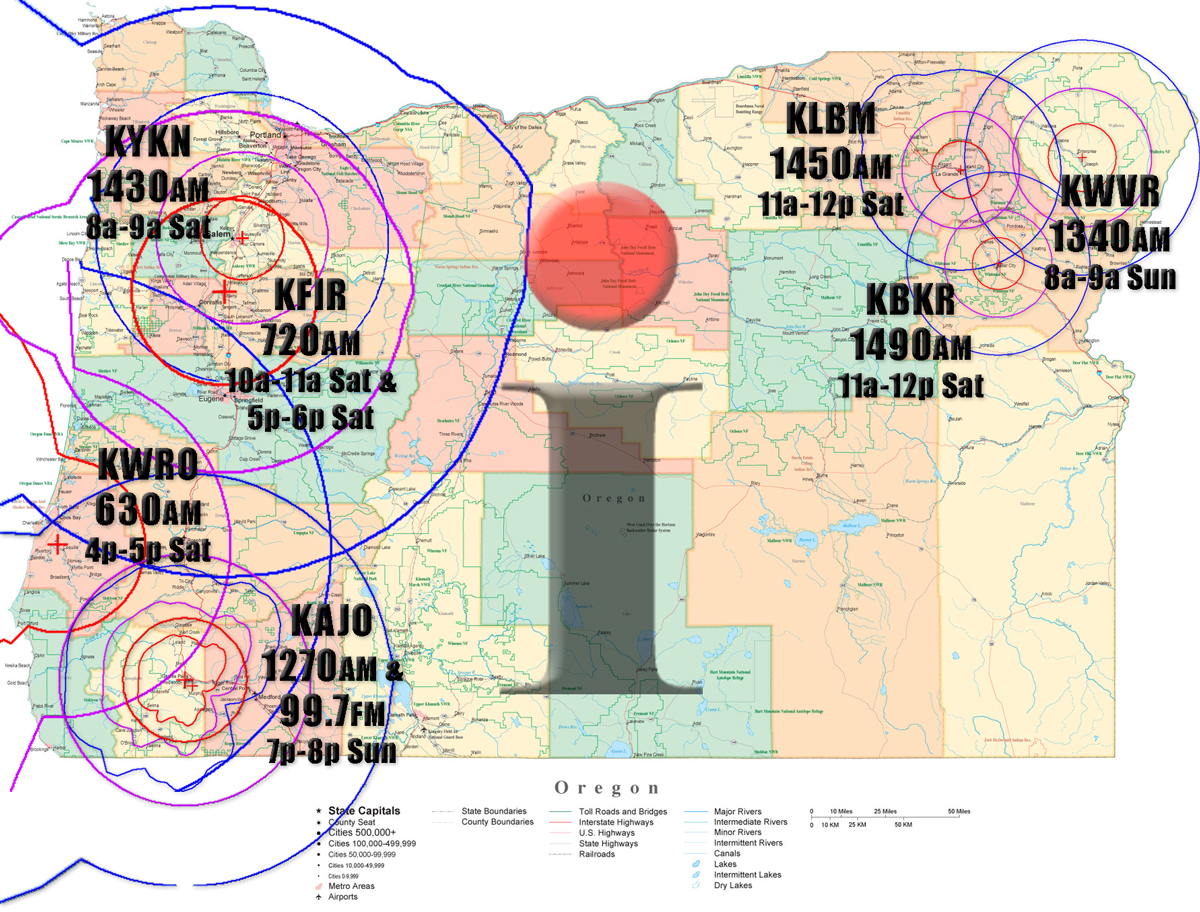

Map of I Spy Radio broadcast areas and air times

The I Spy Radio Show airs weekends — seven times across seven real radio stations, not internet-only streams. Listen anywhere through the stations’ live streams. See when, where, and how to listen for the full schedule.

Missed it? The podcast posts Mondays, after the broadcast stations air the show — here on this page or on your favorite platform.

I Spy Radio  —  Keeping an Eye on Big Government
15-26 Unpacking 1775: Lexington and Concord, Spies, and How Americans Became Patriots

15-26 Unpacking 1775: Lexington and Concord, Spies, and How Americans Became Patriots

Show 15-26 Summary: Unpacking 1775 reveals why July 4th, 1776, had to happen. Battles of Lexington & Concord—plus the “other” Concord. And the spy who may have leaked details of Gage’s Concord Expedition. In our 15th Annual Fourth of July Show, we zero in on the main villain, General Thomas Gage, the famous Midnight Ride of Paul Revere, the Battles of Lexington and Concord, spies, and who might have leaked details of Gage’s “Concord Expedition.” There was another “Concord” before those first shots were fired at Lexington and Concord that taught the patriots the lessons they needed to win. Plus, why and how the colonists’ mindset changed from British subjects to American patriots.

Map showing the radio stations broadcast areas and air time for the I Spy Radio Show.
Current I Spy Radio broadcast areas. Click for full-size map.

The I Spy Radio Show airs weekends, seven times over the weekend, on seven different stations. Listen anywhere through the stations’ live streams! Check out when, where, and how to listen to the I Spy Radio Show. Podcast available Mondays after the show airs on our network of stations.

Air Dates: June 28th & 29th, 2025 | Guest: Greg Leo

This Week – Lexington and Concord, Spies, and How Americans Became Patriots

This week it is our Annual 4th of July Show as we are once again joined by Son of the American Revolution and amateur historian, Greg Leo. Next year is the big 250th anniversary of the signing of the Declaration of Independence — but this year has already seen a whole bunch of 250th’s. The year 1775 was incredibly momentous and unpacking what happened during 1775 reveals why July 4th, 1776, had to happen.

Portrait of General Those Gage, the arch villain of 1775
Gen. Thomas Gage (see his lovely wife’s portrait below)

On this year’s show, we focus the “arch villain,” General Thomas Gage, Revere’s famous ride, the official start of the Revolution at the battles of Lexington and Concord — and who might have leaked the details of “The Concord Expedition” to the patriots? The lessons the Colonists learned at another “Concord” before Lexington and Concord ever happened taught the patriots what they needed to know to win.

And we look at the mental shift away from British subject to American patriot.

1775’s American Revolution 250th’s are Why 1776 Happened

The battles on April 19, 1775, of Lexington and Concord marked the beginning of the American Revolutionary War. But there were many critical events in 1775 that shaped shaping the America’s, leading up to the signing of the Declaration of Independence on July 4, 1776.

Here is a good list of what happened in 1775 that led directly to America demanding independence: The Path to Revolution – Major Events of 1775.

Be sure to check out the many resources in the Show Notes, below! Maps (including a terrific interactive map of Paul Revere’s ride), notes, Paul Revere’s ride in his own words and so much more!

The I Spy Radio Show Podcast Version

Trapped under a heavy object? Missed the show? Don’t worry—catch the podcast version. Mondays, after our network of radio stations have aired the show, I Spy Radio is now available on your favorite podcasting platform, or you can grab it right here. See the full list of podcast options.

Show Notes: Research, Links Mentioned & Additional Info

Need help dealing battle with Oregon’s legislature? Greg Leo is your man. theleocompany.com

1775’s Arch Villain: General Thomas Gage

  • Thomas Gage was appointed Royal Governor of Massachusetts in 1774 and tasked by the British Parliament with stamping out rising unrest caused by restrictive British policies.
    • Gage inflamed tensions between the colonies and the mother country and practiced harsh enforcement of British law. He drafted the Coercive Acts, a series of laws intended to punish colonists for deeds of defiance against the King, such as the Boston Tea Party.
  • Terrific write-up on General Thomas Gage (RevolutionaryWar.net, March 4, 2020)

Leading Up to the Battles of Lexington and Concord

  • The “other” Concord before Lexington and Concord.
  • What arms were hidden at Concord that the British tried to seize? And did they successfully destroy or capture any of them? Answer via Grok (X’s AI bot)

Margaret Kemble – Was Gage’s Wife an American Spy?

  • Portrait of General Thomas Gage’s wife, Margaret Kemble
    Margaret Kemble (click for full size)

    Was a woman the informant who helped launch the American Revolution? (Washington Post, Apr 19, 2025) [Note: not all browsers can open this link to get you past WaPo’s paywall; the Brave browser usually does.]

  • Probably the best article on the speculation about Margaret Kemble: “Inside one of the biggest conspiracy theories of the American Revolution: That a woman may have kick-started the whole thing” (New York Post, April 19, 2025)
  • Was Margaret Kemble Gage her Husband’s Worst Enemy at Lexington and Concord? (via Mr Nussbaum)
  • The General’s Lady…Was She a Spy? – Heroes, Heroines, and History: The General’s Lady…Was She a Spy? (Heroes, Heroines, and History, Jan 20, 20217)
  • Forgotten Connections and Divided Loyalties: The Story of General Thomas Gage and Margaret Kemble (Fellowship & Fairydust Magazine, June 17, 2015)

The Midnight Ride  – Paul Revere, William Dawes (and later, Samuel Prescott)

Battles of Lexington and Concord

Battle of Bunker Hill


12-26 Fourth of July – George Washington and the Incredible Hand of Providence

12-26 Fourth of July – George Washington and the Incredible Hand of Providence

Show Summary: It’s that time of year again: it’s our annual Fourth of July celebration. This year, we are looking back at the Guy, George Washington who got us through the war. Let’s face it. If we hadn’t won the war, the Declaration would have been just an interesting but failed experiment; a side note in history. This week, it’s a fascinating look at a man who was truly born for his time, and had the eternal Hand of Providence on him so many times that his life and what he accomplished was truly a miracle.

Coverage Map of I Spy Radio Show broadcast areas, as of June 2021
Current I Spy Radio broadcast areas. Click for full-size map.

The I Spy Radio Show airs weekends, six different times, on seven different stations. Listen anywhere through the stations’ live streams! Check out when, where, and how to listen to the I Spy Radio Show. Podcast available Mondays after the show airs on out network of stations.

Original Air Dates: June 25, 2022 | Guest: Greg Leo 

This Week – Our 12th Annual Fourth of July Show

How has it been 12 years already? Time flies when you’re keeping an eye on big government I guess, but every year we focus on the Fourth of July and events around it that make the founding of this great country so unique and special.

Previously, we’ve focused on such things as celebrating the Fourth down through History, what those early celebrations looked like. The Declaration of Independence itself, the rights and grievances listed therein. Celebrating the Fourth on the Oregon Trail, the Fourth of July during the Civil War, the first 50 years, major anniversaries, and others. And last year’s focus on the some of the signers of the Declaration (and its predecessor petition).

Looking for something fun and unique to do this Fourth? Celebrate an old fashioned Independence Day at the Newell House at historic Champoeg Park, the birthplace of Oregon. This free event includes a patriotic program with music, food, and a home-baked pie contest and auction.

George Washington

But for this year’s Fourth of July show, we are focusing on the guy. George Washington. The guy who won the war and without whom America might never have existed. Except for a brief, failed attempt at freedom. Squashed by a ruthless king.

We look at his early years, his rural upbringing that often left him feeling inadequate in high society, his involvement in the French and Indian War—which made him a celebrity on both sides of the Atlantic—and the continual Hand of Providence on his life that saved him time and again.

And, naturally, we look at his Revolutionary War accomplishments. His defeats and his victories. And how he persevered through both. We look at his personal struggles too, including getting through the deep betrayal of Benedict Arnold, which Washington blamed himself for and nearly quit.

Tune in to hear about America’s quintessential hero. The man for his time. And a man even King George III came to admire.

The I Spy Radio Show Podcast Version

Trapped under a heavy object? Missed the show? Don’t worry—catch the podcast version. The I Spy Radio Show is now available on your favorite platform, or you can grab it right here. See the full list of podcast options.

Research, Links Mentioned & Additional Info

We have lots of information for you on George Washington! Be sure especially to check out the Mount Vernon and the Washington Papers sites. But, really, these are all fantastic.

General George Washington Links (as in “general”)

George Washington – French and Indian War

  • Washington: The Soldier Through the French and Indian War (via US History.org)
  • George Washington’s forays into the Ohio country shaped his career and sparked a global war (via Mount Vernon)
  • Excellent summation about Washington’s involvement in French and Indian War (via Mount Vernon)

George Washington: Revolutionary War

  • Super cool! Washington’s Revolutionary War Itinerary (via the Washington Papers)
  • List of Revolutionary War Battles George Washington was at (via Mount Vernon)*While there were over 230 skirmishes and battles fought during the American Revolution, these are the battles General Washington was present for.
  • Washington wins first major US victory at Trenton (via History.com)
  • Washington Biography: Victory, Defeat, Misery, Stalemate: the Early War Years (via SparkNotes)
  • Revolutionary War Battles (via Mount Vernon)
  • General George Washington led the American army to victory during the Revolutionary War (via Mount Vernon)
  • Appointment as Commander in Chief (via Mount Vernon)
  • As Commander in Chief (via Thimbles and Acorns)
  • Another perspective on Washington as the Commander in Chief (via US History.com)
  • George Washington’s Final Command (via Boundary Stones)
    • Did you know Washington was recruited one last time by President Adams to be commander-in-chief?

Timelines for George Washington

Facts Lists for George Washington

  • Key Facts About George Washington (via Mount Vernon)
  • George Washington’s Surveying Career (via Mount Vernon)
  • Top 10 Facts about George Washington (via TheTopTens)
  • 5 Facts About George Washington (via Colonial Williamsburg)
  • 10 Facts About George Washington (via ThoughtCo.com)
  • 11 Little-Known Facts About George Washington (via History.com)
  • Four Uplifting Facts About the Personality of George Washington (by Lioness Rue at Medium.com)
  • 11 Surprising Facts About George Washington You Never Learned In School (via Reader’s Digest)
  • 27 Facts That Paint America’s First President In A New Light (All That’s Interesting)
    • Some myths and more: cherry trees, wooden teeth, but true facts too
  • 47 Interesting Facts About George Washington That You Should Know (via The Fact File)
  • 10 Things You Really Ought to Know about George Washington (via Mount Vernon)
    • Like that he was mostly self-educated, fearless in battle, was the first to sign the Constitution, and more
  • 10 Major Accomplishments of George Washington (Learnodo-Newtonic.com)
    • accomplishments in a nutshell, French and Indian War, and Washington’s accomplishments in the Revolution
  • George Washington (via Britannica)