Tag: Founding Fathers

16-26 America at 250 — The Revolution as Seen Through Everyday Colonists’ Eyes

16-26 America at 250 — The Revolution as Seen Through Everyday Colonists’ Eyes

I Spy Radio Show | Keeping an Eye on Big Government
Show 16-26

America at 250 — The Revolution as Seen Through Everyday Colonists’ Eyes

Aired  July 4–6, 2026
Runtime  47:50
Host  Mark Anderson
Guest  Greg Leo
Listen  See our network of stations, areas, times and livestream options

Listen to this episode (Available Mondays after airing on our network of stations)


Player block is self-contained and swappable. When the site goes static,
replace this <audio> element with the Podlove Web Player to get chapter
navigation and transcript sync — the chapter data below already feeds it.

About this episode

On America’s 250th anniversary, we go past the mythology to ask: what actually drove ordinary people to take on the most powerful empire on earth?

The Declaration of Independence is a document most Americans think they know — but its list of grievances wasn’t written for philosophers. It was written for farmers who couldn’t sell their own crops, merchants who watched their livelihoods strangled from 3,000 miles away, and tradesmen like Paul Revere whose first major ride came the day after the Boston Tea Party, not the night the lanterns were hung in Old North Church. Mark and returning Fourth of July guest Greg Leo work through the Revolution from the ground up: the militias who held the line while a real army was being built, the colonial farmers for whom land ownership was the American Dream the King kept trying to close off, and the merchants and craftsmen whose 100-year tradition of self-directed trade was suddenly taxed and restricted into rebellion.

The conversation moves from the specific grievances of the Declaration to the foundational idea behind all of them — that rights come from the Creator, not the Crown — and takes a hard look at the claim that the founders were merely deists. Hint: the peer-reviewed data says otherwise. The show closes with Oregon’s own threads back to 1776: William Cannon, the only Revolutionary War veteran known buried in the Pacific Northwest; Marion County, named for the “Swamp Fox” who pushed Cornwallis to Yorktown; and Mount Hood — named, in an irony of history, for the British admiral whose defeat made American independence possible.


In this episode

00:00
01

Ordinary People, Extraordinary Times

Mark’s opener on the militias, farmers, merchants, and tradesmen who made independence possible — then Greg Leo on why land ownership made the Revolution more existential for colonists than any abstract ideal.

00:00
02

Paul Revere and Benjamin Franklin — Up Close

Revere’s real first ride (December 1773, the day after the Tea Party), how British economic policy turned a silversmith into a revolutionary, and Franklin’s extraordinary arc from runaway apprentice to statesman — and why he chose to spend his wealth building a nation rather than enjoying it.

00:00
03

The Grievances — Read Through Everyday Colonists’ Eyes

No taxation without representation, the Quartering Act, the Proclamation of 1763 cutting off westward expansion, and the strangling of colonial maritime trade — each grievance mapped to the people it actually hurt most.

00:00
04

A Nation of Laws, Not Men — and the Echoes Today

How the specific abuses in the Declaration found their way into the Constitution as safeguards, the parallels between colonial two-tier justice and what Americans see today, and why Abigail Adams’s famous warning to John still resonates.

00:00
05

The Faith of the Founders — What the Data Actually Shows

Were the founders deists or practicing Christians? The Lutz/Hyneman study, the role of political sermons as the op-eds of their day, and why the biblical framework wasn’t just private faith — it was the public political language of the Revolution.

00:00
06

Oregon’s Threads Back to 1776

William Cannon — Revolutionary War veteran, Champoeg voter, and the only man of his generation known buried in the Pacific Northwest. Marion County and its namesake Francis Marion, the Swamp Fox. And Mount Hood, named for the British admiral whose defeat at the Battle of the Virginia Capes ended the war.

Links & resources mentioned

Greg Leo & The Leo Company

America’s 250th — Oregon Events

  • The Sounds of Liberty — Liberty Bell ringing at the Oregon State Capitol (July 4, 2026, 10:30 a.m.; declaration read aloud at 10:30, bell rings at 11:00 a.m.)

The Declaration of Independence & the Revolution

Faith of the Founders

  • Donald Lutz & Charles Hyneman, “The Relative Influence of European Writers on Late Eighteenth-Century American Political Thought” (American Political Science Review, 1984 — peer-reviewed source for the 34% Bible citation figure)

Oregon’s Revolutionary War Connections

  • William Cannon — Revolutionary War veteran (Pennsylvania 4th Regiment), Champoeg voter (1843), buried at St. Paul Cemetery (mentioned in Washington Irving, Astoria, 1836)
  • Marion County, Oregon — named for Brig. Gen. Francis Marion, the “Swamp Fox” of the Southern Campaign
  • Mount Hood — named by Lt. William Broughton (Vancouver Expedition, 1792) for Rear Admiral Samuel Hood, whose defeat at the Battle of the Virginia Capes (1781) helped end the Revolutionary War
  • Jesse Applegate and the Applegate family — son of Revolutionary War soldier Daniel Applegate; led the 1843 Cow Column to Oregon (see ispyradio.com/16-26 for more)

About the guest

Greg Leo
Government & Public Affairs Consultant  ·  The Leo Company

Greg Leo is a government and public affairs consultant and the owner of The Leo Company, which helps smaller governments navigate interactions with larger ones. He is an avid amateur historian with a deep interest in America’s founding and Oregon’s history, and a regular Fourth of July guest on I Spy Radio. Greg lives near Champoeg, Oregon — where American settlers voted in 1843 to form the first American-style government on the Pacific Coast.

theleocompany.com

Full transcript

Transcript is being prepared and will be posted shortly. Auto-generated from the episode audio, then cleaned for names, places, and natural paragraph breaks.

Catch the show live
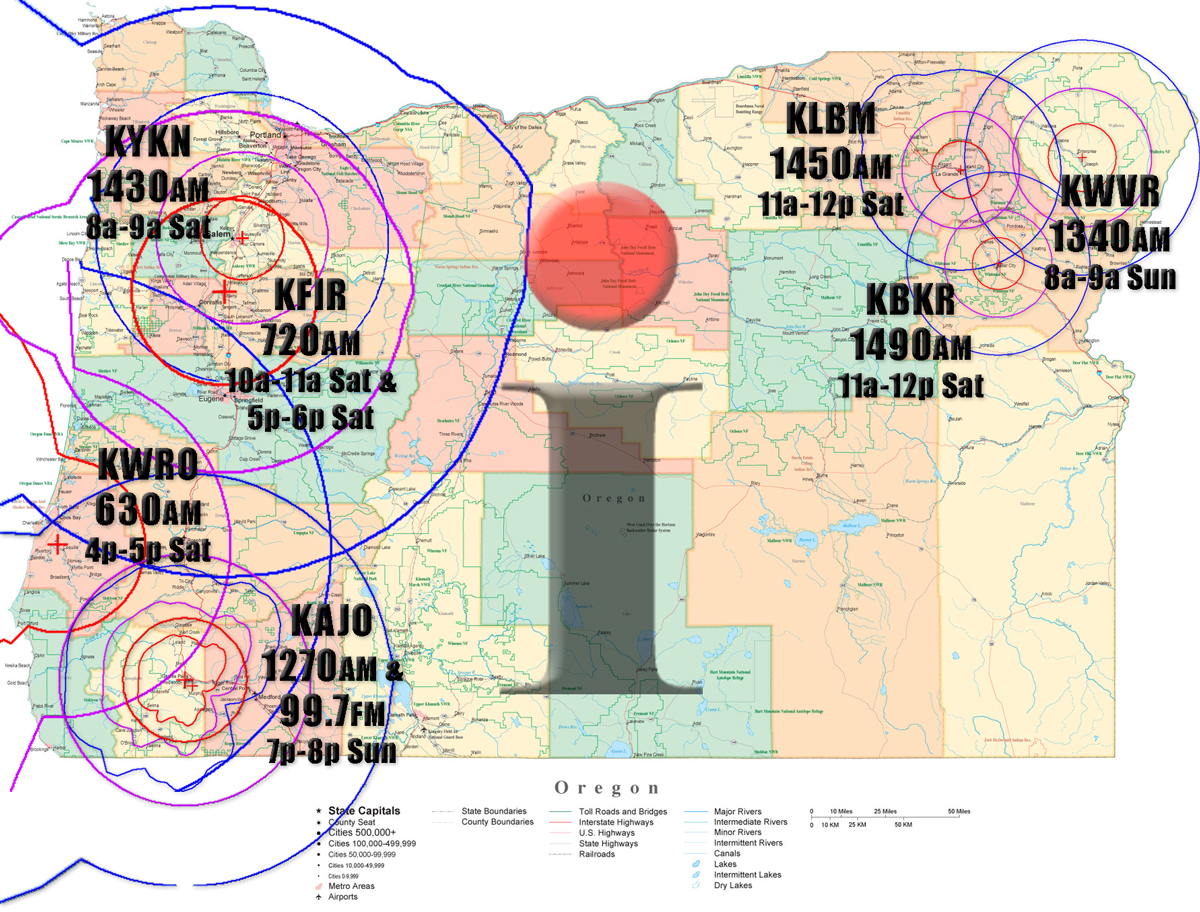

Map of I Spy Radio broadcast areas and air times

The I Spy Radio Show airs weekends — seven times across seven real radio stations, not internet-only streams. Listen anywhere through the stations’ live streams. See when, where, and how to listen for the full schedule.

Missed it? The podcast posts Mondays, after the broadcast stations air the show — here on this page or on your favorite platform.

I Spy Radio  —  Keeping an Eye on Big Government
14-26 Annual July 4th Show | How Presidents Celebrated July Fourth

14-26 Annual July 4th Show | How Presidents Celebrated July Fourth

Show 14-26 Summary: It’s our annual 4th of July show! With our annual guest, amateur historian Greg Leo. This year our main focus is on how Presidents celebrated July Fourth down through the years. One didn’t. And one president may have died because of his Independence Day celebrations. And be sure to tune in to hear about one of history’s largest bar tabs. Because our founding fathers definitely knew how to celebrate freedom. As always, there’s always lots more to discuss—including the big 250th anniversary coming up in 2026, just two short years away.

I Spy Radio Coverage Map as of April 2024
Current I Spy Radio broadcast areas. Click for full-size map.

The I Spy Radio Show airs weekends, six different times, on seven different stations. Listen anywhere through the stations’ live streams! Check out when, where, and how to listen to the I Spy Radio Show. Podcast available Mondays after the show airs on out network of stations.

Original Air Dates: June 29th & 30th, 2024 | Guest: Greg Leo

This Week – How Presidents Celebrated July Fourth

It’s our annual Fourth of July show! Down through the years we have look at the history of Independence Day, how it’s been celebrated and the traditions that have come down to us even from those early celebrations. We’ve looked at July 4th on the Oregon trail. We’ve examined the Declaration of Independence itself and the rights and grievances lodged against the king. We’ve looked at the signers of the declaration. And two years ago we took an in-depth look at George Washington who was so very central to America’s independence.

But it’s not always been easy. And there have been celebrations even in dark, turbulent times in American history. Like the Civil War. And the first 50 years, because there was a lot of doubt America would even make it that far.

This year, being a presidential election year, we’re looking at how presidents celebrated Independence Day.

Want more? Because there’s always so much to talk about we feel like we only scratched the surface. so if you’d like to find out more about how presidents celebrated Independence Day, be sure to check links and information section below.

The I Spy Radio Show Podcast Version

Trapped under a heavy object? Missed the show? Don’t worry—catch the podcast version. Mondays, after our network of radio stations have aired the show, I Spy Radio is now available on your favorite podcasting platform, or you can grab it right here. See the full list of podcast options.

Research, Links Mentioned & Additional Info

Greg Leo is a public affairs consultant, working with governments, tribes, businesses, and individuals. If you need help in that area, contact him via greg@TheLeoCompany.com

How Presidents have Celebrated Independence Day

America at 250: The 250th Anniversary of the Declaration of Independence

Mentioned/Related/Additional Fourth of July Links


Restoring America: How Our National Holidays Tell Our Story

Restoring America: How Our National Holidays Tell Our Story

Show Summary: This week, it’s about rediscovering America, with Scott Powell, who authored the book, Rediscovering America: How the National Holidays Tell an Amazing Story about Who We Are.

Looking for the links mentioned during the show? Click this to jump to the links section.

Coverage Map of I Spy Radio Show broadcast areas, as of June 2021
Current I Spy Radio broadcast areas. Click for full-size map.

The I Spy Radio Show airs weekends, six different times, on seven different stations. Listen anywhere through the stations’ live streams! Check out when, where, and how to listen to the I Spy Radio Show. Podcast available Mondays after the show airs on out network of stations.

Original Air Dates: February 12th & 13th, 2022 | Guests: Scott Powell

Rediscovering America

This week it’s about rediscovering America. Scott Powell’s new book,  Rediscovering America: How the National Holidays Tell an Amazing Story about Who We Are.

Rediscovering America - Scott Powell
Available now!

This show looks at how we got to America’s present condition (hint: Marxists) and a look at how we start to climb out of this (hint #2: we need to remember why America is worth fighting for). Scott Powell has been a fellow at Stanford’s Hoover Institution and is currently senior fellow at Discovery Institute.

We discuss how America has fallen — and how we do we get it back? Would the Founders recognize the chaos of today? After all, they fought off their own tyranny. Although that was the King, an ocean away; not right here in the halls of our own government.

David Horowitz: “Scott Powell has made a major contribution in the research and writing of Rediscovering America, providing substantive reason for hope and confidence in the midst of troubled times. It may be the first book written in the history genre that lays out the progressive and redemptive course that is America’s greatest legacy.”

Why has America Lost Its Way?

We also talk with him about how our rapid material success as a country was not equaled by a similar and equal rapid progress in spiritual or social progress. This is very much a spiritual war we are going through, not just one of laws and regulations and elections.

And why aren’t the checks and balances—so carefully crafted by our Founding Fathers—not working right now?

“This book was written to defeat the enemies of our republic by equipping readers from all walks of life to get connected to the character and accomplishments of their forebears and the arc of redemption that defines our history. Prior generations of Americans who shared a similar greatness of moral vision and believed in the beauty of freedom and equality sacrificed their all that this nation might be protected, guided, and healed. We are called to do no less.”

We also talk corruption and abuse of power rather than institutional or constitutional failure, are the chief causes of decline in America today, and what you can do to help fix this.

Be sure to tune in — it was such an interesting discussion that we plan to have him back around Easter.

The I Spy Radio Show Podcast Version

Trapped under a heavy object? Missed the show? Don’t worry—catch the podcast version. I Spy Radio is now available on your favorite platform, or you can grab it right here. See the full list of podcast options.

Links & Info

Be sure to order Scott Powell’s book, Rediscovering America. It is available March 8th, 2022, but you can pre-order it today.

Annual 4th of July Show! Getting to the Declaration, It’s Signers

Annual 4th of July Show! Getting to the Declaration, It’s Signers

Show Summary: The Declaration of Independence was the third, this-time-we-mean it appeal to the King. We look at the others and why they failed. We often talk about the Founding Fathers but we don’t often talk about the Founding Fathers. What led them to be there? Did you know some weren’t supposed to be there? Join us for this special look into the Signers’ lives, sacred honor, and fortunes—before and after they signed.

Coverage Map of I Spy Radio Show broadcast areas, as of June 2021
Current I Spy Radio broadcast areas. Click for full-size map.

Six Different Times, on Eight Different Stations. Listen anywhere! All stations stream live!

Saturdays
8a – 9a: KYKN 1439AM (Salem/Keizer) | Direct Link to KYKN Live Stream
10a – 11a: KFIR 720AM (entire Willamette Valley) | Direct Link to KFIR Live Stream
11a – noon: KLBM 1450AM (Union County) | Direct Link to KLBM Live Stream
11a – noon: KBKR 1490AM (Baker County) | Direct Link to SuperTalk Live Stream
7p – 8p: KWRO 630AM (Oregon Coast & Southeastern Oregon) | Direct Link to KWRO Live Stream

Sundays
8a – 9a: KWVR 1340AM (Wallowa County) | Direct Link: KWVR Live Stream
7p – 8p: KAJO 1270AM or 99.7FM (Grants Pass/Medford) | Direct Link: KAJO Live Stream

Mondays
After the show airs on our network of radio stations, you can listen to our podcast either here on our site or your favorite podcast platform. We are now on Apple podcasts, Spotify, Stitcher, TuneIn, and more. See the full podcast list.

Original Air Dates: June 26 & 27 and July 3rd & 4th, 2021 | Greg Leo

This week: It’s our 11th Annual Fourth of July Show! In the past, our shows focused on celebrating the Fourth of July down through the years and what those celebrations looked like. In the then-frontier of the Midwest. On the Oregon Trail at Independence Rock. The big 50th Anniversary. And, among other things, we’ve looked at the Declaration of Independence itself. The key phrases and the history behind them.

Our guest every year for these annual shows is Greg Leo, a political and business consultant by day but his true love is American history. Especially our early history and the events of our founding.

This year, our special focus is on the previous appeals that led to the final, bold statement: The Declaration of Independence.

Leading up to the Declaration: The Olive Branch Petition

Did you know that the Declaration of Independence was not the first appeal to the King? There were two others that could be considered forerunners to the Declaration. We focus on the Olive Branch Petition.

And we take a look at the First Continental Congress and their two main accomplishments. Do you know whose idea a continental congress was in the first place?

The Second Continental Congress, the same one that sent the Declaration of Independence, sent the Olive Branch Petition to the King, in an attempt to avert war. By then, there had been shots fired and people killed at the battles of Lexington and Concord.

Thomas Jefferson did a first draft but Congress considered it too inflammatory. So they turned to John Dickinson, known as the “penman of the revolution” to soften the tone.

Tune in to hear why it didn’t work. Was it inadvertently sabotaged by one of the Declaration’s signers?

“United”? Not Quite

There were some 65 delegates to the 2nd Continental Congress. But a quick count shows only 56 signers. What happened there?

Well. While we often see the Founding Fathers as a united front, getting there wasn’t easy. And it definitely wasn’t always united. We talk to Greg Leo about the divisions and some delegates who had to be replaced to get to that united.

The Signers of the Declaration of Independence

This year we focus on some of the signers of the Declaration of Independence. We hear about them pledging their lives, their fortunes, their sacred honor. And they really meant it. All of them were truly putting everything on the line.

But what led them to be there?

And did you know that some of them weren’t even supposed to be there? One was a substitute for the serving President of the Second Continental Congress but played a key role in the Declaration itself.

With 56 signers, and only a one-hour show, we couldn’t focus on all of them. But we do focus on:

  • John Hancock – you know him for his signature. Why so big? But how did this late arrival end up being the President of the Second Continental Congress? Did you know that in many ways he was the Donald Trump of the Revolution?
  • John Morton – I know. Who? You’ve probably never heard of him but he was the key vote. He was also the first signer to die.
  • Button Gwinnett — The second signer to die but not from what you might think. This signer embodied the idea of sacred honor.
  • Samuel Adams — Most people think of him for beer. Except he wasn’t a brewer. What else don’t you know about him? He was
  • John Adams — A creature of politics and a rival to many. Most famously to Thomas Jefferson over states’ rights vs. powerful federal government. Hear about his intercepted letter.
  • Thomas Jefferson — The workhorse who wrote most of the Declaration. A complicated and conflicted man for sure but how’d he get to the 2nd Continental Congress in the first place?
  • Charles Carroll – the very last of the signers of the Declaration of Independence to die. Imagine the changes he saw in the 56 years after the signing.

The I Spy Radio Show Podcast Version

Trapped under a heavy object? Missed the show? Don’t worry—catch the podcast version. I Spy Radio is now available on your favorite platform, or you can grab it right here. See the full list of podcast options.

Links and Info on the Signers of the Declaration

Some Signers We Just Couldn’t Get To

  • Joseph Hewes – A successful Businessman who put it all on the line. He was a merchant and had quite a few ships and was the “go-to expert” in Congress for maritime issues. He placed his ships at the service of the Continental Armed Forces. And he served Congress as the Secretary of the Naval Affairs Committee until 1779, when he fell ill.
  • Thomas Lynch Jr. – He was commissioned a company commander in the South Carolina regiment in 1775. … He fell ill shortly after signing the Declaration and retired from the Congress. At the close of 1776 he and his wife sailed for the West Indies. The ship disappeared and there is no record of his life after.
  • Richard Stockton – He was captured and tortured: “New Jersey was overrun by the British in November of ’76, when he was returning from the mission. He managed to move his family to safety, but was captured and imprisoned by the British. Originally, he was taken to Perth Amboy where he was jailed. Stockton was then moved to Provost Prison in New York where he was intentionally starved and subjected to freezing cold weather. Died of lip cancer before the war was finished
  • George Taylor – A bit of a quirky story. He actually arrived too late to vote for independence but signed the Declaration.
  • John Witherspoon – One of two ministers to sign, though the other (Lyman Hall) was also a physician